
In a rapidly changing music landscape, the African music industry is grappling with the implications of artificial intelligence (AI) on creativity and originality. The case of Nigerian singer-songwriter Fave highlights both the challenges and opportunities that artists face in this new era. Last July, Fave experienced a viral moment when an unauthorized version of one of her tracks featuring an AI choir surged in popularity online. To reclaim her creative control, she recorded a remix that incorporated elements from the AI-generated song, ultimately adding it to her official discography. Entertainment lawyer Oyinkansola Fawehinmi remarked, "In my view, [that] was smart and very business aware. She essentially reclaimed the 'AI version' and released it as her own official expression."
Vulnerabilities in African Music Markets
Many African music markets are perceived as particularly susceptible to the dangers posed by AI-generated music, largely due to inadequate legal frameworks safeguarding intellectual property. This vulnerability raises concerns not just about unauthorized music but also about the broader implications of deepfakes in the entertainment industry. Recently, South Africa made headlines by withdrawing its draft national AI policy after discovering AI-generated citations within the document. This incident underscores the complexities and potential pitfalls in developing comprehensive regulations around AI. Originally reported by The Guardian.
This month, the Atlantic Music Expo in Cape Verde centered its discussions on AI's role in the music industry, positioning the event as a key platform for dialogue. Benito Lopes, the expo's director since 2024, emphasized the importance of providing performers with knowledge to navigate AI technology without sacrificing their human identity and creative integrity. "We need to explore [AI] the best way without losing their human identity and their creativity," Lopes stated.
Supporting Local Artists in a Globalized Market
In a bid to promote Cape Verde as a cultural hub, particularly in music, the country's culture minister, Augusto Jorge de Albuquerque Veiga, is advocating for enhanced financial support for local artists. With a budget of just $6 million, which is less than 1% of the national budget, Veiga is actively seeking funding through Cape Verde's tourism tax and has initiated diaspora bonds aimed at the nation's extensive diaspora communities in cities like Boston and Lisbon. "You have to work with it, not to be eaten by it," he told the Guardian, emphasizing the need for collaboration with AI technologies. "I think that AI will never cover what's authentic.. AI is the present already, so we have to discuss this and find ways to work with AI for the country, for the culture and for the future."
AI as a Tool, Not a Replacement
At the expo, which leads into the Kriol Jazz Festival, the importance of live music and human interaction was a recurrent theme among delegates. Veteran Bissau-Guinean singer Patche di Rima expressed the sentiment that "an artist without media and networking is nothing," highlighting the crucial role of community and connection in the music industry. Many participants also pointed out that AI-driven tools for mixing and mastering, as well as data-driven marketing, can enable independent artists to compete on a global scale, even with limited resources.
José Moura, co-founder of Sona, an AI startup focused on empowering artists through music technology, explained how their platform could enhance creativity. "Homogenisation happens when the tool doesn't know where you're from," Moura stated. "Unlike conventional AI that trains on global averages, Sona is built on local music, governed by local artists, so when it amplifies your sound, it amplifies exactly what makes it yours. It's the opposite of erasure.. artists decide what gets preserved before the AI touches anything."
Bridging Cultures Through Music
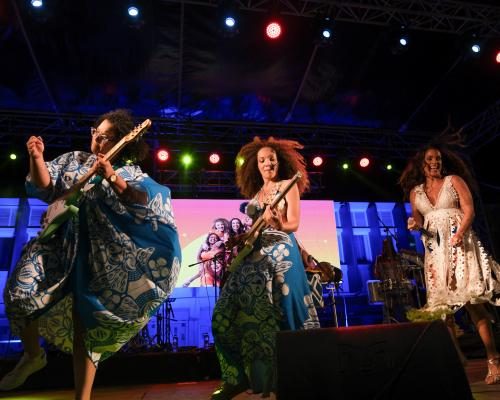
A highlight of the expo was the performance by Sambaiana, a seven-woman ensemble from Brazil, marking their first appearance outside their home country. They celebrated their connection to Cape Verde's vibrant culture, with lead singer Ju Moraes noting, "We feel honoured to represent the Brazilian music style. We recognise ourselves here, the energy, the people, the culture and even the architectures are very similar to Bahia." Fellow vocalist Rayra Mayara echoed the sentiment, asserting that no technology could replicate the emotional experience of live performance. "AI can complement the production process but it is not as a substitute to the human," she affirmed.
As the African music industry continues to navigate the complexities introduced by AI, the focus remains on leveraging technology as a supportive tool rather than a replacement for the artistry that defines the region's musical heritage. The dialogue around AI is crucial for fostering an environment where creativity can thrive alongside new technological advancements.
Originally reported by The Guardian. View original.