
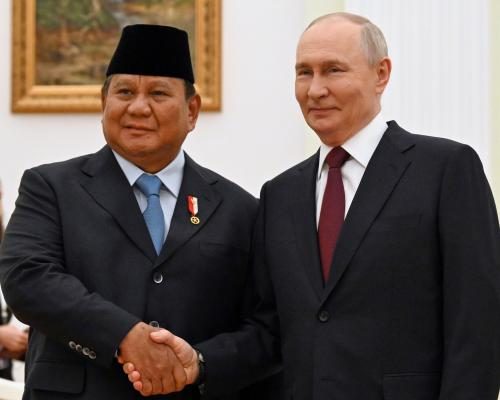
As the Middle East conflict continues to disrupt global energy supplies, Southeast Asian nations are increasingly looking to Russia to fill their fuel and fertilizer gaps. The European Union's foreign policy chief, Kaja Kallas, recently urged countries in the region to avoid Russian oil in order to prevent enabling the ongoing war in Ukraine. Despite these warnings, countries like Indonesia and the Philippines are moving forward with deals with Moscow.
EU's Urgent Plea to Southeast Asia
In a bid to address the pressing fuel shortages caused by the turmoil in the Middle East, the European Union has issued a stark warning to Southeast Asian countries. During a meeting with foreign ministers from the Association of Southeast Asian Nations (ASEAN) in Brunei, Kaja Kallas highlighted the broader implications of purchasing Russian oil. She stated that such actions would provide financial support to Russia, allowing it to continue its military operations in Ukraine. However, the response from Southeast Asia has been largely dismissive of these concerns. Originally reported by The Guardian.
Countries in the region, which heavily rely on energy and fertilizer imports from the Middle East, are increasingly turning to Russia for their needs. The situation is acute; Indonesia recently announced plans to import up to 150 million barrels of Russian crude oil after President Prabowo Subianto's meeting with Vladimir Putin. Additionally, the Philippines, a long-time ally of the U.S., received its first shipment of Russian crude in five years this past March. This shift indicates a significant pivot in the region's energy strategy as nations seek to secure necessary resources amid ongoing shortages.
Russia's Strategic Gains Amid Conflict
The conflict in the Middle East has unexpectedly benefited Russia, with soaring global energy prices and a temporary waiver allowing countries to purchase sanctioned Russian oil at sea. This has resulted in multi-billion dollar profits for Moscow, challenging the effectiveness of Western sanctions and isolating efforts. As Southeast Asian countries rush to strike deals with Russia, questions arise about the long-term implications for regional geopolitics.
Polling data reveals a generally favorable view of Russia among Southeast Asian populations. For instance, a 2024 poll by The Economist found that over 50% of respondents in Indonesia and Vietnam preferred a Russian victory in the Ukraine war. Furthermore, a 2025 Pew Research Center survey indicated that 64% of Indonesians hold a positive view of Russia, significantly outpacing the 48% who view the U.S. favorably. Ian Storey, a researcher from Singapore's ISEAS-Yusof Ishak Institute, notes that Putin's image as a strong leader opposing the West resonates well with many in the region.
Complex Relationships and Regional Dynamics
Despite the warming ties between Southeast Asia and Russia, analysts caution that there are limitations to Russia's influence due to its reliance on China. This dependency could raise concerns for countries like Vietnam and the Philippines, which have maritime disputes with China. The U.S. has temporarily paused sanctions on Russian oil shipments in an effort to stabilize global supplies, which could shape how Southeast Asian countries engage with Russian energy in the future.
Russia aims to expand its influence in the region, particularly in the nuclear energy sector, where it has already established contracts with Myanmar and Vietnam. Observers note that the current crisis may prompt Southeast Asian nations to reassess their energy strategies, focusing on energy sovereignty and diversification. Storey asserts that the ongoing conflict offers Russia a chance to position itself as a reliable partner for energy and food security in Southeast Asia.
Indonesia's Non-Aligned Approach
For Indonesia, engaging with Russia is about more than energy needs; it reflects a broader foreign policy of non-alignment. By solidifying ties with Russia, Indonesia sends a message to the U.S. and the West that it will not be swayed by their agendas. Professor Leszek Buszynski from the Australian National University's strategic and defense studies center argues that these agreements also serve to bolster Indonesia's status in international forums, where it supports Russia's narrative regarding the conflict in Ukraine.
The upcoming joint commemorative summit between Russia and ASEAN in Kazan this June, marking 35 years of diplomatic relations, symbolizes this evolving relationship. As Southeast Asian countries seek to navigate their energy needs amid geopolitical tensions, the implications of their partnerships with Russia will likely continue to unfold.
Originally reported by The Guardian. View original.