
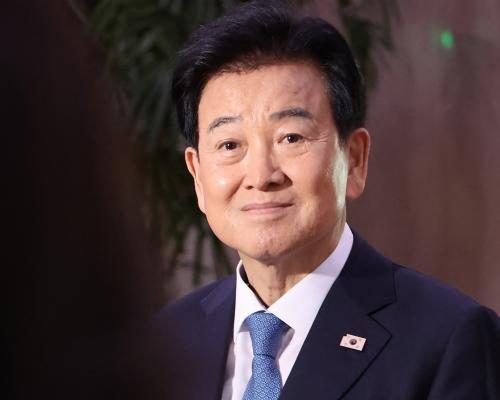
The United States has imposed partial restrictions on intelligence sharing with South Korea following the unification minister's disclosure of a suspected North Korean nuclear site. Chung Dong-young's comments during a legislative session in March have reportedly raised concerns among US officials about the unauthorized sharing of sensitive information.
Minister's Controversial Comments Spark Tensions
Chung Dong-young, South Korea's unification minister, stirred controversy when he publicly identified a suspected North Korean uranium enrichment facility located in Kusong, a region in north-western North Korea. This area had not been previously acknowledged as a nuclear site, adding to the existing known facilities at Yongbyon and Kangson. His remarks were made during a parliamentary briefing in March, where he asserted that North Korea was actively operating these facilities. Originally reported by The Guardian.
Following Chung's statements, US military officials expressed significant concerns, prompting what South Korean media outlets describe as a series of protests from Washington. A senior military official disclosed to the state-funded Yonhap news agency that the US has implemented partial restrictions on the sharing of satellite intelligence concerning North Korean advancements since the start of the month. However, surveillance on missile activities continues without interruption, and joint military readiness remains intact.
Chung Defends His Statements Amid Backlash
Chung has staunchly defended his comments, asserting that they were based on publicly accessible research rather than any classified intelligence. He expressed regret that his remarks had been mischaracterized as a leak of sensitive information. "This is open information," Chung stated, highlighting a 2016 report from a US think tank and various South Korean news articles as the foundation of his claims. Additionally, he pointed out that he had previously mentioned Kusong during his confirmation hearing without any repercussions.
On social media, Chung expressed his confusion over the sudden backlash, stating he was "bewildered" that an issue which had not raised alarms nine months ago was now causing diplomatic friction. His defense has, however, not quelled criticism from opposition politicians, who have called for his dismissal, arguing that his disclosures jeopardize the South Korea-US alliance.
Political Implications and International Reactions
The political fallout from Chung's comments has been significant. President Lee Jae Myung, who has adopted a conciliatory stance towards North Korea, publicly supported his minister. In a post on X, Lee emphasized that the existence of the Kusong site has been well-documented in academic literature and media reports prior to Chung's comments. He asserted, "Any claims or actions premised on the assumption that minister Chung leaked classified information provided by the United States are wrong," indicating a broader frustration with how the situation has unfolded.
The restrictions on intelligence sharing come amid a backdrop of increasing strain in the South Korea-US alliance. Reports suggest that Washington cited several grievances, including pending South Korean legislation which would grant Seoul more authority over the demilitarized zone-an area currently controlled by the US-led United Nations command. Opposition parties in South Korea have described Chung's comments as a "clear security disaster," further complicating the political landscape.
Concerns Over North Korea's Nuclear Ambitions
The incident underscores ongoing concerns about North Korea's nuclear program, which has reportedly expanded significantly in recent years. Rafael Grossi, the head of the International Atomic Energy Agency (IAEA), recently noted during a visit to Seoul that the agency has observed "a rapid increase in the operations" of the Yongbyon reactor. He warned that these developments indicate a serious escalation in North Korea's capabilities concerning nuclear weapons production, estimating that the nation may possess several dozen warheads.
The 2016 report referenced by Chung identified a suspected early centrifuge research facility near the Panghyon air base in the Kusong region but characterized it as a "preliminary site identification" requiring further verification. This evolving situation highlights the delicate balance of intelligence sharing and diplomatic relations in a region fraught with geopolitical tensions.
As the US and South Korea navigate this diplomatic impasse, the ramifications of Chung's comments may reshape the future of their alliance and responses to North Korea's advancing nuclear capabilities. The international community will be watching closely, as the implications of this incident could have lasting effects on regional security dynamics.
Originally reported by The Guardian. View original.