
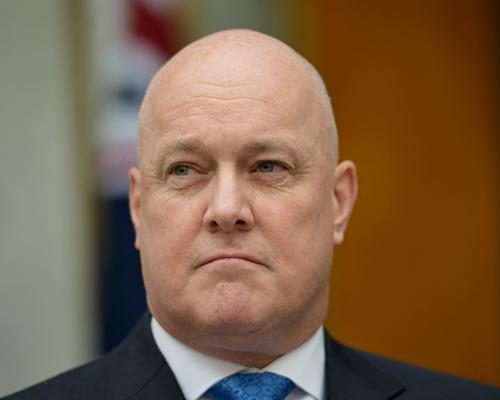
New Zealand's Prime Minister Christopher Luxon has emerged victorious in a leadership vote, a decision that comes as his administration grapples with declining public support just six months ahead of the national election. Luxon, who has held the prime ministerial position since November 2023, convened the caucus meeting in Wellington on Tuesday morning, where the vote took place over a tense two-hour period.
Leadership Vote: A Moment of High Tension
The caucus meeting, marked by speculation and uncertainty, raised eyebrows about Luxon's future as leader. Concerns had been mounting among party members regarding his performance and the party's dwindling popularity, prompting whispers of potential leadership challenges. In the aftermath of the lengthy meeting, Luxon issued a brief two-minute statement affirming his leadership support. "I moved a formal motion of confidence in my leadership," he stated, adding that the motion was passed, confirming his backing within the caucus. However, he did not entertain questions from the press, emphasizing that the matter was now closed. Originally reported by The Guardian.
Luxon took the opportunity to express his frustration with media coverage, accusing journalists of crafting what he termed a "media soap opera." He remarked, "Everyday Kiwis will not be losing sleep over political sideshows here in Wellington. They'll be thinking about their mortgage, their kids' education, and the safety and security of their community." His comments reflect a growing annoyance with the media's focus on speculation rather than substantive issues.
Public Opinion: A Worrying Trend
As the national election approaches in November, Luxon's leadership faces a daunting backdrop of declining opinion polls. A recent survey revealed that only 16% of New Zealanders view him as their preferred leader, highlighting a significant drop in public sentiment. Furthermore, if an election were to take place immediately, Luxon's right-wing coalition government, which includes the ACT party and the populist New Zealand First party, would likely face defeat.
Since assuming office with a 38% electoral mandate in 2023, the National Party has witnessed a downward trend in support. The pressure has intensified among backbench members, with concerns so pronounced that National party whip Stuart Smith had reportedly requested a meeting with Luxon to address these worries. However, reports suggest that Luxon did not meet with Smith, a move characterized by some as a "rare and extraordinary" rebuke to party discipline.
Attempts to Regain Control
In March, Luxon made efforts to revitalize his cabinet and re-election team in a bid to address the party's declining fortunes. His restructuring aimed to bolster his leadership and reverse the negative momentum reflected in public opinion. However, the effectiveness of these changes remains to be seen, especially with the upcoming election looming on the horizon.
The coalition government campaigned on promises to rejuvenate New Zealand's economy, which has faced considerable challenges in the wake of the COVID-19 pandemic. Despite these promises, recovery has been slow, and the economic outlook continues to weigh heavily on voters' minds. Luxon's ability to navigate these challenges and restore confidence in his leadership will be critical as the election approaches.
Media Relations and Future Prospects
The relationship between Luxon and the media has been strained, with the prime minister openly criticizing the press for focusing on rumors and speculation rather than the pressing issues facing ordinary New Zealanders. His remarks underscore a broader frustration with media narratives that detract from the real concerns of the electorate.
Looking ahead, Luxon's survival of the leadership vote may provide a temporary reprieve, but the critical question remains: can he turn around his party's fortunes in time for the national election? The coming months will be pivotal, not only for Luxon's political future but also for the direction of the National Party and its coalition partners. With public sentiment shifting and the stakes rising, the prime minister must find a way to address the concerns of voters while managing the internal dynamics of his party.
Originally reported by The Guardian. View original.