
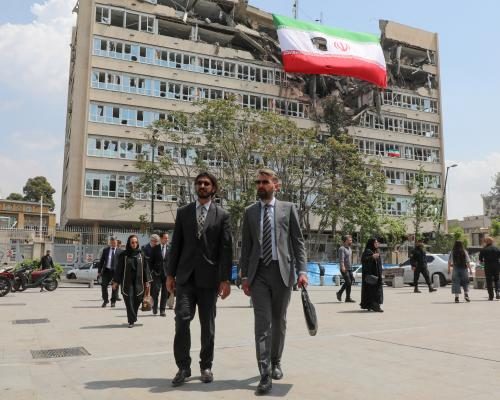
In a rapidly evolving diplomatic landscape, Iran is weighing its options for negotiations with the United States, following recent escalations that threaten the fragile ceasefire agreement. The situation has intensified after the U.S. Navy seized an Iranian-flagged container ship in the Strait of Hormuz, prompting Iran to label the incident as "maritime piracy." As Pakistan's military seeks to mediate, uncertainty looms over the potential resumption of talks.
Last week, a high-profile visit from Pakistan's army chief, Field Marshal Asim Munir, to Tehran aimed to revive discussions between the U.S. and Iran. Initially, both sides appeared committed to returning to negotiations after the first round in Islamabad earlier this month, which saw significant diplomatic engagement despite underlying mistrust. However, the U.S. naval actions have since complicated the dialogue, with Iran suspending its plans for a second round of talks in Islamabad. Originally reported by The Guardian.
Iran's Response to U.S. Naval Actions
The Iranian government reacted strongly to the U.S. seizure of the container ship, asserting that it violated international law and undermined the ceasefire agreement. The foreign affairs ministry condemned the act, calling for the immediate release of the vessel and its crew, and highlighted the potential for severe implications in the already volatile region. Iran's semi-official Tasnim news agency relayed a statement expressing that the seizure marked a significant escalation in U.S.-Iran tensions. Furthermore, Iran has sought to engage international bodies, urging for a condemnation of what it termed aggressive actions by the U.S.
Amid these tensions, U.S. President Donald Trump has remained vocal, asserting that Iran must choose between negotiating or facing unprecedented Challenges. His rhetoric has often been accompanied by social media posts that amplify the stakes, suggesting that Iran's nuclear ambitions remain a central point of contention. Trump announced that retrieving uranium from Iran would be a "long and difficult" endeavor, hinting at the complexities of the ongoing standoff that continued from last year's military strikes on Iranian nuclear sites.
Pakistan's Role as Mediator
Pakistan's involvement in facilitating discussions between the U.S. and Iran reflects its strategic interest in stabilizing the region. The diplomatic efforts by Field Marshal Asim Munir have been pivotal, especially following the temporary ceasefire agreement reached on April 8, following Trump's alarming threats against Iran. Islamabad's push for dialogue was seen as a diplomatic success, with both sides initially agreeing to meet again in Pakistan.
However, as tensions escalated, the diplomatic landscape shifted. Despite optimism from Pakistani officials regarding the potential for a second round of talks, the Iranian government's decision to withdraw has cast doubt over the future of negotiations. The Pakistani military and government have invested significant resources in trying to bring both parties together, recognizing the far-reaching implications of continued conflict.
Unresolved Issues and Future Prospects
Trump's administration has faced criticism over its handling of the situation, particularly regarding the assertion that Iran agreed to relinquish its stockpile of enriched uranium. Iran has firmly denied these claims, underscoring the complexities of the nuclear issue that continues to plague discussions. As tensions between the nations escalate, the potential for miscommunication and further military confrontations grows.
On the ground, the situation remains fluid as both nations navigate this precarious diplomatic environment. With the U.S. threatening more aggressive actions and Iran asserting its military capabilities, the stakes are higher than ever. Observers are closely watching for signs that might indicate a return to the negotiating table, as Pakistan remains poised to facilitate discussions.
The future of U.S.-Iran relations hangs in the balance, with the international community keenly aware of the implications for regional stability. As both sides assess their next moves, the need for dialogue appears more critical than ever.
Originally reported by The Guardian. View original.