
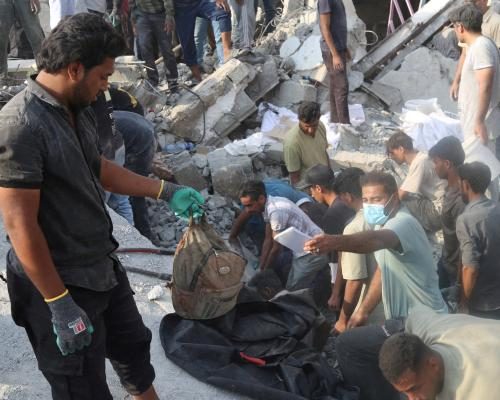
A preliminary investigation into a tragic bombing of an Iranian girls' elementary school has reportedly identified the U.S. military as responsible for the attack, which claimed the lives of at least 175 individuals. According to a report by the New York Times, unnamed officials familiar with the early findings indicated that a Tomahawk missile strike on the Shajareh Tayyebeh primary school was a result of a "targeting mistake" by U.S. forces.
Details of the Incident
The missile strike occurred while U.S. military operations were focused on an adjacent Iranian base, one that previously included the school facility. The investigation revealed that the targeting coordinates used for the strike were based on outdated data supplied by the Defense Intelligence Agency. This revelation has raised significant concerns among officials regarding why such crucial information wasn't verified before launching the attack. Originally reported by The Guardian.
In light of the findings, there are lingering questions about operational protocols within U.S. Central Command (Centcom). The officials who spoke with the Times highlighted the alarming lack of checks that could have prevented this incident. Despite the mounting evidence pointing toward U.S. responsibility, former President Donald Trump has asserted that Iran should bear the blame, even admitting to having limited knowledge about the details surrounding the attack.
Political Reactions and Implications
Following a closed-door briefing with defense and state officials, some Senate Democrats criticized the Trump administration's handling of U.S.-Iran relations, describing its strategy as "incoherent". Senator Chris Murphy expressed serious concerns during a television interview, stating, "This is a disaster of epic proportions. It's already getting Americans killed. It's driving up prices here at home." His comments reflect a broader sentiment among Democrats who are increasingly alarmed at the implications of the military actions.
Senator Rick Scott, a Republican member of the Senate Armed Services and Foreign Relations committees, countered that Trump has no intention of deploying ground troops in Iran, despite the chaos surrounding the situation. He commented, "There's nothing in this briefing that said that we are going to put troops on the ground. There was nothing," emphasizing the administration's strategic direction.
U.S. Military Operations and Iran's Response
Recent military actions by the U.S. have included the destruction of 16 Iranian mine-laying vessels near the strategically vital Strait of Hormuz. This development follows reports that Iran has begun laying explosive devices in the waterway, raising tensions further. Senator Scott remarked on the challenges posed by this situation, stating, "It's going to be very difficult to open the Strait of Hormuz; however, the administration clearly has a plan."
As military actions continue, the impact on domestic fuel prices is becoming a critical concern for many Americans. Senator Scott acknowledged the pressure on prices, saying, "Nobody wants to see gas prices up. So we want prices to come down. I think, unfortunately, prices are going to be up for a while until this ends." This statement underscores the interconnectedness of foreign military engagements and domestic economic conditions.
Democratic Gains Amidst Political Turmoil
Amidst the upheaval, Democrats also made significant electoral gains, with a special election in New Hampshire resulting in a Democrat flipping a Republican-held seat. Bobbi Boudman emerged victorious against Republican Dale Fincher in Carroll County District 7, achieving approximately 52% of the vote. This win marked a notable shift in a district previously carried by Trump, adding to a growing trend of Democratic successes in traditionally Republican strongholds.
National Democrats have pointed to this victory as part of a broader pattern of successful campaigns in red and swing areas, with a total of 28 seats flipped since Trump's election in November 2024. The Democratic Legislative Campaign Committee (DLCC) has expressed optimism about the potential for further gains, aiming for the largest Democratic victories in two decades.
In a recent interview, Trump claimed that the U.S.-Israel war on Iran would conclude "soon" due to a significant reduction in viable targets. Yet, the inconsistency in messaging from the administration regarding the timeline of military operations raises questions about the future of U.S. engagement in the region. Meanwhile, as political dynamics evolve and military actions continue, both domestic and international observers will be closely monitoring the unfolding situation.
Originally reported by The Guardian. View original.