
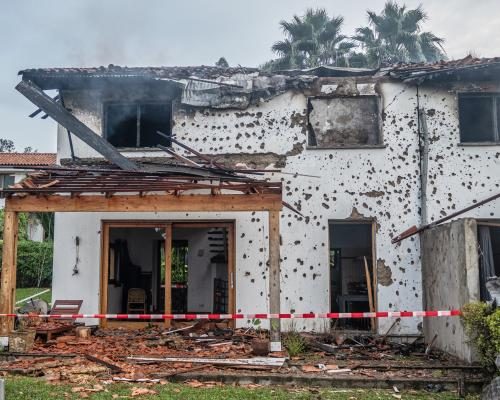
In a tragic incident that underscores the escalating violence in eastern Democratic Republic of the Congo (DRC), a drone strike early Wednesday morning in Goma resulted in the deaths of at least three individuals, including a French humanitarian worker employed by the United Nations Children's Fund (UNICEF). The attack, which occurred around 4 a.m. local time in a residential neighborhood, has been attributed to the ongoing conflict involving the M23 rebel group, which has occupied the area since January 2025.
Details of the Attack
The M23 rebel group, claiming responsibility for the drone attack, identified the fatalities, including the UNICEF aid worker whose nationality was confirmed by French President Emmanuel Macron. In a statement posted on social media, Macron expressed his condolences and emphasized the need to uphold humanitarian laws, particularly in conflict zones where aid workers risk their lives to assist those in need. "Respect for humanitarian law and for the personnel who are on the ground and committed to saving lives," he urged. Originally reported by The Guardian.
Images circulating on social media depicted firefighters battling flames on the upper floor of a two-storey building that suffered significant damage in the strike. The attack marks a disturbing shift in tactics, reflecting a growing reliance on drone warfare by both the M23 and Congolese military forces.
M23's Response and Accusations
Lawrence Kanyuka, spokesperson for the M23, condemned the drone strike, asserting that it was perpetrated by the Congolese government. He accused the Kinshasa regime of launching an offensive that endangers innocent civilians. "A drone attack is currently being carried out against the city of Goma by the terrorist regime of Kinshasa, well beyond the frontlines," Kanyuka stated on X, formerly known as Twitter. He characterized the assault as a deliberate provocation aimed at a densely populated urban area.
The government of the DRC has yet to publicly comment on the incident, leaving many questions unanswered regarding the nature of the attack and the broader implications for the region. The lack of immediate accountability for such violence raises concerns about the safety of civilians and humanitarian workers in conflict zones.
Background of the Conflict in Eastern DRC
Goma, the capital of North Kivu province and the largest city in eastern DRC, has been a focal point of violence for years, particularly during the resurgence of the M23 rebels, who are backed by Rwanda. The group claims to protect the interests of the Congolese Tutsi minority and other vulnerable populations, amid ongoing conflicts with Hutu rebel factions that fled to the DRC following the 1994 Rwandan genocide.
The situation in eastern DRC has been further complicated by the presence of over 100 armed groups vying for control of the region's valuable mineral resources. The M23 has established significant control over large territories, often implementing their governance structures in areas they occupy. Despite a peace agreement brokered by the United States in December between the Congolese and Rwandan governments, fighting has persisted, underscoring the fragility of peace in the region.
International Response and Escalating Tensions
The international community has been closely monitoring the situation, with the United States recently imposing sanctions on the Rwandan army and several high-ranking officials. The U.S. government accused them of providing support to the M23, further complicating the dynamics between the DRC and its neighbors. The sanctions highlight growing frustration over the ongoing violence and the perceived lack of accountability for those perpetuating it.
Wednesday's drone strike not only raises alarms about the safety of civilians but also signals a renewed intensity in the conflict. Just weeks prior, an army drone attack in Rubaya, a strategic coltan mining town controlled by the M23, resulted in the death of the group's military spokesperson, Willy Ngoma, and several other leaders. The M23 retaliated last week with a drone attack targeting Kisangani airport, indicating that both sides are increasingly willing to employ aerial assaults in their military strategies.
As the situation evolves, the implications for humanitarian operations in the region become increasingly severe. The ongoing violence complicates efforts to deliver aid and support to those in dire need, raising the stakes for all involved.
In summary, the drone attack that claimed the life of a French aid worker further illustrates the escalating violence in eastern DRC. With both sides employing drone warfare, the conflict continues to evolve, posing significant challenges for civilians caught in the crossfire and humanitarian efforts aimed at alleviating their suffering.
Originally reported by The Guardian. View original.