
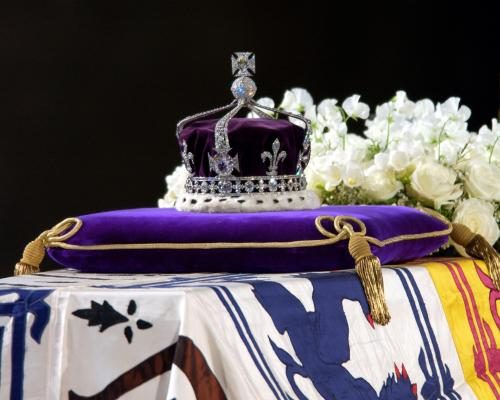
New York's mayor, Zohran Mamdani, has reignited demands for Britain to return the Koh-i-noor diamond after suggesting last week that he'd raise its fate with King Charles III during the monarch's visit to the city. His remarks drew criticism in New York and celebration across India.
Mamdani's remark divides New York and India
Asked at a press conference what he would discuss with the monarch, Zohran Mamdani replied: "If I was to speak to the king.. I would probably encourage him to return the Koh-i-noor diamond," Originally reported by The Guardian.
The New York Post condemned the intervention as "rude" and lacking "maturity, grace and humility". Across India, however, the response revived demands for the jewel's return after decades of British refusals.
There's no confirmation that Mamdani raised the subject during his subsequent brief interaction with King Charles III. His mother is a renowned Indian film-maker; his father, from Kenya, is a leading scholar on colonialism.
The exchange exposed how an object displayed in London can still unsettle diplomatic occasions abroad. The diamond remains mounted in the crown of Queen Elizabeth the Queen mother, its royal setting inseparable from arguments over how Britain acquired it during the conquest of Punjab in 1849.
A stone carrying South Asia's colonial grievances
William Dalrymple, co-author of Koh-i-noor: The History of the World's Most Infamous Diamond, wasn't surprised by the controversy.
"What people have got to realise is the Koh-i-noor is still a hugely emotional issue," William Dalrymple said. "On to this one little stone, sitting in a glass cabinet in London, has been projected all the pain that South Asia feels about colonialism."
William Dalrymple described it as a "pocket-sized symbol of colonial loot and plunder". Even after Charles's engagements with Trump and Congress, the diamond had again become a source of friction.
"It just goes on, decade after decade, dynasty after dynasty," William Dalrymple said.
Legend holds that the stone brings disaster to male owners, whose histories include assassination, illness and war. During more than a century and a half in British possession, it has been worn by queens, not kings. Its reputation has outlasted successive dynasties.
From the peacock throne to Punjab
Probably originating in southern India, the diamond travelled through empires by conquest and coercion. But its fame doesn't reflect its original standing: it wasn't the largest or most celebrated Mughal diamond, nor separately recorded in their jewel inventory.
Dalrymple and co-author Anita Anand have traced much of its mythology to a British bureaucrat. The stone was among gems adorning Mughal emperor Shah Jahan's peacock throne, seized by Persian ruler Nader Shah in 1739.
Taken to what's now Iran, it acquired the name Koh-i-noor, meaning mountain of light. Nader Shah publicly displayed it before his assassination.
The diamond subsequently passed through Afghanistan and reached Ranjit Singh, founder of the Sikh empire in Punjab, who wore it on his arm. After his death, it came into the possession of his young heir, Duleep Singh. Its journey linked Mughal emperors, Persian invaders and Sikh rulers long before it became an emblem of British imperial possession overseas.
A child ruler's surrender still shapes restitution
In 1849, the East India company annexed Punjab and forced 10-year-old Duleep Singh to sign the Treaty of Lahore. Surrendering the diamond to Queen Victoria was among its demands; critics maintain that the transfer happened under duress.
Britain then helped manufacture its imperial mystique. Presented to Victoria and publicly exhibited, the jewel underwent a much-criticised recutting to suit European tastes before entering the crown jewels.
After Indian independence in 1947, demands for its return gathered force. Successive Indian governments made formal requests, placing it alongside the Parthenon marbles and Benin bronzes in debates about colonial appropriation.
British governments have refused repatriation. At the Tower of London, Indian visitors specifically seeking the diamond sometimes cry "chor, chor", meaning "thief, thief", while passing its display on a moving walkway.
Mamdani's intervention hasn't changed its ownership. But it has renewed attention to a dispute Britain's refusals haven't settled, ensuring the diamond remains more than a museum attraction.
Originally reported by The Guardian. View original.