
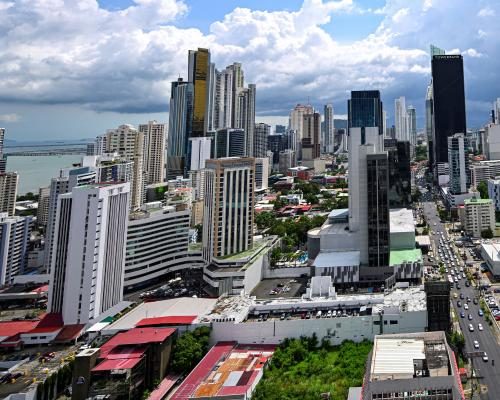
When it comes to global super-rich may have hidden $3.55tn from tax officials, says oxfam, oxfam's latest analysis suggests that the world's wealthiest individuals may have concealed up to $3.55 trillion from tax authorities. As the charity marks a decade since the Panama Papers investigation, it calls for global reforms to combat tax evasion and inequity.
Understanding Global Super-rich May Have Hidden $3.55tn From Tax Officials, Says Oxfam
The charity Oxfam has released a startling report indicating that the global super-rich may be hiding as much as $3.55 trillion from tax authorities, a figure that represents more than 3% of the global GDP. This analysis, which builds on the foundational work of economists including Gabriel Zucman and the EU Tax Observatory, highlights a significant increase in total offshore wealth, now estimated at $13.25 trillion (£10 trillion) in 2023. Despite the introduction of automatic information exchanges between jurisdictions in 2016, which have reportedly reduced the share of hidden wealth, Oxfam's findings reveal that a substantial amount remains untaxed. Originally reported by The Guardian.
According to Oxfam, approximately 80% of the concealed wealth, or $2.84 trillion, is likely owned by the top 0.1% of households globally. This statistic underscores a stark inequality, with this tiny fraction of the population holding untaxed assets equivalent to the combined wealth of the poorest half of the world's population.
Calls for Global Wealth Tax Gain Momentum
In light of these findings, Oxfam has renewed its call for a progressive global wealth tax, urging governments worldwide to close tax loopholes that allow the super-rich to shield their fortunes. Christian Hallum, Oxfam's tax lead, stated, "This isn't just about clever accounting - it's about power and impunity. When millionaires and billionaires stash trillions of dollars in offshore tax havens, they place themselves above the obligations that bind the rest of society."
The charity is part of an ongoing global campaign advocating for a wealth tax, which is currently being discussed at the United Nations as part of broader tax cooperation negotiations. Oxfam's push includes calls for increased participation from countries in the global south in the Common Reporting Standard, which facilitates information exchange between jurisdictions.
UK's Tax Policies Under Scrutiny
In the United Kingdom, Oxfam has directed its attention towards the Labour Party, urging Chancellor Rachel Reeves to implement a more comprehensive wealth tax. Reeves has already made some adjustments, such as increasing the capital gains tax and introducing a new council tax surcharge for properties valued over £2 million. She has also built upon her Conservative predecessor Jeremy Hunt's reforms, including the elimination of the "non-dom" tax status that allowed some wealthy foreign residents to avoid UK taxes.
Despite these measures, Oxfam and the Green Party, led by Zack Polanski, argue for more aggressive tax reforms. Polanski has emphasized that a wealth tax would be a "day one priority" for his party if they were to gain power, proposing an annual tax of 1% on assets exceeding £10 million and 2% on those above £100 million, which could potentially yield around £15 billion annually.
Expert Opinions on Tax Reform
While Oxfam's proposals have garnered attention, the Institute for Fiscal Studies has cautioned that the focus should be on reforming existing wealth taxes, such as council tax and capital gains tax, rather than introducing new levies. Additionally, the House of Commons Public Accounts Committee has raised concerns about HM Revenue and Customs' lack of oversight, notably its inability to accurately count the number of billionaires within the UK.
This ongoing debate over tax reform and the hidden wealth of the super-rich highlights the growing tensions surrounding economic inequality. As public scrutiny increases, the need for transparent policies and equitable tax structures becomes ever more pressing.
Oxfam's findings serve as a reminder of the challenges that governments face in addressing tax evasion and wealth inequality. The call for a global wealth tax and the closure of tax loopholes is likely to intensify as more citizens demand accountability from their governments and the wealthy elite.
Originally reported by The Guardian. View original.