
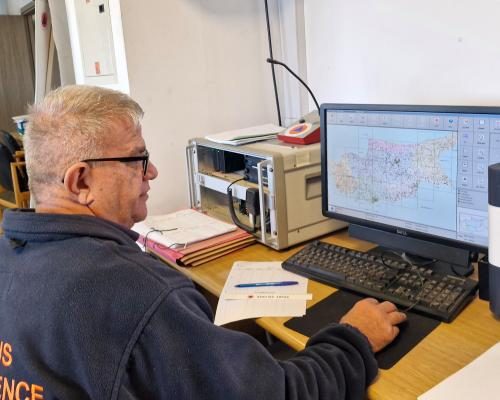
In an alarming wake-up call, Cyprus's civil defense authorities are grappling with the stark inadequacies of the island's bomb shelters following a recent drone threat. On March 2, Valentinos Pangalos, a veteran officer, activated emergency sirens at Paphos International Airport as a suspicious drone was detected, prompting an evacuation. The incident has intensified fears among the population, revealing significant gaps in the nation's crisis preparedness.
Emergency Response Triggers Widespread Panic
At precisely 12:33 PM local time on March 2, Valentinos Pangalos received orders that would set off a series of urgent actions at Paphos International Airport. The airport was placed on high alert when a drone, believed to be carrying explosives, was spotted heading towards the facility. This unsettling incident followed closely on the heels of a drone attack on RAF Akrotiri, a British base in Cyprus, which occurred just 12 hours earlier. Pangalos, who has dedicated 24 years to civil defense, remarked, "In 24 years of doing this job, I'd never been asked to do anything like it. To receive such an order, so abruptly, was intense." As the island grapples with escalating regional tensions, the urgency for improved security measures has never been more acute. Originally reported by The Guardian.
Longstanding Fears Resurface Among Cypriots
The recent events have reignited fears among older Cypriots, particularly those who vividly remember the 1974 Turkish invasion that resulted in the division of the island. With tensions rising, calls to the civil defense have surged, with many residents inquiring about the nearest bomb shelters. Pangalos noted, "At all hours we've been receiving calls, especially from the elderly, asking where the nearest refuge is and what they should do. Unfortunately, there aren't many of us here because we're so understaffed." The emotional toll is evident, with many citizens expressing anxiety about their safety.
Infrastructure Strain and Calls for Reform
Maria Papa, the chief officer of the civil defense, lamented that the emergency had caught authorities unprepared. "This security crisis has exposed just how ill-prepared we are," she stated. Reports reveal that of the 2,480 bomb shelters listed by authorities, approximately 480 are deemed unsuitable, inaccessible, or nonexistent. In response to public outcry, officials have begun posting lists of nearby shelters; however, many of these are little more than cramped garages or neglected cellars. As Papa prepares to leave her post, speculation abounds that her departure is linked to the inadequate state of the country's civil defense infrastructure.
Government Response and Future Plans
In light of these challenges, President Nikos Christodoulides has acknowledged the pressing need for action. "We're not at all happy with the state of the shelters," he remarked, noting that only 45% of the island's roughly 1 million residents could be accommodated in the existing bomb shelters. To address these inadequacies, the government plans to appoint a national coordinator to reform crisis response strategies based on European standards. Additionally, new legislation is being drafted to incentivize construction of bomb shelters in residential buildings. "To date, we've asked people to make shelters available out of the goodness of their heart," Papa explained. This voluntary approach is no longer seen as sufficient in the face of rising threats.
The situation has also led to discussions about enlisting the expertise of Israeli civil protection specialists to improve Cyprus's defense mechanisms. While some citizens express fears that the presence of European warships and fighter jets might signal deeper involvement in regional Conflicts, others stress that Cyprus remains a safe place. Yiota Andreou, a 67-year-old pastry shop owner, voiced her concerns, stating, "I won't hide it, I'm scared. Why are all these ships here if we are as safe as they say? It's terrible that shelters are in this state, that governments have turned a blind eye, wasted money and not cared at all about us."
As Cyprus navigates this unsettling chapter, the call for reform and investment in civil defense infrastructure grows louder. The need for effective and rapid responses to potential threats has never been clearer, and citizens are watching closely as their leaders aim to bring about the necessary changes.
Originally reported by The Guardian. View original.