
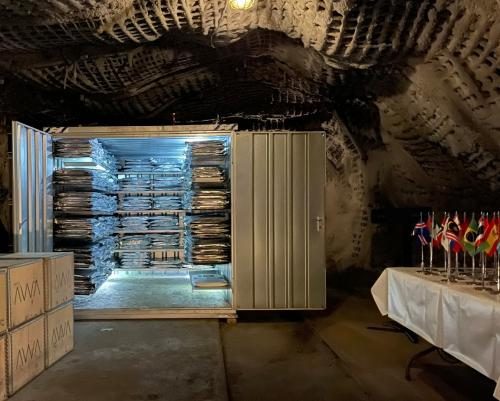
In a remarkable blend of culture and technology, Nigeria has become the first African nation to deposit its Indigenous stories and cultural records into the Arctic World Archive (AWA), a data storage facility located 300 meters beneath the permafrost of Svalbard, Norway. This historic move, which took place on February 27, 2023, marks a significant step in preserving the nation's diverse heritage for future generations.
Preserving Cultural Heritage in the Arctic
The Arctic World Archive is designed to safeguard important historical records using a specialized digitized film known as Piql, which can endure for up to 2,000 years. Inspired by the Svalbard Global Seed Vault, which protects a million seed samples against global catastrophes, AWA aims to serve as a repository for the "world's memory." Established in 2017 by a Norwegian technology firm, the archive currently houses records from 37 countries, including notable contributions from the Vatican Library, the European Space Agency, and various cultural institutions. Originally reported by The Guardian.
Within this unique facility, Nigeria's collection consists of a rich tapestry of social history, cultural narratives, and creative works. The archives were compiled from 12 Nigerian organizations, including private art foundations, museums, and libraries, showcasing the depth of Nigeria's artistic and cultural landscape. The effort to deposit these materials was spearheaded by historian Nze Ed Emeka Keazor, appointed chair of Piql's first Africa office in Lagos in 2022.
Collaborative Efforts to Archive Nigerian History
Keazor's mission involved extensive outreach to cultural institutions throughout Nigeria. His efforts included visits to places like Abeokuta in Ogun State, where he engaged with the head of archives at the Olusegun Obasanjo Presidential Library. Other contributors to this historic initiative include Bloom Art, a Lagos-based gallery; the Asaba Monument Trust, which commemorates the tragic 1967 Asaba massacre; and the Nsibidi Institute, dedicated to social research.
Ugoma Ebilah, founder of Bloom Art, emphasized the importance of this archival effort, stating, "It is important to me that Nigeria is remembered, because my work is about building cultural infrastructure." This sentiment resonates deeply, especially in a year when Fela Anikulapo Kuti was posthumously honored with a Lifetime Achievement Award at the Grammys, highlighting Nigeria's rich cultural contributions.
Community Engagement and Preservation Initiatives
Dr. Chima Korieh, a West African history expert at Marquette University, has also been instrumental in preserving local narratives. His project with the Umuchieze community in Imo State focused on documenting cultural practices and historical accounts from precolonial Nigeria. The AWA deposits from this initiative included manuscripts detailing the community's history and governance structures.
Korieh pointed out the precarious state of public records in Nigeria, noting, "From 1960 onwards, most of the public records that should be in the archives in Nigeria are not there." His work emphasizes the crucial need for community involvement in preserving Indigenous knowledge, with plans to establish a community center in Umuchieze to provide public access to these resources.
Significance of Nigeria's Participation in the AWA
The National Commission for Monuments and Museums and the National Council for Arts and Culture also contributed to the archives, including vital reports on Nigeria's creative economy. Obi Asika, director-general of the National Council for Arts and Culture, remarked on the importance of memory in Africa, stating, "One of the key things that has affected Africa is memory." He expressed pride in Nigeria's participation in the AWA, viewing it as a pivotal moment in the nation's history.
As Nigeria embarks on this new chapter of cultural preservation, the initiative not only seeks to safeguard its heritage but also aims to inspire future generations. By archiving stories and records, the nation is taking significant strides towards recognizing and celebrating its vibrant history amid the challenges of modernity.
As these archives rest securely in the Arctic, the hope is that they will serve as a beacon of Nigeria's rich cultural heritage, ensuring that the stories of its people endure for millennia to come.
Originally reported by The Guardian. View original.