
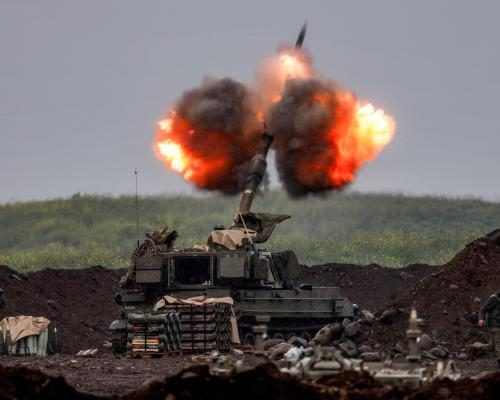
The Middle East finds itself in a state of turmoil as the US weighs the prospect of winding down its military operations against Iran, coinciding with a notable easing of sanctions on Iranian oil. This development unfolds amid a backdrop of escalating military actions, including Israel's retaliatory strikes against Iranian targets. The conflict, now in its early days, has already incurred a staggering cost of $12.7 billion for the US and prompted the Pentagon to seek an additional $200 billion in military funding.
Oil prices have surged to $125 a barrel, a figure that many now consider a stark reality rather than a distant fantasy. The ramifications of this conflict extend beyond military expenditures; the world's largest liquefied natural gas plant, Ras Laffan in Qatar, faces a prolonged shutdown, potentially enduring for five years at a staggering annual cost of $20 billion. Meanwhile, Iranian drone threats loom over various oil depots across the Gulf, further exacerbating the already volatile situation. Originally reported by The Guardian.
Human Cost and Escalating Tensions
The human toll of the ongoing conflict is devastating. Reports indicate that over 18,000 civilians have been injured and more than 3,000 have lost their lives in Iran alone. The Iranian regime, grappling with its survival, has shown a willingness to escalate hostilities. An Iranian official recently hinted at additional tactics that could soon come into play, suggesting that vital resources like the Gulf's desalination plants could become targets in this high-stakes game.
As the conflict continues, the Iranian military's rhetoric has intensified. General Abolfazl Shekarchi warned that global parks, recreational areas, and tourist destinations are not safe for the country's adversaries, signaling Iran's readiness to extend its retaliatory actions beyond the Middle East. This development raises alarm bells about potential militant attacks targeting US and Israeli interests worldwide, emphasizing the unpredictable nature of this conflict.
Regional Responses: Saudi Arabia and Kuwait on Alert
In the wake of Iran's aggressive posturing, neighboring nations have ramped up their military preparedness. Saudi Arabia has reported the successful interception of multiple drones aimed at its territory, with its defense ministry stating that it had intercepted a total of five drones in its eastern region, following a series of interceptions in recent days. Kuwait's military also confirmed that it had been actively thwarting missile and drone attacks, underscoring the heightened state of alert in the Gulf.
Saudi officials have condemned Israel's recent airstrikes on Syrian military camps, labeling them "aggression" and calling for international intervention. Israel justified its actions by stating they were necessary to protect the Druze community in Syria's Sweida province from hostile attacks. The Kingdom's foreign ministry labelled these strikes a blatant violation of international law and called upon the global community to put an end to Israel's transgressions. Turkey echoed this sentiment, characterizing the Israeli actions as a dangerous escalation.
International Implications and Energy Market Turbulence
The ongoing conflict and rising military expenditures have sent shockwaves through the global energy market. The European Commission has urged EU member states to lower their natural gas storage targets, suggesting a revised target of 80% capacity to manage demand more effectively. This recommendation comes in light of the disruptions caused by the Iran war, which has severely affected key suppliers and led to soaring energy prices.
With the Iranian regime willing to escalate its response, the potential for further conflict remains high. The world watches closely as the US contemplates its strategy while grappling with the economic implications of a war that has already proven costly. The situation remains precarious, and the potential for broader regional conflict looms large as nations grapple with the evolving dynamics of power and aggression in the Middle East.
As President Donald Trump considers winding down US military operations, the outcomes of these deliberations could significantly impact not only the future of US-Iran relations but also the stability of the entire region. The international community continues to call for restraint amid escalating tensions, emphasizing the need for diplomatic solutions to prevent further loss of life and economic devastation.
Originally reported by The Guardian. View original.