
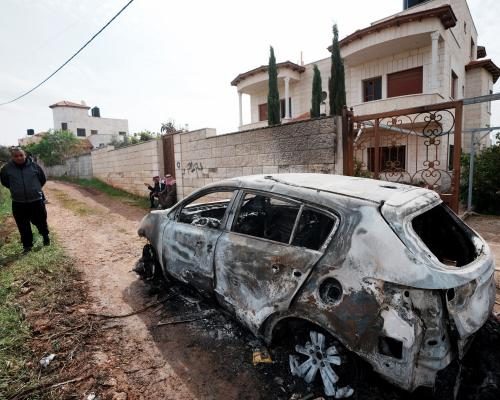
In a striking appeal, prominent leaders from the Jewish diaspora are urging Israeli President Isaac Herzog to take decisive action against escalating violence by Jewish extremists targeting Palestinians in the West Bank. This call comes in the form of an open letter, organized by the London Initiative, which has garnered over 3,000 signatories from around the world, including diplomats, philanthropists, and academics.
The letter, released in conjunction with the Jewish festival of Passover, highlighted a disturbing increase in attacks against Palestinian civilians, including killings and arson, particularly in March. Notable figures, such as former British Foreign Secretary Malcolm Rifkind, joined the initiative, echoing concerns that the Israeli government must do more to protect vulnerable communities. The letter stated, "Israel's security forces are clearly better able to protect Palestinian civilians in the West Bank, living under different levels of Israeli military and civil control, from Jewish terror. That they do not act decisively suggests a lack of directives from the government." Originally reported by The Guardian.
International Support for the Letter
The open letter has attracted signatories from diverse backgrounds, emphasizing the global concern regarding the situation in the West Bank. Among the UK signatories are well-known personalities such as Matthew Gould, the former UK Ambassador to Israel, and Lord Michael Levy, a former Middle East envoy closely associated with former Prime Minister Tony Blair. Additionally, Sir Malcolm Rifkind and Times columnist Daniel Finkelstein have also added their names to the list, showcasing a united front from the British Jewish community.
Beyond the UK, influential figures from North America and Europe have lent their voices to the cause. Canadian billionaire philanthropist Charles Bronfman, former Israeli diplomat Ilan Sztulman Starosta, and Michael M Adler, a former US ambassador to Belgium, are among those who have signed the letter. Their participation underscores a broader sentiment that violence against Palestinians not only poses ethical dilemmas but also jeopardizes the future of Israel and its standing within the global Jewish community.
Herzog Responds to Concerns
In response to the open letter, President Herzog acknowledged the serious nature of the violence perpetrated by extremist groups, labeling it as a "recent surge of violence by extremist elements in Judea and Samaria." He expressed his agreement with the letter's sentiment, asserting that such acts are contrary to the foundational values of Israel and the ethical traditions of the Jewish people.
Herzog emphasized the need for law enforcement to act decisively against those responsible for the violence, demanding that authorities "employ all available means to bring those responsible to justice and put an immediate end to this unacceptable phenomenon." He described the vigilantism and violence as "shameful crimes against innocents," which further complicate efforts to address ongoing Palestinian threats in the region.
Historical Context and Escalating Violence
This letter isn't the first of its kind; it follows a similar appeal made to Prime Minister Benjamin Netanyahu in August 2025, where over 6,300 Jews worldwide called for the restoration of humanitarian aid to Gaza and an end to violence in the West Bank. The previous letter criticized members of Netanyahu's government for using inflammatory language that perpetuates division and conflict.
According to the recent correspondence, the situation has continued to deteriorate, with settler violence reaching alarming levels during the ongoing conflict with Iran. The letter concludes that the government's negligence in addressing these issues not only harms Israel's reputation but also threatens the relationship between future generations of Jews and the state of Israel.
The plea from the Jewish diaspora leaders highlights a pressing dilemma: how to reconcile the security concerns of Israel with the need for humanitarian consideration of Palestinian rights. As tensions remain high, the actions taken by Israeli leadership in the coming weeks may significantly influence the trajectory of peace and stability in the region.
Originally reported by The Guardian. View original.