
Amid escalating tensions in the Middle East, a surge in electric vehicle (EV) sales across Europe has emerged as a striking response to skyrocketing fuel prices. March witnessed a remarkable 51% increase in the sales of electric cars in continental Europe, reflecting a growing urgency for sustainable alternatives. However, as the International Energy Agency dubbed the disruption in the Strait of Hormuz the "biggest energy crisis in history," the unfolding situation has triggered significant unrest, particularly in Ireland.
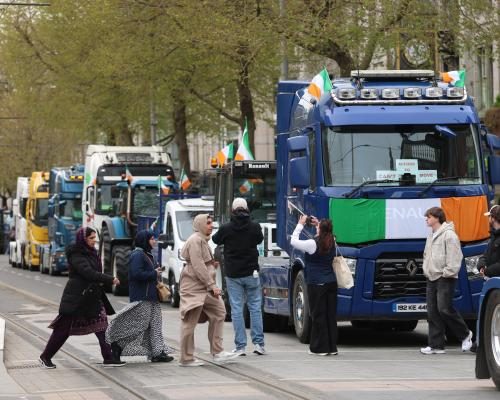
Earlier this month, widespread fuel protests swept across Ireland as truckers and farmers rallied against soaring petrol and diesel prices. Demonstrators took to the streets, using their vehicles to blockade critical infrastructure, including ports, fuel depots, and the nation's only refinery. Their grievances, however, were not directed at foreign policies or corporate greed but aimed squarely at the high taxes imposed on fuel. The protests quickly escalated, raising alarms within the government and drawing comparisons to similar grassroots movements seen in France and Germany. Originally reported by The Guardian.
Government Response to Fuel Blockades
After six days of intense stand-offs and disruptions that threatened vital services such as water treatment plants, the Irish government capitulated. In a bid to quell the unrest, officials announced a €505 million rescue package that included cuts to excise duties on fuel and direct financial support for hauliers and agricultural contractors. Perhaps most importantly, the government postponed a planned increase in the carbon tax, a key element of both national and EU climate strategies, by six months.
This move has drawn criticism from experts like Hannah Daly, a sustainable energy professor at University College Cork, who characterized the carbon tax as a "lightning rod" for public frustration. She pointed out that the government's response reflects a broader failure to adequately prepare for a transition to a clean energy future. "The rescue package has artificially shielded motorists and others who are dependent on fuel from an international fuel crisis," Daly stated. "But it is temporary relief, at huge expense, that everybody is paying for."
Wider Implications for European Energy Policies
As Ireland grapples with its fuel crisis, similar sentiments over rising fuel prices are echoed across Europe. Energy analysts express concern that larger economies, such as Germany and Poland, may resort to blanket fuel subsidies rather than providing targeted support for the most vulnerable populations. This approach could undermine long-term sustainability efforts and delay the transition to cleaner energy sources.
Germany's reluctance to implement measures such as speed limits on its autobahns, even amid the current crisis, has drawn criticism from environmental campaigners. The European Commission has proposed tax cuts designed to promote electricity usage over oil and gas, while also setting ambitious goals for electrifying road transport. Despite the recent surge in EV registrations, it's noteworthy that 96% of the EU's transport fleet continues to rely on petrol and diesel, highlighting the urgency for a shift in policy.
Lessons from Ireland's Experience
Inevitably, Ireland's fuel protests have opened discussions about the nation's heavy reliance on road transport, with only one electrified heavy goods vehicle registered in the country as of April this year. By contrast, Norway's proactive policies have resulted in EVs comprising 32% of all passenger vehicles. This disparity illustrates the consequences of delayed action in transitioning to sustainable energy.
While the protests may have seemed disruptive, they could also signal a pivotal moment in public opinion regarding fossil fuel dependency. Hannah Daly remarked on the irony that the current crisis has aligned Europe's climate policies with geopolitical realities. The EU's green deal offers feasible alternatives even in fossil fuel-dependent nations like Ireland, yet persistent barriers hinder progress. "If we had gone faster, we wouldn't be facing this pain," Daly commented.
Countries like Spain and Denmark, which invested heavily in domestic renewable energy earlier, are now reaping the benefits with lower, more stable electricity prices. In contrast, Ireland's recent turmoil has raised uncomfortable questions about the future of its energy policy and the potential for climate-skeptic narratives to gain traction.
Ultimately, while the protests revealed deep-seated frustrations with fuel prices and government policies, they may also act as a catalyst for a much-needed shift toward cleaner energy practices. As Europe confronts its oil addiction, the path forward must involve a delicate balance between immediate relief and long-term sustainability.
Originally reported by The Guardian. View original.