
In a significant move to regularize undocumented migrants, Spain's socialist government has initiated a program poised to benefit at least 500,000 individuals. The scheme, which opened last week and runs until the end of June, allows undocumented migrants who arrived in Spain before December 31, 2022, to apply for legal residence. However, applicants are facing long queues and a complicated process as they navigate the requirements.
New Opportunities for Undocumented Migrants
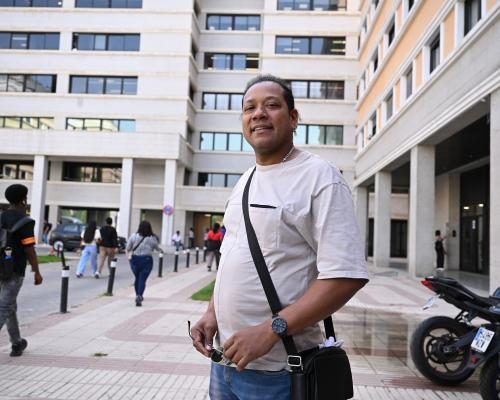
A few minutes from the vibrant Calle Ponzano in Madrid, a more somber atmosphere prevails at the regional transport consortium's offices. Here, individuals and couples emerge periodically, some smiling with success while others leave in disappointment. Among those who triumphed was Gimbad Mosquera, a 46-year-old musician from Colombia. He hopes the new decree will allow him to perform with his vallenato band across Europe. Originally reported by The Guardian.
"I thought it would be even more difficult," Mosquera remarked, reflecting on the complexities involved in the application process. The government's initiative aims to bring undocumented workers into the formal economy, granting them rights and protections that many have long been denied.
Another success story comes from Shiva Pyuthani and his girlfriend, Sirjana Ghising, both from Nepal. After obtaining their transport certificates, they expressed eagerness to work in the hospitality sector. "We've come here so that we can work and so that we can earn money to send home to support our parents and our families," Ghising stated.
A Complex Application Process
Despite the potential benefits, many applicants face hurdles. Mosquera's attempt to provide necessary documentation at the transport office highlights the confusion that surrounds the process. He needed additional supporting documents, which complicated his appointment further. His partner, Yelitza Villega, acknowledged the system's intricacies but noted that it wasn't as daunting as she expected.
For many, the financial burden of hiring legal assistance adds another layer of difficulty. "Those who can afford to are paying lawyers to handle their applications and make the necessary appointments," Villega explained. A Peruvian woman shared that many Latin Americans-who represent the majority of undocumented workers-utilize social media platforms like WhatsApp to share information about documentation and appointment times.
"It's really useful to go to the talks that NGOs are organising, where lawyers explain exactly what you need and where you need to go to get it," she added. The official channels have been criticized for their lack of clarity, leaving many to rely on community resources.
Political Landscape and Public Response
Spain's regularization initiative is set against a backdrop of rising anti-migrant sentiment in many European countries. While Spain's socialist government is advocating for the economic and social advantages of migration, conservative opponents in the People's Party (PP) argue that the scheme will overburden public services. The far-right Vox party has also claimed that Prime Minister Pedro Sánchez is trying to "replace the Spanish population" with this policy.
Despite the political backlash, many hopeful migrants are focused on the practical aspects of the process. Photos from various locations across Spain show long lines outside town halls and consular offices as people seek to secure their status. Although the government anticipates that around 500,000 will benefit from the scheme, some estimates suggest that the actual number of eligible individuals could be much higher.
According to a report from the Funcas think tank, there are approximately 840,000 undocumented migrants in Spain. Of these, a significant majority are Latin American, with 760,000 individuals hailing from various countries, including 290,000 Colombians and 110,000 Peruvians.
Challenges Ahead for Immigration Officials
As the regularization process unfolds, concerns have been raised about the capacity of immigration services to handle the influx of applications. Police unions have warned that the sheer volume could overwhelm the system, leading to bureaucratic delays. Last week, immigration officers called off a proposed strike after the government promised to improve their working conditions amid the anticipated surge in applications.
Looking ahead, the Spanish government must navigate the complexities of this ambitious regularization effort while addressing the concerns of both migrants and citizens. The balance between facilitating integration and managing public resources will be critical as Spain seeks to reinforce its commitment to the benefits of migration.
As applicants queue and gather the necessary documentation, the outcomes of this initiative could reshape not only their lives but also the fabric of Spain's economy and society.
Originally reported by The Guardian. View original.