
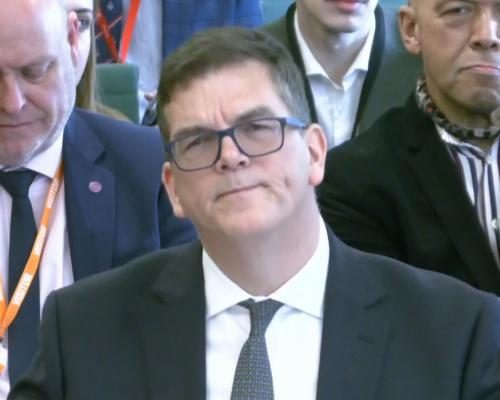
In a surprising revelation, Olly Robbins confirmed on Tuesday that senior government officials deliberated over whether to withhold Peter Mandelson's Vetting documents from Parliament. This admission came amidst allegations of a potential cover-up, Following Robbins' dismissal from his role as the Foreign Office's top civil servant by Labour leader Keir Starmer just days prior.
Robbins responded to inquiries from Labour MP Alan Gemmell regarding the alleged cover-up involving Mandelson's sensitive vetting files, which the Cabinet Office procured in late March. Although Robbins refrained from directly addressing the cover-up claims, he did acknowledge a significant internal debate among officials across various government departments about the necessity of sharing the document with Parliament. He referred to the file as residing in a "hermetically sealed box," emphasizing the serious implications of opening it. "To open that box is to do something that has long-term, damaging and chilling implications for UK national security," Robbins stated. "I will not hide from the fact that my department, including me, took that view in those internal discussions." Originally reported by The Guardian.
Parliament's Demand for Transparency
The controversy surrounding the vetting documents escalates tensions with Parliament, which explicitly required the government to disclose all relevant papers related to Mandelson's appointment. This motion, passed in February, included provisions for documents associated with UK Security Vetting (UKSV), an agency within the Cabinet Office, though it allowed for exemptions concerning national security or international relations. The Intelligence and Security Committee (ISC), chaired by Lord Beamish, has been tasked with reviewing the vetting process. Beamish expressed strong disapproval of any efforts to limit transparency, asserting, "Parliament has given the ISC a clear task, set out in the humble address. We take a dim view of any attempt to withhold documents."
Robbins' admission raises critical questions about the government's adherence to this directive. The motion mandated the release of all pertinent documents, leading to speculation about whether Darren Jones, the Prime Minister's chief secretary and a close ally of Starmer, misled the public when he denied reports of officials considering withholding information.
Internal Disputes Over Disclosure
During an appearance on the BBC's Today programme, Jones outright dismissed claims that officials had contemplated not revealing the vetting documents to Parliament, stating, "That's not true. All of these documents are going through what's called the humble address process, which my department is responsible for." However, Robbins contradicted this assertion, revealing that senior officials were indeed engaged in discussions over the disclosure of the vetting file to the ISC, as required by the humble address motion.
Robbins described the internal debate as a lengthy and fraught process, lasting nearly three weeks, involving high-ranking officials including Antonia Romeo, the Cabinet Secretary, and Cat Little, the top civil servant in the Cabinet Office. He recalled being informed that officials were concerned about the implications of opening the file, which they viewed as a decision fraught with potential national security risks.
Implications for Government Accountability
The situation has led to heightened scrutiny of the government's transparency protocols, especially concerning sensitive national security matters. Robbins expressed a desire for greater clarity regarding the expectations of Parliament in connection with vetting procedures, noting that the wording of the humble address motion was "a bit inconclusive." He indicated that there was substantial debate among officials about how to proceed, reflecting the complexities of balancing national security with the need for accountability.
Despite the controversies, government sources maintain that the intention to release the vetting file to the ISC remained unchanged throughout the discussions. A version of the document has reportedly been shared with the committee, and the Cabinet Office insists that there was no unnecessary delay in the process, attributing the timeline to "expedited checks" aimed at quickly informing the Prime Minister.
As this story continues to unfold, the implications of Robbins' testimony and the internal debates among government officials serve as a reminder of the delicate balance between national security interests and public accountability. The political repercussions of this situation may resonate beyond just the immediate allegations, potentially influencing future government transparency practices.
Originally reported by The Guardian. View original.