
As the two-week ceasefire in the ongoing conflict between the United States and Iran approaches its expiration, concerns are mounting over the potential for military escalation. President Donald Trump, who has consistently vowed against deploying ground troops in the Middle East, now finds himself in a precarious position amid dwindling hopes for renewed Negotiations. The Trump administration has signaled its readiness for possible military action by deploying additional forces to the region, raising the specter of a potential ground incursion.
Military Buildup in the Region
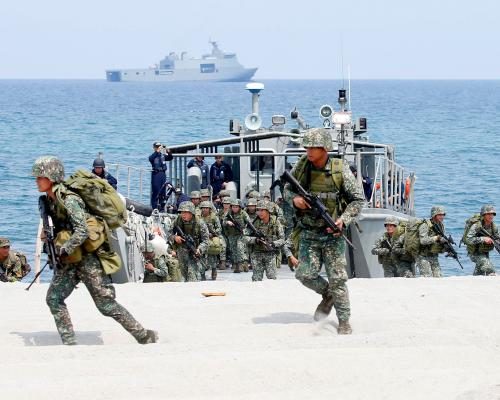
Since the ceasefire agreement was established on April 8, the Trump administration has dispatched over 10,000 additional troops to the area. The arrival of the Boxer Amphibious Ready Group and its Marine Corps task force at the end of the month is expected to bolster U.S. military presence in the region. This increase in military assets has led analysts to believe that a ground invasion is becoming more likely. Ali Vaez, the Iran project director at the International Crisis Group, stated, "If we pay more attention to what President Trump does rather than what he says, then a ground invasion is quite likely." Originally reported by The Guardian.
Vaez emphasized that Trump has historically used military force when significant assets are deployed. He noted, "We have not seen him deploying significant military assets to any theatre and ending up not using it." The buildup of troops suggests a heightened risk of mission creep, which could lead to a more extensive military engagement.
Iran's Preparedness for Conflict
The Iranian leadership appears to be preparing for a potential resumption of hostilities. Mohammad Bagher Ghalibaf, the speaker of the Iranian parliament, indicated that Tehran is ready to deploy "new cards on the battlefield" should fighting escalate. Iranian military planners have spent years preparing for a land invasion, and the regime seems confident in its ability to confront U.S. forces. Iranian Foreign Minister Abbas Araghchi expressed this confidence, stating, "No, we are waiting for them, because we are confident that we can confront them, and that would be a big disaster for them."
Analysts like Ashkan Hashemipour from the University of Oxford argue that Araghchi's defiance reflects Iran's current military capabilities. "If it's fought on the ground, he knows that they'll be even stronger," he remarked. This sentiment is bolstered by Iran's experience during the 1980-88 war with Iraq, which has shaped the military strategies of current Iranian leaders.
Lessons from the Iran-Iraq War
The Iran-Iraq War serves as a foundational experience for Iranian hardliners. They view the current conflict as a continuation of past efforts by the U.S. and its allies to undermine the Islamic Republic. Nader Hashemi, a professor of Middle East and Islamic politics at Georgetown University, explained, "That war was a foundational experience for the Iranian hardliners and conservatives. They viewed it not simply as a war between Iran and Iraq, but as a major attempt by the United States and the west to undermine the Islamic revolution."
Iran's Islamic Revolutionary Guard Corps (IRGC) is expected to employ asymmetric warfare tactics if a ground invasion occurs. The IRGC has been strategically divided into 31 provincial units, allowing for localized defense strategies that could complicate U.S. military operations. According to Saeid Golkar, a politics professor at the University of Tennessee at Chattanooga, this decentralized approach aims to create a mosaic of defenses throughout the country.
Potential for Escalation
The situation remains precarious as the ceasefire deadline looms. With both sides signaling readiness for conflict, the risk of a miscalculation that could lead to a larger confrontation is significant. The U.S. military is prepared for various scenarios, while Iran's leadership is increasingly vocal about its willingness to counter any potential invasion. As tensions rise, the international community watches closely, aware that the stakes have never been higher.
Looking ahead, the coming days will be crucial in determining whether diplomacy can prevail or if military action will redefine the U.S.-Iran relationship. The balance of power in the region hangs in the balance, and the consequences of any military engagement could resonate far beyond the Middle East.
Originally reported by The Guardian. View original.