
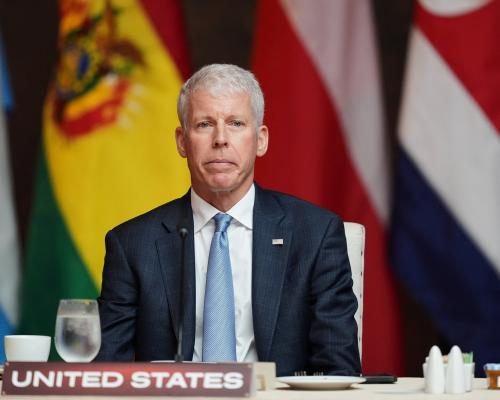
In the midst of escalating tensions due to the ongoing conflict in Iran, U.S. Energy Secretary Chris Wright provided reassurances on Sunday that the recent spike in energy prices is expected to subside within weeks. Speaking on CNN's State of the Union, Wright emphasized that the situation should not lead to prolonged economic instability.
As the geoPolitical Landscape evolves, particularly following U.S.-Israeli military actions in the region, concerns have heightened regarding supply chain disruptions and inflationary pressures. The conflict has notably impacted shipping routes through the Strait of Hormuz, a critical passage for oil transport, leading to fears over market volatility. Originally reported by The Guardian.
Short-Term Price Hikes Amidst Geopolitical Strain
Wright stated that the current surge in energy prices, which saw West Texas Intermediate (WTI) crude oil increase by 35% within just one week, is unlikely to last long. He remarked, "In the worst case, this is a weeks, this is not a months thing." This statement comes as American consumers feel the pinch at the pump, with regular gasoline prices rising 14% in a week to reach $3.41 per gallon, according to the AAA motor club.
The secretary reiterated that the U.S. has no intentions of targeting Iran's energy sector. "We're targeting zero energy infrastructure," he affirmed, referencing the recent attacks attributed to Israeli strikes on fuel depots in Tehran, where plumes of smoke were reportedly visible. These developments have stirred apprehension among consumers and analysts alike, who are watching closely for potential long-term implications on the global economy.
Administration's Strategy on Energy Stability
The Biden administration is working to frame the short-term rise in energy costs as a necessary consequence of addressing the long-term threat posed by Iran's military capabilities, particularly regarding its nuclear program. Wright pointed out that Iran has expanded its missile program, which could threaten regional allies and global stability.
He stated, "It is simply unacceptable for the United States, for the Middle East geography and for the world economy to have a terrorist regime with nuclear weapons and a gigantic missile arsenal." In an effort to reassure the public, White House press secretary Karoline Leavitt described the rise in gas prices as "a short-term disruption for a long-term gain," indicating a focus on eliminating Iran's influence over energy supplies.
Domestic Energy Prices: What Lies Ahead?
Amid the political and economic turbulence, Wright expressed optimism that domestic energy prices would eventually stabilize. He noted that the administration aims to bring gasoline prices back down to below $3 a gallon, stating, "It will be again before too long."
The urgency of addressing energy prices is underscored by the upcoming congressional elections in November, where cost of living remains a top concern for voters. In contrast, former President Donald Trump has expressed a more relaxed attitude toward the price fluctuations, stating, "I don't have any concern about it. They'll drop very rapidly when this is over."
As the situation continues to develop, there are indications that the U.S. military presence in the region is evolving in response to the threats posed by Iran. Leavitt highlighted the administration's support for political risk re-insurance for shipping vessels and U.S. Navy escort services through the Strait of Hormuz, aimed at ensuring the safe passage of energy supplies.
International Reactions and Future Implications
U.S. Ambassador to the United Nations Mike Waltz also weighed in on the situation, asserting that Iranian military threats are being systematically dismantled. He expressed optimism about potential diplomatic and military actions from Gulf states, which are increasingly united in their response to Iranian aggression.
As tensions persist, Wright acknowledged that while shipping traffic through the Strait of Hormuz has been reduced, there is hope for a return to normalcy. He noted a tanker had successfully transited the strait recently, although he admitted that the current traffic remains significantly below typical levels.
In this complex geopolitical climate, the U.S. administration is balancing immediate economic concerns against broader strategic objectives. The coming weeks will be crucial in determining how these dynamics will shape energy prices and international relations.
Originally reported by The Guardian. View original.