
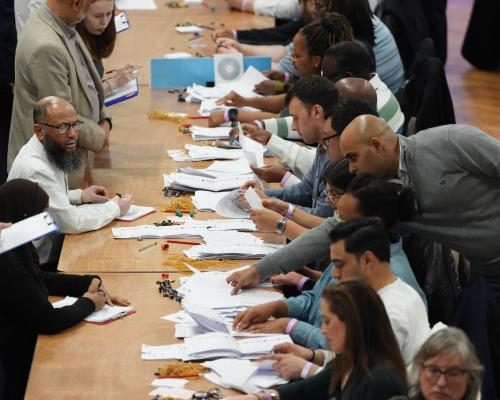
Elections across England, Scotland, and Wales are underway, with results from local councils and parliament elections eagerly anticipated. As counting begins, significant changes loom over Welsh politics, where the Welsh Parliament, known as the Senedd, is set to expand from 60 to 96 members. This shift is part of a newly implemented proportional electoral system, which could lead to major political upheaval.
Labour Faces Historic Setbacks in Wales
As the results are tallied, Labour is bracing for what many analysts predict to be its first loss of control over the Senedd since devolution began in 1999. The changes in the electoral system have led to expectations that Plaid Cymru, led by Rhun ap Iorwerth, could rise to prominence, potentially ushering in a new era focused on Welsh independence. Polls suggest that Labour's losses may be severe enough to place them as low as fourth in some districts, trailing behind not only Plaid Cymru but also the Green Party. Originally reported by The Guardian.
In a notable twist, Eluned Morgan, the current Labour first minister, is at risk of losing her seat. The introduction of a new list system means that margins are razor-thin; according to pollsters from More in Common, as little as 0.06% of the vote could determine the outcome of the last available seat in each constituency. As counting progresses, the dynamics of coalition-building will be crucial, with Plaid Cymru likely to form a minority government without formal agreements with Labour or the Green Party.
Key Contests in England and Scotland
Meanwhile, in England, the elections encompass 136 local councils and all 32 borough councils in London, with a total of 5,014 seats contested. Early results from Hartlepool could indicate whether Reform UK can convert its polling momentum into tangible gains. The declaration guide hints that Hartlepool might witness significant advances for Reform, a development that could reshape Labour's strategy in traditionally safe areas.
Oxford presents another interesting battleground, where Labour, the Greens, and the Liberal Democrats vie for similar voter bases. The fragmentation among progressive and anti-Conservative voters could lead to a diverse array of outcomes, complicating predictions. Moreover, Dudley, situated in a politically charged Midlands area, is under the spotlight as Labour faces challenges from Reform amid rising concerns over immigration and living standards.
Election Timeline and Anticipated Results
As the night unfolds, the first results in England are expected between midnight and 2 a.m., while counting in Scotland And Wales will not commence until around 9 a.m. Friday morning. This staggered timeline means that the initial declarations could set the tone for the entire electoral night, with observers keenly watching the early returns for signs of broader trends.
The excitement surrounding these elections also stems from the various mayoral contests, including those in Croydon, Hackney, Lewisham, Newham, Tower Hamlets, and Watford. With so many seats contested across jurisdictions, political analysts will be watching closely for any shifts that might signal a broader national trend.
Implications for Future Governance
The results from this election night could have lasting implications for governance in Wales and beyond. Should Plaid Cymru secure a significant number of seats, the issue of Welsh independence is likely to gain renewed focus. The potential for coalition dynamics shifting in Wales could also influence how Labour approaches future elections, especially if Reform UK manages to capitalize on discontent in areas they once dominated.
As counting continues, the political landscape in the UK is poised for potential realignment. The emergence of new players like Reform UK could challenge established parties, while the fallout from Labour's predicted losses will require introspection and strategy shifts moving forward.
With high stakes and unpredictable outcomes, this election night promises to reshape political narratives across England, Scotland, and Wales. As the clock ticks down to the first results, all eyes remain on the counting tables.
Originally reported by The Guardian. View original.