
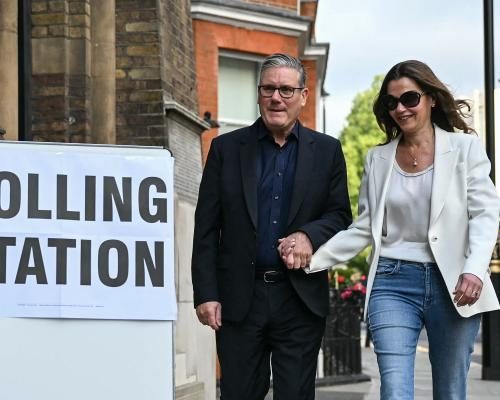
Millions of citizens across England, Scotland, and Wales flocked to polling stations today, casting their ballots in a pivotal election that could shape governance for the next four years. The stakes are high, with parties presenting various visions for the future as they campaign on pressing issues like the cost of living and local governance.
Wales Embraces a Call for Service
On the eve of the Elections, Rhun ap Iorwerth, the leader of Plaid Cymru, emphasized the core value of service in his message to Welsh voters. He stated, "Service is a value which has always sustained Wales." He recounted how this principle was instilled in him by his parents, both educators, and how he aims to impart this to his own children. Iorwerth urged voters to seize the opportunity to elect representatives who prioritize their needs. He asserted, "Tomorrow is a chance for the people of Wales to choose who serves our nation for the next four years." Originally reported by The Guardian.
He further articulated that Plaid Cymru is a party free from Westminster's influence, focusing solely on the interests of Wales. "As your first minister, service is a value that would guide me every day," he added, promoting a leadership style rooted in compassion and credibility. Iorwerth called on the electorate to support Plaid Cymru, promising a commitment to serving the Welsh people above all else.
Scotland's Quest for Change
In Scotland, First Minister John Swinney rallied voters to support the Scottish National Party (SNP) as a means to secure a brighter future. He asserted, "Today is Scotland's opportunity to choose a better future by voting SNP for real action on the cost of living." Swinney emphasized the party's plans to address the financial struggles faced by families, including lowering the cost of food and providing additional support for childcare and first-time homebuyers. He argued that the SNP is the only party with a clear plan to support constituents amidst rising living costs.
In his passionate appeal, he urged voters to unite behind the SNP to prevent figures like Nigel Farage from gaining influence. "I am asking people to vote for an SNP Government to get things done," he stated. Swinney stressed that a strong majority government could prioritize the cost of living and work towards independence, offering a fresh start for Scotland.
Liberal Democrats Stand Against Reform
Meanwhile, Ed Davey, leader of the Liberal Democrats, highlighted the urgency of the election as a critical juncture in British politics. He warned voters against the rise of the Reform party, led by Nigel Farage, describing their policies as potentially chaotic and detrimental to communities. "We've now seen what Reform looks like in power - banning journalists, scrapping renewables, closing care homes and raising council tax despite their promises," he stated. Davey painted a stark contrast between the Liberal Democrats and Reform, positioning his party as a defender of decency and the rule of law.
He encouraged voters to see the Liberal Democrats as the champions of their local communities, emphasizing their commitment to tangible solutions like fixing local infrastructure and addressing healthcare crises. "A vote for the Liberal Democrats is a vote for a local champion who works hard for their community," he claimed, urging voters not to make a choice they might regret.
Conservative Party's Vision for Local Governance
As polling day unfolds, Kemi Badenoch, the leader of the Conservative Party, presented her party's case for governance. Badenoch asserted that voters face a clear choice between a Conservative council that promises better services and lower taxes, or a chaotic alternative offered by Labour and Reform. "Under my leadership, the Conservative party has changed," she stated, emphasizing a commitment to delivering effective governance.
She urged voters to consider the implications of their choices, highlighting Conservative achievements in local councils and their plans for future improvements. Badenoch's message to voters was clear: choose stability over uncertainty, and opt for a party that prioritizes community needs.
As the polls close this evening, the outcomes across England, Scotland, and Wales will not only determine local leadership but may also reshape the political landscape for years to come. With each party presenting its vision for the future, the decisions made today will resonate through the corridors of power, ultimately impacting the daily lives of citizens.
Originally reported by The Guardian. View original.