
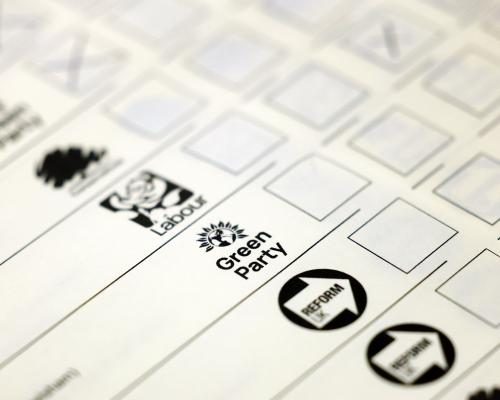
Political ambitions may hinge more on your name than your policies, as recent analyses reveal a significant trend among voters in England. Data from local elections indicates that candidates listed at the top of the ballot paper, particularly those with surnames beginning with letters early in the alphabet, have a distinct advantage. This phenomenon, often referred to as the 'alphabet effect', was highlighted in a recent report by The Guardian, utilizing results compiled by the Democracy Club.
Top of the Ballot Wins: A Statistical Breakdown
The analysis covered local elections held last week, focusing on wards where parties presented three candidates. Strikingly, candidates listed at the top of the ballot secured victory over their colleagues in 2,200 instances, translating to 65% of the time. In contrast, those positioned third on their party's list, often with surnames towards the end of the alphabet, won only 382 times, or about 11% of the time. If ballot order had no bearing on results, the expected win rates would approximate one-third for each position, indicating a clear bias toward candidates whose names are alphabetically advantageous. Originally reported by The Guardian.
Among the parties analyzed, Reform UK exhibited the strongest correlation between ballot position and electoral success. Approximately 74% of candidates with names at the top of the list achieved the highest vote totals within their party. Conversely, candidates whose names appeared nearer the bottom garnered fewer than 8% of top votes. The Green Party followed closely in demonstrating this surname effect, with Labour also showing significant but lesser impacts.
Real-Life Experiences: Candidates Speak Out
Juliet Zhong, who ran for Reform UK in Kensington and Chelsea, experienced the alphabet effect firsthand. In the Queen's Gate ward, her campaign materials prominently featured her name alongside her fellow candidates, Ms. Noble and Mr. Walker. Despite equal exposure, the election results showed a stark difference: Noble received 120 votes, Walker 115, while Zhong trailed with just 102 votes. "That is about 15% to 18% less. It makes no sense at all, as all our campaign materials featured all three of our names," Zhong remarked, expressing frustration over the apparent randomness of voter choice.
Zhong pointed out that her party colleague, Henry Woodruff, also noted similar trends in their group chat post-election. Woodruff secured 288 votes, while his colleagues received 320 and 345 votes, respectively. The top-vote earner, Andrew Barclays, was positioned at the top of the ballot, reinforcing Zhong's assertion that ballot order significantly influences results. She argued for a shift toward grouping candidates by party rather than alphabetically, stating, "It would surely be more logical for voters to see candidates classified by their party rather than playing a game of 'find the surname'."
Voter Awareness: Do Names Matter?
Interestingly, candidates who won while occupying the top alphabetical positions often downplayed the influence of their surnames. Nick Abear, a Green Party candidate elected in the Redhill West & Meadvale Ward, stated, "I hadn't really considered it because I think most people know who (or which party) they are going to vote for in advance of voting." Despite his own success, Abear acknowledged a notable difference in votes compared to his party colleague, Elly Heaton.
Andy Adams, a Liberal Democrat who recently won a council seat in Winchester, echoed similar sentiments. He has been aware of the alphabet effect for some time, having spent years running for election before finally securing a position this year. "In a very close election and at local level the numbers can be very close at times.. a very long list would reasonably be expected to give rise to the effect," he explained. Adams suggested that randomizing ballot papers could be a fairer alternative, stating, "I would probably support randomizing ballot papers in principle even if I would not stand to gain from such an innovation."
Understanding the Electoral Landscape
The electoral system in England varies, with many urban areas electing three councillors per ward while some rural regions may have fewer. During the recent elections, 864 wards had at least one party fielding three candidates. An analysis across all wards indicated that candidates with surnames beginning with letters A through M slightly outperformed their party averages, while those with names starting with W, Y, and Z lagged behind.
For aspiring politicians, the takeaway is clear: if your name is Zebedee Zurcher, you might want to reconsider your career path. The data suggests a significant correlation between alphabetical order and electoral success, raising questions about fairness and transparency in the democratic process. As voters and candidates reflect on these findings, discussions around ballot design could become increasingly pertinent.
Originally reported by The Guardian. View original.