
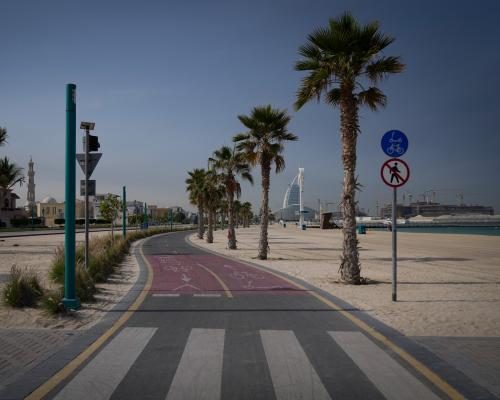
In a city renowned for its glitz and glamour, the escalating conflict between the US, Israel, and Iran is casting a long shadow over Dubai. Once viewed as a safe haven for tourists and expatriates, the United Arab Emirates is now grappling with an existential threat that has prompted a mass exodus of foreign residents and visitors. Analysts indicate that the UAE has endured more than two-thirds of Iran's missile strikes, which have disrupted the city's vibrant economy and shaken the foundations of the so-called 'Dubai dream.'
Exodus of Foreign Residents Amid Rising Tensions
As the conflict intensifies, reports reveal that tens of thousands of expatriates and tourists have abandoned Dubai in the wake of military hostilities. John Trudinger, a British headteacher who has lived in Dubai for 16 years, described the situation as a significant loss of allure for the city. "The shine has definitely been taken off," he said, noting that many teachers from the UK he employs have been traumatized by the sudden escalation of conflict. "They won't come back." Originally reported by The Guardian.
The emotional toll is palpable among those who remain. Alerts warning of potential missile threats now frequently ping on mobile devices, urging residents to seek shelter. Although over 90% of the 1,700 Iranian missiles aimed at the UAE have been intercepted, some have still struck crucial targets. Recent attacks targeted military bases, industrial complexes, and even Dubai Airport, temporarily shutting down a key aviation hub.
Economic Fallout for the City of Luxury
The economic implications for Dubai are expected to be severe. Tourism, which accounts for approximately $30 billion annually, has already taken a hit. The city's reliance on foreign visitors makes it particularly vulnerable, especially since more than 90% of its population consists of expatriates. Khaled Almezaini, a professor at Zayed University, emphasized the potential for significant financial losses if the conflict persists. "If this goes on for another 10 or 20 days, the impact on tourism, aviation, and expatriate businesses will be very difficult," he warned.
Taxi driver Zain Anwar, whose vehicle was destroyed in an attack on the Fairmont hotel, expressed his despair. "I don't want to be in Dubai anymore. There is no business, we are earning nothing since this war," he said. "A lot of taxi drivers like me are thinking of going to a different country now. Everybody knows that Dubai is finished."
Government Response and Public Sentiment
In an effort to maintain calm, Dubai's ruling Sheiks have taken measures to control the narrative surrounding the conflict. Following a surge of panic on social media, Dubai police threatened to arrest influencers sharing content that contradicts official statements. Officials have been keen to reassure the public that the sounds of explosions are merely part of the defense operations, labeling them as "the sound of safety."
Despite the turmoil, some residents and tourists maintain a facade of normalcy. Along Jumeirah Beach, social media influencers continue to post glamorous photos, while children play on inflatables in the water. Christina Hallis, a tourist from Ukraine, reflected on her experiences. "We're from Ukraine so unfortunately we came from one war zone to another, but that's life," she remarked. "I still feel safe here, I'm happy to come to the beach and we've enjoyed life here. You wouldn't know there's a war."
Human Cost and Animal Welfare Concerns
The implications of the crisis extend beyond human residents. As the exodus of tourists and expatriates continues, hundreds of pets have been abandoned in the city. This has raised significant concerns among animal welfare advocates about the fate of these pets, once cherished by social media stars. The rapidly changing landscape of Dubai not only affects human lives but also the countless animals left behind.
The ongoing conflict presents a stark reminder of the fragility of Dubai's status as a global destination. As the city battles a loss of its reputation, the potential long-term consequences for its economy and community become increasingly concerning.
With the situation continuing to evolve, the residents of Dubai are left to navigate a city that was once synonymous with luxury and stability, now caught in the crosshairs of geopolitical strife. The future remains uncertain as both locals and expatriates weigh their options in a city that seems to have lost its luster.
Originally reported by The Guardian. View original.