
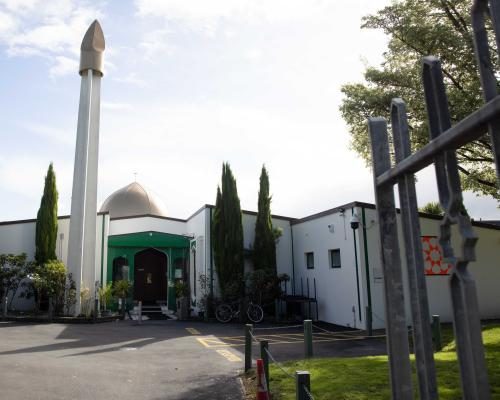
The Australian white supremacist Brenton Tarrant, responsible for the tragic mass shooting that claimed 51 lives at two mosques in Christchurch, New Zealand, in 2019, has been denied the opportunity to appeal against his guilty pleas. This ruling came from one of New Zealand's highest courts, which characterized his appeal as "utterly devoid of merit." Tarrant had sought to challenge his guilty pleas, arguing that adverse prison conditions had impaired his mental health and driven him to confess to the heinous crimes.
Court's Ruling on Mental Health Claims
In a decision released on Thursday, the Court of Appeal dismissed Tarrant's claims regarding his mental state, asserting that they were inconsistent with observations from prison authorities, mental health professionals, and his own trial lawyers. The judges stated, "He endeavoured to mislead us about his state of mind in a weak attempt to advance an appeal in circumstances where all other evidence demonstrated that he made an informed and totally rational decision to plead guilty." The court emphasized that Tarrant was not coerced or pressured into admitting his guilt, stating, "The evidence overwhelmingly demonstrates that he was not suffering any significant psychological impacts as a result of his prison conditions at the time he pleaded guilty." Originally reported by The Guardian.
Tarrant's attempt to explain the delay in filing his appeal was also deemed insufficient by the court. Despite having access to legal counsel, he failed to provide a satisfactory rationale for his late application. The judges concluded, "The court concludes that Mr Tarrant's proposed appeal is utterly devoid of merit." This determination follows Tarrant's guilty pleas in March 2020, where he admitted to 51 counts of murder, 40 counts of attempted murder, and one count of terrorism.
Background of the Christchurch Attack
The Christchurch shooting in March 2019 marked the deadliest mass shooting in New Zealand's history. Tarrant, who relocated to New Zealand in 2017 with intentions of executing a white supremacist attack, meticulously planned the assault for months. He conducted reconnaissance on the targeted mosques, distributed a manifesto filled with his extremist views, and live-streamed parts of the attack on social media, which horrified viewers worldwide.
In August 2020, Tarrant was sentenced to life in prison without the possibility of parole, becoming the first individual in New Zealand to receive such a sentence. The government's response to the attack included a ban on military-style semi-automatic weapons and the establishment of a comprehensive firearms registry. An ongoing inquiry into the attacks stands as the largest coronial investigation in the nation's history, reflecting the profound impact of the tragedy on New Zealand society.
Expert Testimonies Questioning Tarrant's Claims
During the appeal hearing, which commenced on February 9, Tarrant claimed that his mental health had significantly deteriorated due to the solitary confinement conditions he faced in prison. He described suffering from "nervous exhaustion" at the time he entered his guilty pleas, suggesting he felt pressured to confess as his trial approached. However, testimonies from his former lawyers, psychologists, and prison staff contradicted Tarrant's assertions, pointing to his fitness to enter pleas and the absence of any significant mental distress that could have influenced his decision.
Crown lawyer Barnaby Hawes highlighted Tarrant's reliability as a witness, urging the court to treat his narrative with skepticism. He remarked that the evidence of Tarrant's guilt was overwhelmingly clear, stating that he had livestreamed the attacks and left little doubt that a guilty verdict would have been secured had the case gone to trial. Experts asserted that Tarrant's claims of mental health distress were unfounded and that he had been competent to make informed decisions regarding his legal matters.
Future Implications of the Ruling
The court's ruling not only solidifies Tarrant's status but also sends a strong message regarding the accountability for hate-fueled violence. As Discussions surrounding gun control and public safety continue to evolve in New Zealand, the Christchurch attacks have influenced significant legislative changes aimed at preventing similar tragedies. As the inquiry into the attacks proceeds, there remains the possibility that Tarrant could be called as a witness, despite objections from survivors and the families of victims.
As New Zealand grapples with the repercussions of the Christchurch shooting, the court's decision reinforces the necessity for vigilance against extremist ideologies. The legal system's firm stance on Tarrant's appeal reflects a commitment to justice for the victims and a broader societal rejection of hate-driven violence.
Originally reported by The Guardian. View original.