
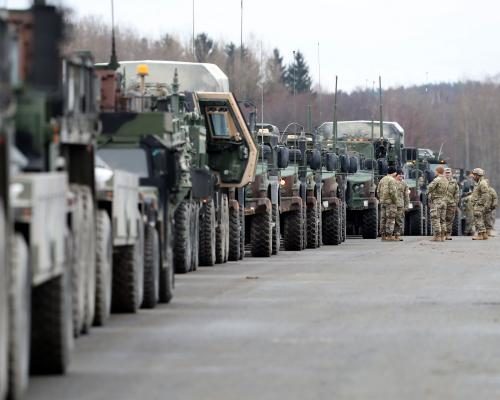
In a move that could significantly impact U.S.-European relations, President Donald Trump has announced that his administration is contemplating a reduction of U.S. troop presence in Germany. This announcement comes shortly after German Chancellor Friedrich Merz criticized the U.S. for being "humiliated" by Iran in ongoing negotiations. Trump's statement, shared on his Truth Social platform, indicated that a decision regarding troop levels would be made in the near future.
Escalating Tensions Over Iran Negotiations
The backdrop to Trump's troop reduction threat is a growing strain in negotiations with Iran, particularly concerning the country's nuclear program and the recent closure of the vital Strait of Hormuz. Chancellor Merz, commenting on the situation, suggested that the U.S. was being outmaneuvered in Discussions aimed at securing peace and reopening crucial trade routes. He remarked, "The Iranians are obviously very skilled at negotiating, or rather, very skillful at not negotiating, letting the Americans travel to Islamabad and then leave again without any result." Merz's remarks highlight the frustration felt in Europe regarding U.S. diplomatic efforts in the Middle East. Originally reported by The Guardian.
Merz reiterated his concerns on Wednesday, noting that Europe is "suffering" due to the ongoing crisis, particularly with the closure of the Strait of Hormuz, a significant chokepoint for global oil shipments. The situation has been exacerbated by Trump's recent decision to cancel a second trip by U.S. negotiators to Islamabad, leaving discussions about Iran's nuclear ambitions and sanctions relief at a standstill.
Trump's Sharp Criticism of German Leadership
In an unexpected retort to Merz's comments, Trump accused the German Chancellor of being complacent about Iran's nuclear capabilities. He claimed that Merz believed it was "OK for Iran to have a nuclear weapon" and asserted that the Chancellor "doesn't know what he's talking about!" Despite these inflammatory remarks, Merz downplayed the tension, asserting that his relationship with Trump remains "as good as ever. However, the president's threats regarding troop withdrawals are likely to raise alarms in Berlin and beyond.
Trump's position on NATO has been increasingly aggressive, with the President previously stating he was "absolutely without question" considering withdrawing from the alliance due to perceived failures by European allies to support U.S. military efforts against Iran. This reflects a broader trend of strain in transatlantic relations, particularly as Trump's administration has issued warnings regarding NATO commitments.
Potential Consequences of Troop Reductions
If the U.S. were to follow through on troop reductions in Germany, it would have significant implications for European security dynamics. Currently, nearly 85,000 U.S. troops are stationed across Europe, with over 39,000 based in Germany alone. These troops are integral not only for NATO operations but also for maintaining a presence in a region seen as critical for both U.S. and European interests.
Experts caution that while outright withdrawal appears unlikely due to U.S. legislation enacted in 2024-requiring a two-thirds Senate majority or Congressional action to withdraw from NATO-the administration could adopt measures that undermine the alliance without formally pulling troops. Such actions could include reducing troop numbers or altering military commitments, which could further fracture the already tenuous U.S.-European alliance.
Future of U.S.-NATO Relations
The prospect of troop reductions raises questions about the future of U.S.-NATO relations, especially amid heightened global tensions. Many observers warn that any reduction in U.S. military presence could embolden adversaries and destabilize the region. As NATO grapples with evolving security challenges, including Russian aggression and Middle Eastern conflicts, the need for a united front becomes increasingly urgent.
As this situation develops, the implications of Trump's proposed troop reductions will undoubtedly reverberate across Europe and the broader international landscape. The coming days will be critical as the administration finalizes its decision regarding troop levels in Germany, a move that could redefine the strategic posture of the U.S. in Europe.
Originally reported by The Guardian. View original.