
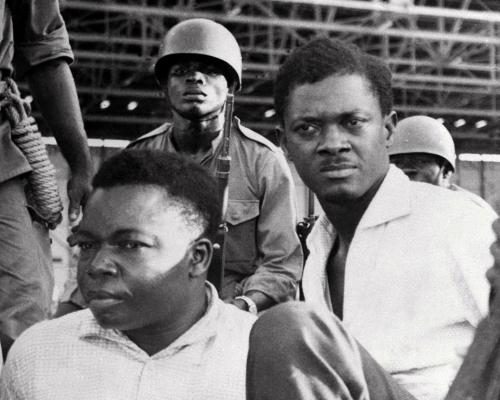
When it comes to belgian court sends ex-diplomat, 93, to trial over 1961 murder of congo leader, a Brussels court has ruled that Étienne Davignon, a 93-year-old former Belgian diplomat, will stand trial for his alleged involvement in the 1961 assassination of Patrice Lumumba, the first prime minister of the Democratic Republic of the Congo. This decision marks a significant moment in Belgium's reckoning with its colonial past, particularly regarding the violent history surrounding Lumumba's leadership.
Davignon is the last surviving individual from a list of ten Belgians accused by Lumumba's family of complicity in the murder. He faces charges related to participation in war crimes, as the court's ruling stems from a surprising referral by the Brussels prosecutor in June 2023, allowing for the trial to proceed. While the court's decision can be appealed, it underscores a growing willingness in Belgium to confront difficult historical truths. Originally reported by The Guardian.
Understanding Belgian Court Sends Ex-diplomat, 93, To Trial Over 1961 Murder Of Congo Leader
Patrice Lumumba was a pivotal figure in the movement for Congolese independence, which was achieved in June 1960. His government was short-lived, as he faced significant opposition both domestically and internationally. Lumumba was ultimately detained, tortured, and executed by firing squad in January 1961, following a coup supported by Belgian mercenaries. Alongside him were his associates Joseph Okito and Maurice Mpolo, who also met similar fates.
The brutality of Lumumba's death has left a lasting scar on the Congo's history and has been a point of contention in Belgium's post-colonial narrative. A parliamentary inquiry in 2001 found that Belgian ministers bore a moral responsibility for the events leading to Lumumba's assassination, highlighting the complicity of the Belgian state in the violence that unfolded.
Davignon's Allegations and Legal Proceedings
Étienne Davignon's charges center on his alleged role in Lumumba's unlawful detention and transfer, along with accusations of denying him a fair trial and subjecting him to inhumane treatment. Notably, a charge of intent to kill was dismissed during the proceedings. Davignon, who served in various prominent political and business positions after his diplomatic tenure, did not attend the hearing at the Palais de Justice in Brussels, and his legal team has yet to issue comments following the court's decision.
Davignon's lawyer previously argued against the war crimes allegations, stating that the case had exceeded the reasonable time limit for prosecution. The court's ruling, however, reflects a broader movement within Belgium to address the legacy of colonialism and the injustices perpetrated during that era.
Family's Response and Belgium's Reckoning
Mehdi Lumumba, the grandson of Patrice Lumumba, expressed relief at the court's decision, stating, "Belgium is finally confronting its history." This sentiment resonates deeply within the Congolese community and among those advocating for justice regarding historical injustices. The trial represents not only a legal proceeding but also a significant acknowledgment of the impact of colonial actions on contemporary society.
In a related move, Belgium returned a gold-capped tooth, a macabre souvenir kept by one of the Belgians involved in Lumumba's murder, to the Lumumba family in 2022. This act was part of a broader initiative to address the lingering effects of colonialism. At that ceremony, Belgian Prime Minister Alexander De Croo reiterated the moral responsibility of the Belgian state for Lumumba's murder, emphasizing the need for historical accountability.
De Croo remarked, "Belgian ministers, diplomats, officials, and officers had perhaps no intention to have Patrice Lumumba assassinated. No evidence has been found to support this. But they should have realized that his transfer to Katanga put his life in danger." Such statements illustrate a shift in Belgium's approach to its colonial past, as the nation grapples with the implications of its history.
The upcoming trial of Étienne Davignon is a pivotal moment not only for the Lumumba family but also for Belgium as a nation. It reflects a growing recognition of the need to confront past wrongs and engage in a dialogue about the lasting effects of colonialism on both Belgium and the Democratic Republic of the Congo. As the trial unfolds, it may pave the way for further discussions on accountability and reconciliation between former colonial powers and the nations they once controlled.
Originally reported by The Guardian. View original.