
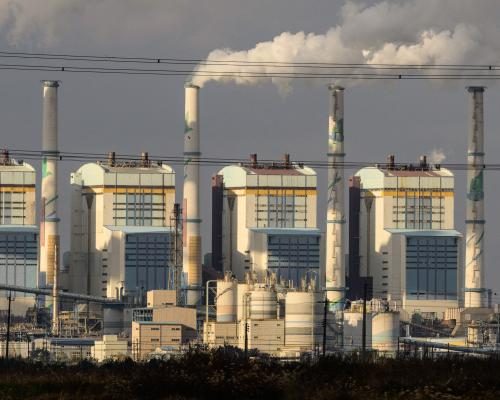
As the US-Israel conflict over Iran stretches on, governments across Asia are increasingly relying on coal to address significant energy shortfalls. This shift comes as nations seek to compensate for the disruption in imported energy, predominantly sourced from the Middle East. Experts warn that this growing dependence on coal could have dire environmental consequences and urge for a pivot toward renewable energy as a more sustainable solution.
Coal Consumption Skyrockets Across Asia
In response to the ongoing energy crisis, Asian countries are ramping up coal utilization, the most polluting fossil fuel available. South Korea has announced plans to delay the shutdown of its coal-fired power plants and has lifted restrictions on coal-derived electricity generation. Meanwhile, Thailand has increased output at its largest coal facility to meet rising demand. The Philippines declared a "national energy emergency," leading to plans to enhance operations of its coal plants. Originally reported by The Guardian.
In South Asia, India, which relies heavily on coal for around 75% of its energy needs, has instructed its coal plants to maximize output and minimize planned outages. Bangladesh has also stepped up coal generation and imports, notably increasing its coal-fired power production in March. With these measures, countries are scrambling to fill the gaps left by diminished supplies of liquefied natural gas (LNG), often viewed as a transitional fuel toward cleaner energy.
Supply Disruptions Intensify Energy Shortages
The war's effects have been felt acutely, particularly with the closure of the Strait of Hormuz, a critical waterway through which about 20% of the world's LNG shipments pass. Furthermore, strikes on significant LNG export facilities in Qatar threaten to exacerbate these already critical shortages. According to Henning Gloystein, managing director of energy and resources at Eurasia Group, nearly 30 billion cubic meters of LNG have been removed from global supply chains, with over 80% of this loss impacting the Indo-Pacific region.
"The global market has flipped within four weeks from quite a healthy supply surplus.. into a very severe deficit," Gloystein stated. He emphasized that countries with coal reserves will increasingly rely on this resource as it's the quickest and most economical way to replace the LNG supply. However, Gloystein also noted that nations like India are simultaneously accelerating their investments in renewable energy, indicating a dual approach to the crisis.
Experts Urge for a Shift Toward Renewables
Climate and energy experts are sounding alarms about the rapid return to coal, arguing it represents a step backward in global efforts to combat climate change. Pauline Heinrichs, a climate expert at King's College London, asserted that the current situation should serve as a wake-up call for governments in Asia. "The impact of coal on climate and health outcomes is devastating and disastrous," she warned, emphasizing the need for a transition to renewable energy sources.
Heinrichs pointed out that countries with substantial renewable energy capacities are less vulnerable to fluctuations in fossil fuel prices. "Those economies that have a substantial amount of renewable energy are in fact less vulnerable," she added. This sentiment is echoed by Dinita Setyawati, senior energy analyst for Asia at Ember, who highlighted that homegrown renewables are essential for enhancing energy security and resilience.
Innovative Solutions for Energy Conservation
In light of the energy crisis, various Asian nations are implementing strategies to reduce energy consumption. The Philippines and Sri Lanka have introduced four-day work weeks for many government employees, while Vietnam is encouraging remote work to lessen electricity demands. Bangladesh has closed universities early to conserve energy and has initiated planned blackouts, while Pakistan has shifted schools to remote online learning.
Gloystein warned that the repercussions of the current energy disruption will linger for years. "This isn't a short-term thing," he said, indicating that the damage inflicted on the LNG supply chain will take a long time to rectify. As nations grapple with the immediate fallout of the energy crisis, the long-term implications for coal use and renewable energy investment will be crucial for Asia's energy landscape moving forward.
As coal consumption surges, the urgency for a sustained commitment to renewable energy sources grows stronger. The path forward must prioritize investments in clean energy technologies to ensure energy security and environmental sustainability in the region.
Originally reported by The Guardian. View original.