
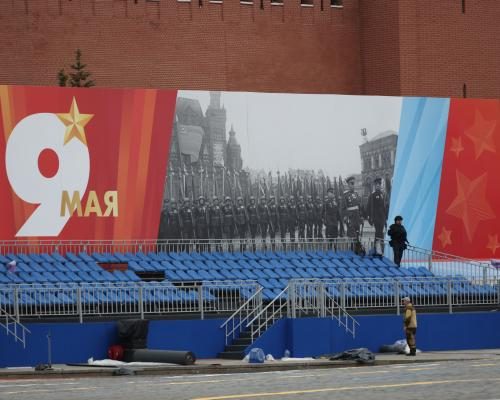
Ukrainian President Volodymyr Zelenskyy has issued a decree allowing Russia's Victory Day military parade to take place on May 9, 2026, while ensuring that no Ukrainian weapons will be aimed at Red Square during the event. This announcement comes in the wake of a newly confirmed ceasefire betweenUkraine and Russia, set to last from May 9 to 11.
Zelenskyy's decree, which carries a tone that some interpret as sarcastic, states, "I hereby decree: to permit the holding of a parade in the city of Moscow (Russian Federation) on May 9, 2026." In a bid to mock Russian authorities, he added that "the territorial sector of Red Square shall be excluded" from any potential deployment of Ukrainian military assets. This declaration follows a week of tension where the Kremlin sought a "permit" from Kyiv for its planned parade, amid accusations from Ukraine of the Russian government's fear of drone attacks on its ceremonial display. Originally reported by The Guardian.
Ceasefire and Military Escalation
The ceasefire, spanning the Victory Day holiday, aims to ease hostilities temporarily, yet Zelenskyy has pointed out that Russian assaults have not lessened. He remarked, "Despite the announced ceasefire, the enemy has not reduced the intensity of its assaults." Russian forces claim to have taken control of the village of Kryva Luka in Ukraine's eastern Donetsk region, a report that remains unverified by independent sources like Reuters.
Amid this backdrop, Ukrainian forces have regained small territories in the southeast, highlighting a complex battlefield scenario where both sides seek strategic advantages. Zelenskyy's visit to the frontlines reflects his administration's focus on maintaining morale and operational transparency during this tense period.
Drone Activity and Environmental Concerns
In an unexpected twist, a significant forest fire erupted in the Chornobyl exclusion zone after a drone crash near the defunct nuclear plant. Ukrainian authorities confirmed the incident, stating that radiation levels remained within normal limits, despite the blaze raising alarms about safety in the region. The fire, which began on Thursday, is under control with firefighting teams deployed to address the situation. This incident highlights ongoing concerns regarding drone usage in the conflict, particularly near sensitive sites.
For context, Ukraine has previously accused Russia of recklessly targeting nuclear facilities, including Chornobyl. A previous incident in 2025 saw a Russian drone cause extensive damage to radiation containment shells at the site, raising fears about the potential for disaster amid ongoing military operations.
Ukrainian Strikes on Russian Infrastructure
In retaliation for ongoing assaults, Ukraine's SBU security service has launched a series of strikes on Russian oil facilities, targeting a Lukoil-owned refinery in Perm for the second consecutive day. This attack, part of a broader strategy, resulted in significant damage to a major oil processing facility located about 1,500 kilometers from Ukraine.
Zelenskyy praised the successful strike on an oil depot in the Yaroslavl region, located approximately 200 kilometers northeast of Moscow. As a precautionary measure, at least 13 airports in southern Russia were closed due to the heightened threat of Ukrainian attacks, demonstrating the ongoing volatility in the region.
The air force spokesperson, Yuriy Ihnat, noted that Ukraine is struggling with a shortage of air defense missiles following Russia's extensive winter campaign. He stated, "Today, the launchers assigned to certain units and batteries are half-empty - and that's putting it mildly." This shortage has forced Ukraine to request small quantities of missiles from allies, further complicating its defense strategy amidst ongoing aerial threats.
Economic Impact of Conflict
The economic ramifications of the conflict are severe, with Ukraine's energy sector suffering approximately $25 billion in damage due to Russian bombardments. The World Bank estimates that the total cost for rebuilding and recovery in the sector could exceed $90 billion. This economic strain is compounded by ongoing attacks on critical infrastructure, including power substations, which have been increasingly targeted by Russian drones.
Moreover, Russia has expressed dissatisfaction with recent actions by Israeli authorities, who reportedly turned away a grain shipment from Haifa after Ukraine claimed the cargo was illegally sourced from occupied territories. This diplomatic spat underscores the broader geopolitical tensions surrounding the conflict, as Ukraine continues to leverage international channels to assert its claims.
As the situation evolves, both nations remain entrenched in their positions, with the ceasefire providing only a temporary respite amid ongoing military and economic challenges. The coming weeks will be critical as both sides navigate the complexities of warfare and international diplomacy.
Originally reported by The Guardian. View original.