
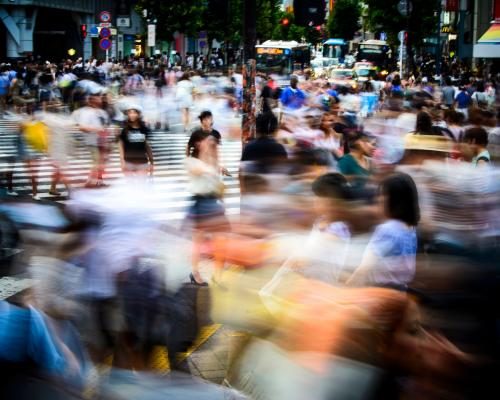
A viral video capturing a young girl being shoved to the ground in Tokyo has raised alarms about a worrying trend known as "butsukari otoko," or "bumping man." The incident, filmed on February 25 at Shibuya's crowded scramble crossing, shows the girl cheerfully making a peace sign before being violently knocked over by a woman wearing a surgical mask. This startling event has not only garnered over a million views on Instagram but has also highlighted a series of similar incidents plaguing Japan.
Understanding the Bumping Phenomenon
The term "butsukari otoko" refers to intentional shoulder-barging incidents, primarily targeting women in crowded public spaces. The first notable incident that caught public attention occurred in 2018 when a video surfaced of a man deliberately pushing into women at Shinjuku station, the busiest railway station globally. Since then, reports of similar assaults have emerged, including a case last May where a 59-year-old associate professor was arrested in Fukuoka for assaulting multiple passersby with his bag. He faces a prison sentence of up to two years or a fine of ¥300,000 (approximately $1,895). Other serious incidents have also been reported, such as a woman suffering broken ribs after being struck near Tamachi station in Tokyo, prompting commuters to stay in designated lanes separated by bollards. Originally reported by The Guardian.
Gender Dynamics and Societal Pressures
Experts attribute the rise in these bumping incidents to a complex interplay of gender dynamics and the pressures of contemporary life in Japan. Kiryu Masayuki, a sociology professor at Toyo University specializing in criminal psychology, noted that traditional notions of masculinity are increasingly being challenged. He stated, "Old-fashioned ideas, such as the belief that men are superior to women, are still deeply rooted. But in today's world, where the job market is tough and people are uncertain about the future, traditional ideas of masculinity have been lost." According to this perspective, some men may resort to such low-risk forms of aggression as a way to vent their frustrations, believing they can easily blend in with the crowd and avoid repercussions.
The Role of Social Media and Tourism
Japan's booming tourism industry has compounded the issue, as the influx of visitors eager to snap the perfect Instagram shot contributes to crowded public spaces. After the viral incident involving the young girl, who is from Taiwan, the Chinese embassy in Tokyo issued a warning to its citizens, advising them to maintain a safe distance from others and to avoid using smartphones while walking in busy areas. The assailant's actions, which included elbowing another man and brushing against another child before pushing the girl, indicate a troubling trend where individuals exploit crowded environments for aggressive behavior.
Public Reaction and Ongoing Concerns
The public's reaction to the incident has been largely one of condemnation. Many commenters on social media criticized the woman's actions while questioning the wisdom of filming in such a congested space. The girl's mother, who recorded the incident, expressed her shock, stating that she had inadvertently captured a "terrifying scene." Despite her daughter being unharmed, she faced harsh criticism online for her decision to take photos at the crossing. "I admit I may have been careless about the flow of people. But it wasn't like I was ignoring traffic rules," she explained, referring to guidance provided on the Go Tokyo website, which encourages visitors to take photos at iconic locations.
As this troubling trend continues to gain visibility, it raises critical questions about safety in public spaces across Japan. The lack of official statistics on these incidents further complicates efforts to address the issue. A recent survey of 21,000 individuals revealed that 14% had experienced being a victim of bumping, while 6% reported witnessing such an assault, with 5% experiencing both. The ongoing discussions surrounding gender dynamics, societal pressures, and the impact of tourism suggest that addressing the bumping phenomenon will require a multifaceted approach.
As the dialogue surrounding this issue evolves, it remains to be seen how Japanese society will respond to these alarming incidents and what measures will be taken to ensure safer public spaces for all.
Originally reported by The Guardian. View original.