
The recent conflict between the United States and Iran culminated in a last-minute two-week Ceasefire, sparking significant implications for the UK's geopolitical status. Following threats from former President Donald Trump to launch extensive military strikes, the diplomatic intervention led to an agreed halt in hostilities and a temporary reopening of the critical Strait of Hormuz. This situation has underscored troubling realities about the UK's military preparedness and its once-celebrated special relationship with the United States.
Shifting Dynamics in UK-US Relations
When Keir Starmer first took office as UK Prime Minister, he worked diligently to foster a strong rapport with Donald Trump, earning a reputation as a diplomatic ally. During a visit to the Oval Office, Starmer extended an "unprecedented" invitation for a second state visit from the King, and Trump remarked that they got along "famously." However, the recent conflict has severely strained this relationship. Starmer's decision not to support initial military strikes in the Middle East prompted an angry response from Trump, who has publicly derided Starmer as "no Winston Churchill" and criticized the UK's military capabilities. Originally reported by The Guardian.
Starmer has since distanced himself from Trump while maintaining that the UK-US relationship remains essential. He stated, "Sharing intelligence every day to keep our people safe - that is the special relationship in action. Hanging on to President Trump's latest words is not the special relationship in action." This apparent rift reflects a broader struggle for the UK to redefine its global standing amid changing international dynamics.
Concerns Over Military Capability
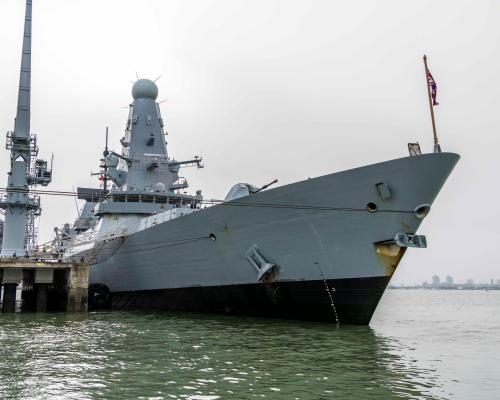
The ongoing conflict has exposed alarming weaknesses in the UK's military readiness. Following an attack on RAF Akrotiri by an Iranian-made drone, the British destroyer HMS Dragon arrived in the eastern Mediterranean three weeks later, highlighting logistical challenges within the military. According to Matthew Savill, director of military sciences at the Royal United Services Institute think tank, this delay illustrates that "one of the military's big problems is giving the government contingency options."
Former First Sea Lord Admiral Lord West of Spithead described the current state of the navy as the most "parlous" in sixty years, citing a smaller, underfunded fleet incapable of adequately protecting the nation. The UK's naval strength has dwindled dramatically since the end of the Cold War; from 51 destroyers and frigates in 1990 to just 13 today. Although the UK currently allocates 2.4% of its GDP to defense, Labour has pledged to increase this figure to 2.5% by April 2027. During last summer's NATO summit, Starmer committed to raising defense budgets to 3.5% of GDP by 2035, yet a detailed ten-year investment plan remains delayed with no clear timeline for release.
Energy Vulnerabilities Amidst Global Tensions
The conflict in the Middle East carries dire consequences for energy prices in the UK. Even if the Strait of Hormuz reopens promptly, energy analysts warn of significant cost-of-living challenges, particularly at the petrol pumps. Goldman Sachs has predicted that fuel prices could soar back to 2022 levels, while sustained disruptions in global gas supplies might push energy bills up by £900, reaching a staggering £2,500 per year.
The UK's dependency on energy imports exacerbates its vulnerability to price shocks. A recent report from the energy department revealed that in 2024, the UK sourced 75.2% of its primary energy needs from fossil fuels, predominantly oil and gas. Net import dependency climbed to 43.8%, marking a rise of 3.4 percentage points since 2023. Despite ongoing efforts to bolster domestic energy production through renewables and nuclear sources, the UK remains far from achieving self-sufficiency.
Starmer's Political Future in Question
As tensions escalated between the US and Iran, concerns about Starmer's political stability also increased. He had previously managed to fend off internal challenges, such as from Andy Burnham, by preventing him from contesting in the Gorton and Denton by-election. However, many MPs expressed doubts about Starmer's leadership, suggesting that his days as Prime Minister could be numbered amidst ongoing crises.
While the military situation unfolds and the impact of rising energy prices looms, the UK government faces a critical moment. The need for a robust strategy to address both military readiness and energy security has never been more urgent, as the ramifications of the Iran conflict resonate far beyond its borders.
Originally reported by The Guardian. View original.