
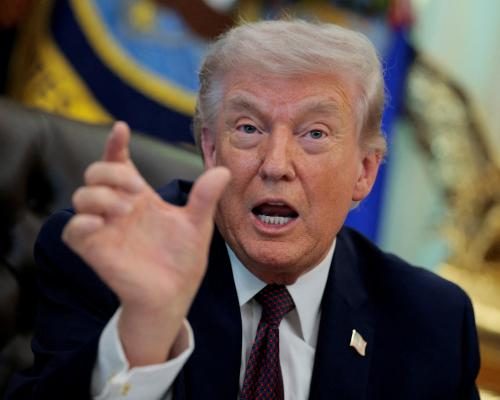
The United States and Iran reached a tentative two-week ceasefire on Tuesday, just an hour before President Donald Trump's ultimatum to escalate military action was set to expire. This unexpected agreement also includes Tehran's commitment to temporarily reopen the strategic Strait of Hormuz, a crucial waterway for global oil transportation. Israel has reportedly backed the ceasefire, according to a statement from the White House, as Trump suspended his plans for heightened military engagement in the region. The president described a 10-point proposal from Iran as a potential "workable basis on which to negotiate," but the specifics of this plan raise critical questions about its viability and the likelihood of U.S. acceptance.
Decoding Iran's 10-Point Proposal
The 10-point plan presented by Iran demands extensive concessions from the U.S., many of which have been previously rejected. Key stipulations include the complete lifting of all primary and secondary sanctions against Iran, which have severely impacted its economy. Furthermore, Iran insists on maintaining control over the Strait of Hormuz, a contentious point given that it had no such authority prior to the ongoing conflict. Additionally, the proposal calls for a U.S. military withdrawal from the Middle East, an end to attacks on Iran and its allies, the release of frozen Iranian assets, and a binding UN Security Council resolution to formalize any agreements reached. Originally reported by The Guardian.
Interestingly, the Farsi version of the proposal included a demand for "acceptance of enrichment" related to Iran's nuclear program, a detail that was conspicuously absent from the English translations shared with international media. This omission raises concerns about the transparency and intentions behind Iran's diplomatic overtures.
Implications for the Strait of Hormuz
The implications of the ceasefire for the Strait of Hormuz are significant. Iranian Foreign Minister Abbas Araghchi stated that safe passage through the strait would be managed by Iranian military forces. However, it remains unclear whether this means Iran will fully relinquish control of the strategic waterway. Reports indicate that Iran and Oman may impose a fee of up to $2 million per ship for vessels transiting through the strait, with funds generated being earmarked for reconstruction efforts.
If the peace talks falter, Tehran has hinted it could once again close the strait, a move that would have severe repercussions for global oil markets and international trade. The strait is vital for the passage of approximately 20% of the world's oil supply, making any instability in the region a matter of international concern.
Challenges Ahead for U.S.-Iran Negotiations
As the U.S. and Iran engage in discussions over the terms of the ceasefire and the broader 10-point plan, significant challenges loom. The stark differences in the demands of both parties have long been a barrier to a lasting agreement. In particular, Iran's insistence on control over the Strait of Hormuz has raised alarms among U.S. officials and lawmakers. Democratic Senator Chris Murphy expressed grave concerns, stating, "Who knows if any of that is true, but if this agreement gives Iran the right to control the strait, that is cataclysmic for the world."
While President Trump has refrained from directly addressing Iran's demands, he did mention U.S. efforts to alleviate traffic congestion in the Strait of Hormuz, suggesting a potential shift in approach. Experts believe that Iran's maximalist demands may serve as a starting point for negotiations rather than a framework for agreement, indicating that both sides will need to make significant compromises to reach a solution.
Role of Regional Players and Future Talks
Israel's stance on the recent developments adds another layer of complexity to the negotiations. Israeli Prime Minister Benjamin Netanyahu's office stated that while they support the U.S. decision to pause military strikes against Iran, the ceasefire does not extend to Lebanon, where conflict has escalated due to Hezbollah's involvement. Netanyahu emphasized the need for immediate action from Tehran to open the Strait of Hormuz and cease attacks against U.S. interests in the region.
Looking ahead, Pakistani Prime Minister Shehbaz Sharif, who played a pivotal role in mediating the ceasefire, has invited both Iranian and U.S. delegations to meet in Islamabad on Friday. Tehran has confirmed its willingness to participate, while the White House is contemplating in-person talks. With Trump's approval ratings dwindling as the midterm elections approach, the stakes for successful diplomacy have never been higher.
Originally reported by The Guardian. View original.