
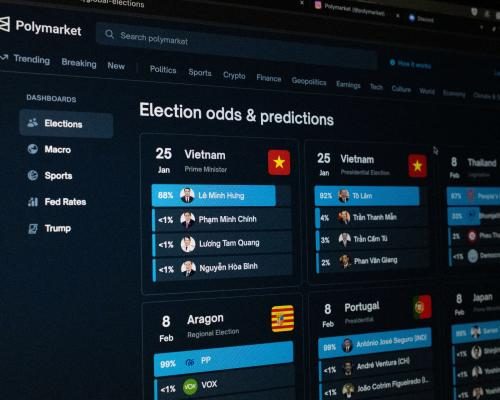
In an era where global crises are increasingly commodified, online prediction markets like Polymarket are transforming significant world events into high-stakes betting opportunities. From conflicts like the Ukraine war to the frequency of social media posts by high-profile figures, almost anything can become a wager. On Polymarket, users are placing millions on outcomes ranging from geopolitical agreements to religious predictions, exemplifying a unique blend of finance and forecasting.
Polymarket allows users to bet on a myriad of events, with options that include the likelihood of a US-Iran peace agreement or even the timing of the second coming of Jesus Christ, currently estimated at a mere 4% chance with $57 million in total wagers. As this phenomenon grows, it raises ethical questions about the implications of turning significant global issues into mere betting chips. Originally reported by The Guardian.
High-Stakes Gambling on Current Events
The platform has quickly gained traction, with hundreds of millions traded daily on Polymarket and competitors like Kalshi. Gamblers can place bets against each other on varying outcomes, essentially transforming predictions about world events into a form of derivatives trading accessible to the masses. For instance, if a user believes that Russia will capture the Ukrainian city of Sumy by June 30, they can buy a "yes" option at the current market odds. If they bet when the chance is pegged at 1%, they stand to gain 100 times their wager should the prediction come true.
However, this form of betting is not without controversy. Critics argue that platforms like Polymarket should be regulated like traditional gambling, if not outright banned. Some countries have already initiated measures to restrict its operations, citing ethical concerns over profiting from human suffering and conflict. Yet, the platform has thrived, particularly during the Trump presidency, which has seen a notable increase in interest in prediction markets.
How Betting Influences Global News
Aisha Down, a reporter for the Guardian, recently investigated how these betting dynamics are reshaping the landscape of global news reporting. As wagers grow, the significance of updates regarding troop movements or political developments shifts. For many users, these updates are no longer just news; they are critical data points that can determine the outcome of substantial financial bets.
For instance, much of the information used to settle bets related to the Russia-Ukraine conflict comes from organizations like the Institute for the Study of War, a US think tank that publishes daily maps of the frontline. However, these organizations remain largely unaware that their reports are being employed in this manner. The implications are profound, as crucial news updates become intertwined with speculative betting, creating a complicated web of interests.
Real-World Implications and Ethical Concerns
The intersection of betting and journalism has raised alarms, particularly when journalists face pressure from gamblers seeking updates that could influence their stakes. Emanuel Fabian, an Israeli journalist, received threatening messages over a report concerning a missile strike near Jerusalem, which became pivotal in a $23 million bet regarding whether Iran would strike Israel on a specific date.
Fabian's experience highlights the real-world risks posed by an environment where financial stakes are attached to news reporting. Gambler demands for accuracy can lead journalists to alter their reporting, either knowingly or unknowingly, to appease bettors. This raises questions about journalistic integrity and the potential for conflicts of interest as reporters navigate their responsibilities amidst the influence of high-stakes gambling.
The Future of Prediction Markets
As prediction markets like Polymarket continue to gain popularity, they are likely to shape how events are reported and understood. The ability to place bets on outcomes, whether in politics or religion, signifies a shift in societal attitudes towards crises and uncertainty. Yet, while these platforms provide a novel avenue for engagement and speculation, they also pose ethical dilemmas about the commodification of human experiences and tragedies.
So, the increasing intersection of gambling and global events presents both opportunities and challenges. As the landscape evolves, stakeholders in journalism, politics, and finance must grapple with the ramifications of turning historic and often tragic moments into betting opportunities. The evolution of prediction markets will continue to prompt discussions about morality, regulation, and the very nature of news itself.
Originally reported by The Guardian. View original.