
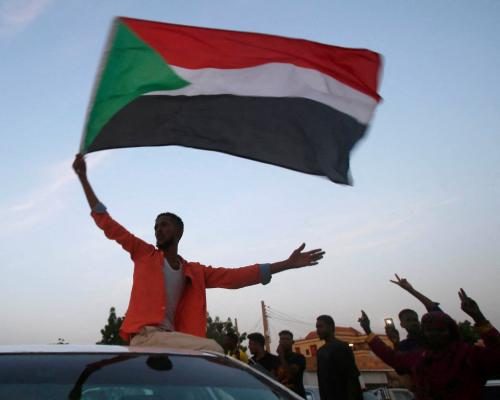
As Sudan's devastating conflict marks its third anniversary, British Foreign Secretary Yvette Cooper is set to address the ongoing bloodshed at a major conference in Berlin this Wednesday. Cooper will call on the warring factions in Sudan to "cease bloodshed" and work towards a diplomatic solution, despite analysts suggesting that significant progress may be elusive. The gathering aims to tackle a dire funding shortfall exacerbating what the United Nations describes as the world's worst humanitarian crisis.
Funding Shortfalls Complicate Humanitarian Efforts
According to recent assessments, the international community has only provided 16% of the humanitarian funding needed for Sudan in 2023. This shortfall comes as the country grapples with an escalating humanitarian disaster, with over 19 million people currently facing acute hunger. Many areas are at risk of famine, particularly in regions like North Kordofan, West Kordofan, South Kordofan, and North Darfur, where emergency levels of hunger have been reported. Originally reported by The Guardian.
Cooper will announce a doubling of UK aid to £15 million, aimed at supporting frontline responders, including grassroots organizations like the Emergency Response Rooms. These local networks have been critical in addressing the immediate needs of those affected by the conflict.
Stalled Peace Talks Leave Many Hopeless
Political momentum for peace appears to be stalling, with recent diplomatic efforts yielding little success. The so-called Quad nations-comprising the United States, Egypt, Saudi Arabia, and the United Arab Emirates-have struggled to facilitate meaningful dialogue between the Sudanese army and the paramilitary Rapid Support Forces (RSF). While the UAE supports the RSF, Saudi Arabia and Egypt back the army, complicating the prospects for peace.
Relations between Saudi Arabia and the UAE have reportedly soured, especially following conflicts in Yemen concerning their respective proxy forces. The upcoming presence of Massad Boulos, Donald Trump's political adviser on Africa, at the Berlin conference has raised some hopes of revitalizing discussions, although a source familiar with the proceedings cautioned against expecting any major breakthroughs.
Escalating Violence and Humanitarian Crisis
As the conflict enters its fourth year, violence continues unabated between the RSF and the Sudanese army. Experts warn that hostilities are likely to worsen, particularly in the Kordofan region, which has become a focal point in the fighting. Paul Byars, director for Sudan at the Danish Refugee Council, expressed concern about the ongoing territorial battles, noting that neither side appears willing to relent.
Moreover, the conflict's intensity is expected to increase due to the growing use of drones in combat. This technological advancement is likely to disrupt the traditional lull in fighting during the rainy season, further exacerbating the humanitarian situation. The United Nations recently reported that nearly 700 civilians have been killed in drone strikes in Sudan since January, underscoring the conflict's brutal toll on innocent lives.
Call for International Unity and Action
During her address at the conference, Cooper emphasized the need for the international community to unite in a collective effort to halt the violence. "Today, in Berlin, I will call for the international community to join in a shared resolve: to secure a ceasefire and a diplomatic solution, to stop the suffering, and allow the people of Sudan to determine their own peaceful future," she stated.
Despite the challenges, Cooper remains hopeful that a ceasefire can be achieved, although the political landscape currently appears bleak. The humanitarian crisis in Sudan continues to deepen, with projected needs for humanitarian assistance expected to rise to between 22 and 23 million individuals in the coming months.
The Berlin conference represents a crucial opportunity for the international community to re-engage with Sudan's complex situation. As the world watches, the hope remains that concerted efforts can pave the way towards a lasting peace and a brighter future for the Sudanese people.
Originally reported by The Guardian. View original.