
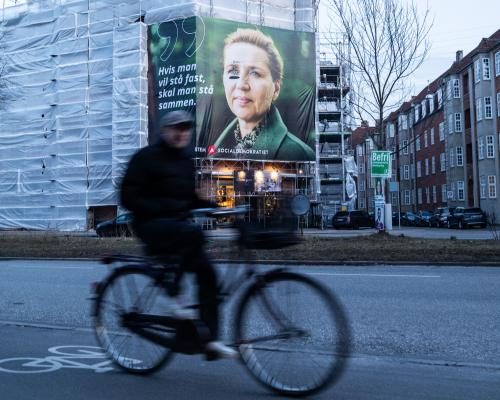
As Denmark gears up for an early general election on March 24, Prime Minister Mette Frederiksen's recent policy shift to the left has ignited a fierce debate. Notably, her proposal for a 0.5% wealth tax on individuals with assets exceeding 25 million kroner (approximately £2 million) aims to fund smaller class sizes in schools, a move that has polarized public opinion.
In a dramatic change of heart, 21-year-old Copenhagen student Sven Li now views Frederiksen more favorably than he did just four months ago. Previously critical of her cold demeanor and the losses faced by her Social Democrats in municipal elections, Li has changed his stance following her adept handling of international tensions, particularly involving Greenland. Her pivot towards leftist policies, especially the wealth tax aimed at reducing class sizes for children aged six to nine from 26 to just 14, has resonated with him and other young voters. Originally reported by The Guardian.
"I am very proud that Mette Frederiksen and [current coalition partner] Lars Løkke Rasmussen, as much as I think that they have undercut general welfare in Denmark, are very competent statesmen and are solid leaders in a time of crisis," Li stated, showcasing a newfound appreciation for her leadership.
Wealth Tax Faces Backlash from Denmark's Elite
The proposed wealth tax, announced in the Folketinget, Denmark's parliament, has sparked outrage among the nation's wealthiest individuals. Critics argue that it could drive affluent citizens to consider relocating abroad. Henrik Andersen, CEO of Vestas, a leading wind turbine manufacturer, expressed his discontent, stating, "enough is enough," suggesting he might leave Denmark if the tax is implemented. Shipping magnate Robert Mærsk Uggla echoed similar sentiments, labeling the proposal as "harmful to Denmark."
Frederiksen's wealth tax, which aims to alleviate pressing issues in the education sector, is being championed by the Danish Union of Teachers, who believe it could address critical challenges like the current teacher shortage and the need for better inclusion of children with special needs. "It's a very classic Danish welfare approach," commented Niels Jørgen Jensen, vice-chair of the union, highlighting the historical commitment to equitable education.
Public Sentiment Shifts Ahead of Election
Despite the backlash from the wealthy elite, polls indicate that Frederiksen's approval ratings have soared, a phenomenon some have dubbed the "Greenland bounce." Young activists like Li hope this will translate into a "red" government coalition involving the Social Democrats, the Danish Social Liberal Party, the Green Left, the Red-Green Alliance, and the Alternative. They are particularly focused on addressing inflation and rising housing costs, which are hampering quality of life in urban areas.
"I want to see something that would account for the fact that inflation and rising housing prices, especially in Copenhagen, have eroded people's quality of living," Li explained. Additionally, he expressed a desire for a more robust strategy to combat rising child poverty, which has become increasingly evident throughout Denmark.
Immigration Policies Remain Tough
While Frederiksen's wealth tax has garnered significant attention, her stance on immigration remains unchanged. The prime minister has reiterated her commitment to Denmark's strict asylum laws, proposing measures to deport foreign nationals sentenced to a year or more for criminal offenses. "We must avoid at all costs a repeat of the situation in 2015, when more than a million refugees and migrants, especially from Syria, came to Europe," she declared, signaling her administration's hardline approach to immigration.
As the political landscape shifts, Sadek Al-Amood, a 26-year-old parliamentary candidate for the Green Left, has been actively engaging voters through informal "dürüm and debate" events, where attendees enjoy free food while discussing pressing political issues. According to him, students are primarily concerned with affordability and climate justice. He remains optimistic about a left-leaning coalition emerging from the upcoming elections.
"Even though she doesn't say it outright, it seems like Mette Frederiksen wants to do at least more left-leaning policies," he asserted, suggesting that the current political climate could be ripe for a progressive transformation following years of centrist governance.
With the early election approaching, the focus remains on Frederiksen's wealth tax proposal and its implications for Denmark's educational system and economic landscape. The outcome of the election will likely hinge on how voters perceive these policies and the broader socio-economic issues at play.
Originally reported by The Guardian. View original.