
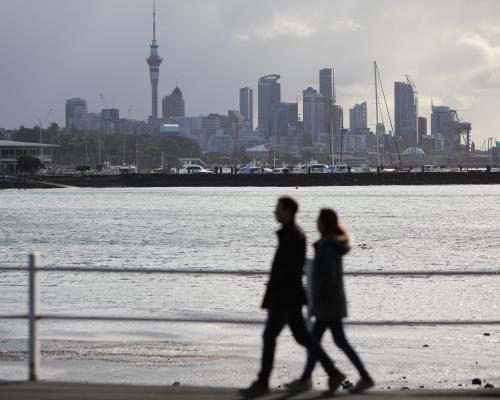
New Zealand's economic recovery, which has recently shown signs of improvement, is now threatened by escalating tensions in the Middle East. As the war unfolds, economists warn that the nation's reliance on global trade and tourism could expose it to significant economic shocks. Finance Minister Nicola Willis emphasized the precarious situation, stating, "We would far prefer this wasn't happening to the New Zealand economy, and it's not good for the New Zealand economy." The upcoming elections in November are set to focus heavily on economic stability and the cost of living, amidst these rising challenges.
Fragile Growth Amid Global Turmoil
After a prolonged period of economic stagnation exacerbated by the COVID-19 pandemic, New Zealand's economy was beginning to show signs of recovery, with projections suggesting an annual growth rate potentially surpassing that of neighboring Australia. However, the ongoing conflict in the Middle East presents a new set of challenges. Economist Benje Patterson remarked, "We've been through an economic trough that's been just as deep and prolonged.. as that which followed the global financial crisis." The nation has endured significant setbacks, including recession, inflation, and rising costs of living, leading to decreased consumer spending. Originally reported by The Guardian.
Despite these difficulties, there is cautious optimism. The gross domestic product (GDP) data, set to be released on Thursday, is expected to indicate a growth of 1.6% for 2025, with forecasts suggesting that growth could accelerate to 2.8% in the current year. This would place New Zealand ahead of Australia, which is projected to grow by 2.5%. Such recovery signs have been bolstered by strong demand for exports, particularly in the meat and dairy sectors, along with a resurgence in tourism as the world emerges from pandemic restrictions.
Impact of Rising Oil Prices
The war in the Middle East has already begun to affect energy prices significantly, with petrol costs in New Zealand rising by approximately 45-50 cents per litre. Kelly Eckhold, Westpac's chief economist, highlighted that while the immediate effects may not be disastrous, the longer-term implications could lead to adjustments in growth forecasts. Eckhold noted, "I don't think that we would say that this is a disaster yet for the economy," but acknowledged that the conflict could potentially stall economic growth for a quarter as the situation develops.
New Zealand's geographic isolation makes it particularly vulnerable to external shocks, especially regarding energy supply and trade. As Patterson pointed out, "Because we're small, we get knocked around by shocks more. So the volatility is higher." In contrast, larger economies like Australia can absorb such shocks more effectively, given their more extensive domestic markets.
Signs of Recovery Amid Uncertainty
In the face of these challenges, there are signs that New Zealand's economy is beginning to stabilize. The job market has shown improvement, with an increase in job advertisements and a slight uptick in workforce participation. This shift is crucial as rising consumer confidence could lead to increased spending. Patterson noted that the reduction in fixed mortgage rates due to recent interest rate cuts has provided households with additional disposable income, which he described as "the gravy money for many households." This financial flexibility could foster further economic activity, allowing New Zealand to build on its recovery.
However, economists are cautious. Unemployment is projected to reach its highest level in a decade by the end of 2025, highlighting the delicate balance of the recovery. Shamubeel Eaqub, another economist, remarked, "It's been a tough couple of years - like, really tough. We've had significant reduction in the economy, job losses, business closures, all that kind of stuff." For many, the true measure of recovery will come when economic improvements are felt at the community level.
Looking Ahead: The Path Forward
As New Zealand navigates this uncertain landscape, confidence in its economic future remains fragile. The impact of the conflict in the Middle East on global markets is likely to reverberate across Asia, where New Zealand exports and tourism thrive. The upcoming elections will be pivotal, as leaders will need to address these economic challenges head-on. Eaqub succinctly stated, "We're all waiting for it. It just hasn't turned up yet." With the potential for continued volatility, the nation's recovery will depend on its ability to adapt and respond to these external pressures, ensuring that growth is not just a fleeting moment but a sustainable trend.
Originally reported by The Guardian. View original.