
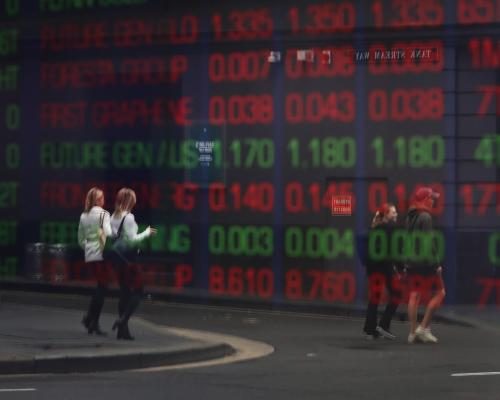
In a dramatic display of market resilience, Wall Street stocks surged to record highs even as the International Monetary Fund (IMF) issued stark warnings about a looming global recession. This unexpected rebound has sparked discussions on whether the Australian market can mirror this performance amid ongoing geopolitical tensions and energy supply disruptions.
Wall Street's Surprising Recovery Amid Global Uncertainty
Just days after the IMF warned of a global recession, Wall Street defied expectations by hitting record highs. This sharp turnaround raises questions about investor sentiment and market dynamics. The American market, particularly the S&P 500, seemed unfazed by the ongoing energy crisis, which has been described by the International Energy Agency as the "greatest global energy security threat in history." While American stocks recovered from an initial drop of about 8% due to the Iran conflict, Australian stocks, represented by the S&P/ASX 200 index, faced their own challenges. Originally reported by The Guardian.
At their lowest point on March 23, Aussie stocks had fallen 9% from pre-conflict levels. However, recent weeks have seen a steady recovery, with the ASX 200 recouping approximately 70% of those losses. Despite not reaching previous highs, the Australian market's upward trajectory is noteworthy, especially in light of the geopolitical risks affecting global markets.
Investors' Confidence and the Underlying Risks
Shane Oliver, chief economist at AMP, noted that investors appear to be shifting their perspective on recession risks. "Two or three weeks ago, investors were starting to factor in the risk of a recession," Oliver stated. However, the recent ceasefire and speculation about potential diplomatic resolutions have led many to believe that the risk of recession is diminishing. This optimism is evident in Wall Street's recovery, which Oliver finds surprising given the broader economic challenges.
In contrast, the Australian market's more modest rebound may be attributed to its reliance on fuel imports, which renders it more vulnerable to fluctuations in energy prices. Higher fuel costs not only impact households but also affect businesses, adding pressure to the local economy. This vulnerability, combined with ongoing geopolitical uncertainties, could explain why the ASX 200 has not mirrored Wall Street's exuberance.
The Complacency Debate: Are Investors Underestimating Risks?
Stephen Miller, a market strategist at GSFM, offered two perspectives on the Wall Street recovery. He suggested that markets might be exhibiting "incredible complacency," underestimating the inflationary pressures and potential growth impacts stemming from the global oil shock. "The macroeconomic environment is pretty challenging," Miller warned, emphasizing that even if diplomatic resolutions are reached, oil prices are unlikely to return to pre-crisis levels.
Alternatively, Miller indicated that significant trends within the U.S. economy could be driving market optimism independently of the broader economic outlook. The rise of artificial intelligence, increased defense spending, and other transformative sectors are attracting investor interest, creating a divide between these sectors and traditional economic indicators. As Wall Street climbs its "wall of worry," Australian markets may find themselves swept along by these currents, albeit more cautiously.
Future Outlook: Navigating Uncertainty in Australian Markets
While the Australian market has shown resilience, analysts warn that challenges lie ahead. Oliver pointed out that investor confidence hinges on the belief that U.S. President Donald Trump will seek to de-escalate tensions with Iran, a scenario he refers to as the "Taco" trade. Historically, this has been a pattern where Trump has retreated from aggressive postures when faced with potential economic fallout. However, the unique complexities of the current situation may not afford the same outcome.
Miller echoed these sentiments, remaining cautious about the broader economic implications. He stated, "My own opinion is that those 'macro chickens' may yet come home to roost." As investors navigate these uncertain waters, the disparity between Wall Street's performance and the Australian market's more tempered recovery underscores the divergent paths both economies may take in response to ongoing global challenges.
As the situation develops, it will be crucial for Australian investors to stay vigilant and informed about both local and international dynamics that could influence market trends. The current climate demands a careful examination of risks and opportunities as the world grapples with unprecedented energy challenges and geopolitical tensions.
Originally reported by The Guardian. View original.