
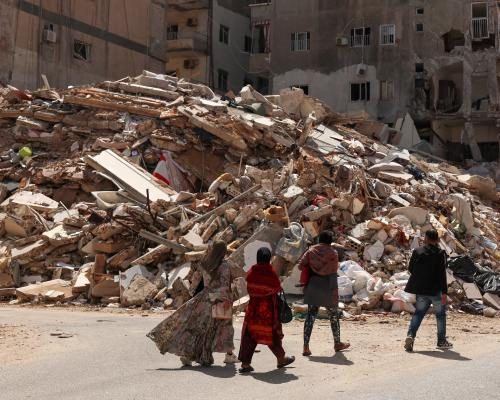
In a significant escalation of hostilities in the Middle East, a strike on the Prince Sultan airbase in Saudi Arabia has reportedly injured at least 12 American soldiers, two of whom are in serious condition. This incident marks the latest chapter in a series of retaliatory attacks linked to ongoing tensions between the United States, Iran, and their respective allies in the region.
Iran Targets US Military Base in Saudi Arabia
The attack on the Prince Sultan airbase, which occurred on Friday, involved multiple missiles and drones, according to reports from The New York Times and The Wall Street Journal. The soldiers were inside a building at the base when the strike occurred, causing injuries and damage to several aerial refueling aircraft. US officials, who spoke on the condition of anonymity, confirmed that the incident was part of Iran's ongoing retaliation against Gulf nations perceived as supporting US military actions. Originally reported by The Guardian.
Iran has intensified its missile strikes, targeting US and allied installations since the onset of the conflict. The Prince Sultan airbase has previously been a focal point, with Saudi Arabia successfully intercepting several missiles aimed at the facility. This surge in Iranian attacks underscores the heightened risks of military engagement in the region.
UN Warns of Nuclear Risks Amid Ongoing Strikes
As hostilities escalate, the International Atomic Energy Agency (IAEA) reported a third strike near the Bushehr nuclear power plant in Iran within ten days. Tehran informed the IAEA that, despite the proximity of the attack, there was no damage to the operational reactor and no radiation was released. IAEA chief Rafael Grossi expressed grave concerns, warning that any strike causing damage to a reactor could lead to a catastrophic radiological incident. He urged for "maximum military restraint" from all parties involved in the conflict.
Grossi's comments reflect the precarious balance of military actions in a region where the consequences of miscalculation could be dire. The IAEA continues to monitor the situation closely, recognizing the potential global impact of any nuclear incident resulting from the ongoing conflict.
US Military Operations Expected to Conclude Soon
Amid these escalating tensions, US Secretary of State Marco Rubio asserted that Military Operations Against Iran are projected to conclude within weeks. Speaking after a G7 meeting in France, Rubio stated that Washington is "on or ahead of schedule" in its objectives and does not anticipate the need for ground troops to achieve its aims. However, he noted that additional troops are being deployed to the region to provide the President with maximum flexibility in response to emerging contingencies.
Rubio's comments signal a shift in US military strategy, aiming for a rapid conclusion to operations while minimizing troop deployment. This approach appears to be a response to both domestic and international Pressures, as the Biden administration seeks to balance military effectiveness with public and global sentiment regarding prolonged military engagement.
Iran's Regional Allies Prepare for Potential Escalation
As the conflict unfolds, Iran's regional allies, including the Houthis in Yemen, have signaled their readiness to intervene militarily if certain conditions are met. The group stated that its "finger is on the trigger" and would act if new countries join the US and Israel in their military efforts against Iran. The Houthis' threats highlight the risk of a broader regional conflict involving multiple actors in the Middle East.
Additionally, Iranian Revolutionary Guards announced that the Strait of Hormuz, a critical route for global oil and gas shipping, is now "closed" to vessels associated with Iran's adversaries. This declaration raises alarms about potential disruptions in global energy supplies and the economic implications of a protracted conflict.
The situation remains fluid, with ongoing military strikes and diplomatic maneuvers occurring simultaneously. As tensions rise, the international community watches closely, recognizing the potential for a wider conflict that could destabilize the region and impact global markets.
As the US and its allies prepare for potential further military action, the stakes are higher than ever. With Iran's missile capabilities and its willingness to retaliate, the prospect of a major confrontation looms large, prompting urgent calls for diplomatic engagement to prevent an escalation into a full-scale war.
Originally reported by The Guardian. View original.