
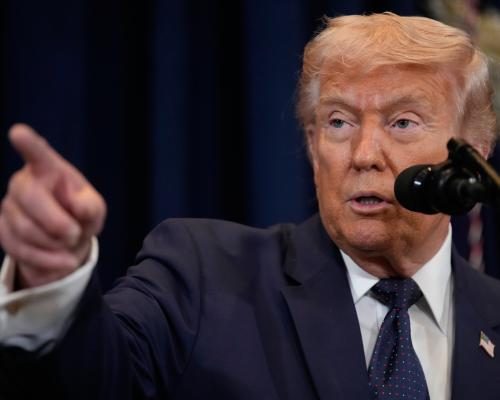
In a surprising announcement following a phone call with Russian President Vladimir Putin, former President Donald Trump indicated that the United States plans to ease oil-related sanctions on certain countries. This decision aims to alleviate the oil shortage exacerbated by the ongoing U.S.-Israeli conflict with Iran. Speaking to reporters in Florida on Monday, Trump stated, "So we have sanctions on some countries. We're going to take those sanctions off until the strait [of Hormuz] is up." While he did not elaborate on specific countries or the duration of this waiver, the implications could be significant for global oil markets.
Potential Repercussions for Russian Oil Sanctions
The easing of sanctions could lead to a further relaxation of restrictions on Russian oil exports, according to multiple sources, including Reuters. This move may complicate efforts by Western nations to punish Moscow for its ongoing military actions in Ukraine. Recently, oil prices surged past $100 a barrel, marking their highest levels since Russia invaded Ukraine in 2022, with the blockade of the Strait of Hormuz severely impacting tanker traffic. Originally reported by The Guardian.
As the situation unfolds, alternative measures being contemplated by the U.S. include the potential release of oil from strategic reserves or imposing restrictions on domestic oil exports. Last week, the U.S. government issued a temporary waiver allowing India to purchase specific Russian oil cargoes to help mitigate the fallout from reduced Middle Eastern supplies.
Trump and Putin's Optimistic Dialogue
Trump characterized his conversation with Putin as positive, noting, "We were talking about Ukraine, which is just a never-ending fight. But I think it was a positive call on that subject." Putin's foreign affairs adviser, Yuri Ushakov, described their discussion as "frank and businesslike." The call lasted about one hour, during which Putin reiterated Russia's readiness to supply oil and gas to Europe, attributing the current global energy crisis to the ongoing conflict in Iran.
During the call, Putin warned that oil production reliant on transport through the Strait of Hormuz could face complete disruption. Holding the title of the world's second-largest oil exporter, Russia's influence on global energy markets remains a pressing concern for Western policymakers.
Ukraine's Response to Regional Tensions
In the midst of these discussions, Ukraine's President Volodymyr Zelenskyy revealed that his administration has sent interceptor drones and operators to protect U.S. bases in Jordan. This move comes as part of Ukraine's response to requests for assistance from 11 countries affected by the U.S.-Israeli conflict with Iran. Zelenskyy stated that he acted on a request from the U.S. to bolster defenses in Jordan, emphasizing Ukraine's commitment to strengthening relations with Gulf and Middle Eastern nations under threat from Iranian aggression.
Recent satellite imagery has shown damage to radar systems used by U.S. air defense installations in Jordan, which have been targeted by Iranian attacks. As the U.S.-Israeli war against Iran continues through its tenth day, Ukraine remains poised for new peace talks with Russia, though Zelenskyy noted that the focus of U.S. allies has shifted toward the ongoing conflict in Iran.
Escalating Violence in Ukraine
As the geopolitical landscape shifts, violence continues to plague Ukraine. On Monday, a Russian drone strike in Kharkiv, Ukraine's second-largest city, resulted in injuries to six individuals, including a small child. Kharkiv, located just 30 kilometers from the Russian border, has been a frequent target of Russian air raids since the conflict began in February 2022.
Additionally, Russian shelling in the southeastern city of Dnipro led to injuries for seven civilians, according to regional governor Oleksandr Ganzha, who shared images of the destruction on social media. The relentless attacks underline the ongoing humanitarian crisis in Ukraine, drawing international attention and concern.
Amid these challenges, Ukraine has urged organizers of the Venice Biennale to reconsider Russia's participation in the prestigious art exhibition. Critics argue that allowing Russia to showcase its artists would enable a "whitewashing" of its war crimes. This request follows widespread condemnation of the decision to include Russia, with Italy's culture ministry voicing its opposition.
As the geopolitical landscape continues to evolve, the ramifications of these discussions will undoubtedly ripple through international markets and affect the ongoing conflicts in both Ukraine and the Middle East. Stakeholders will be closely monitoring how these developments will influence energy prices and diplomatic relations moving forward.Originally reported by The Guardian. View original.