
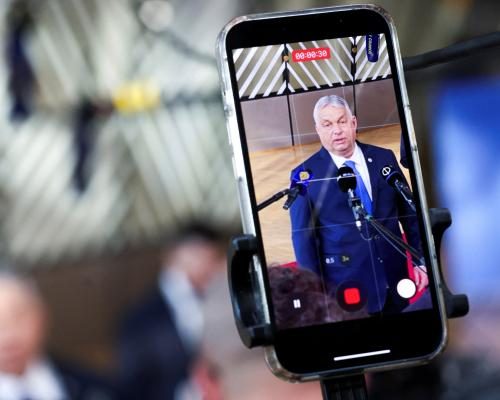
Hungary's Prime Minister Viktor Orbán has firmly stated that he will not support the European Union's proposed €90 billion loan to Ukraine until issues surrounding the Druzhba oil pipeline are resolved. This announcement comes amid a backdrop of growing tensions within the EU and ongoing geopolitical challenges.
The Druzhba pipeline, a crucial artery for oil transport from Russia to Europe, has been a point of contention since Ukraine reported damage due to a Russian strike earlier this year. The closure has left Hungary and Slovakia without access to Russian oil since late January, prompting Kyiv to seek technical support from the EU to assess and restore operations on the damaged pipeline. Orbán has made it clear that Hungary will block any EU decisions favoring Ukraine until the pipeline is operational again, emphasizing the importance of energy security for his country. Originally reported by The Guardian.
EU Trade Committee Advances Deal with the US
In a separate development, the European parliamentary trade committee has voted to move forward with legislation to ratify a trade deal initially brokered with the Trump administration last summer. This deal, which includes 15% tariffs on most EU exports, will now go to a full vote in the European Parliament. The tariffs, previously deemed illegal by the US Supreme Court, are part of a broader agreement that also aims to enhance access for US agricultural products and includes a commitment from the EU to purchase $750 million worth of energy from the United States over the next three years.
Earlier this year, progress on the deal had been stalled, largely due to Trump's controversial remarks about Greenland. However, recent concessions from the US, including a reduction in tariffs on certain steel derivatives, have reignited discussions. The committee's approval comes after extensive lobbying by EU officials to address what they perceive as 'tariffs by stealth,' a term used to describe additional tariffs on products containing steel.
Concerns Over Middle East Crisis Impacting Ukraine
As discussions continue within the EU, the ongoing crisis in the Middle East is raising alarms about its potential to overshadow the war in Ukraine. Lithuanian President Gitanas Nausėda expressed concern that the focus on the Middle East could divert attention and resources away from the critical situation in Ukraine. He noted that as casualties mount and military operations continue, the urgency for a comprehensive peace deal remains paramount.
Nausėda criticized the slow progress on new sanctions against Russia, calling for the EU to finalize its 20th package of sanctions without delay. He pointed out that while Hungary's position complicates matters, time is of the essence for Ukraine, which is under immense pressure not just militarily but also economically. The €90 billion loan is seen as essential for Ukraine's resilience as winter approaches.
EU Leaders Push Back Against Orbán's Stance
EU foreign policy chief Kaja Kallas has expressed skepticism regarding the likelihood of reaching an agreement with Orbán, indicating that his actions do not align with the spirit of cooperation expected within the EU. Kallas stated, "There are alternatives," but emphasized that it would require political courage from all parties involved to find a resolution. Her comments reflect a broader frustration among EU leaders, who have been critical of Hungary's refusal to back the loan package for Ukraine.
The upcoming elections pose a significant challenge for Orbán, who faces the most significant test of his 16-year rule. As pressures mount, EU leaders, including Czech Prime Minister Andrej Babiš, have prioritized discussions on competitiveness and emissions trading reforms while downplaying the pipeline dispute as a Hungarian issue. Babiš remarked, "I am here to fight for the European industry, and we are losing time," highlighting the urgency of economic stability amid ongoing geopolitical tensions.
As the EU navigates these multifaceted challenges, the pathway forward remains fraught with obstacles. The delicate balance between supporting Ukraine and addressing member state concerns, particularly from Hungary, will test the unity and resolve of the European bloc in the coming weeks. Leaders are hopeful for a technical resolution to the pipeline issue, which could unlock critical financial aid for Ukraine and reaffirm the EU's collective commitment to supporting its embattled neighbor.
Originally reported by The Guardian. View original.