
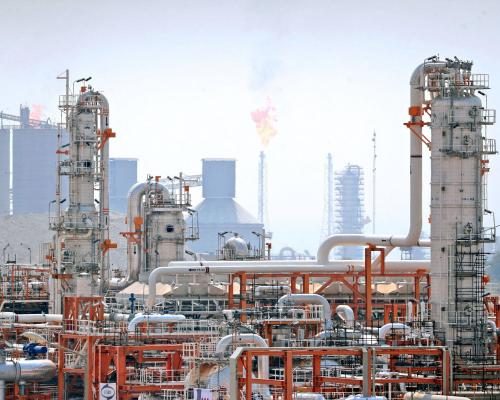
In a dramatic escalation oftensions in the Middle East, former President Donald Trump has threatened to "massively blow up" the entire South Pars gas field if Iran retaliates against Qatar's liquefied natural gas (LNG) facilities. This warning comes in the wake of a recent Iranian strike on Qatar's Ras Laffan gas hub following an Israeli attack on the South Pars field, intensifying an already volatile geopolitical situation.
Recent Attacks in the Persian Gulf
The UK Maritime Trade Operations Centre (UKMTO) reported a vessel was struck by an unknown projectile in the Persian Gulf early Thursday, just east of Ras Laffan, Qatar. Fortunately, all crew members were reported safe. This incident followed another attack in the Gulf of Oman, where a vessel off the coast of Khawr Fakkan, UAE, caught fire due to a similar projectile strike. UKMTO confirmed that they received reports of these attacks at 01.30 GMT on Thursday and 23.00 GMT on Wednesday, respectively, and investigations are ongoing. Originally reported by The Guardian.
Adding to the chaos, Iran executed three individuals convicted of murder and supporting anti-government operations that allegedly aided the U.S. and Israel during unrest earlier this year. According to Iran's judiciary, these executions were part of a broader crackdown on dissent amid ongoing tensions with regional neighbors.
Qatar's Response and Fire Containment
In the aftermath of the Iranian attack, Qatari officials confirmed that all fires at the Ras Laffan gas hub have been contained. The Ministry of Civil Defence announced that it successfully brought all fires under control in the industrial area without any reported injuries. Cooling and site-securing operations are reportedly still underway, ensuring the safety of the region's vital energy infrastructure.
Iran's overnight strike on the Ras Laffan facility has raised alarms about the security of energy supplies in a region critical to global oil and gas markets. The South Pars gas field, shared between Iran and Qatar, plays a crucial role in the energy landscape, contributing significantly to the world's natural gas supply.
Economic Ripple Effects and Global Reactions
The escalating conflict has not only geopolitical implications but also economic ramifications. Japan's central bank has warned of rising inflation, citing a recent surge in crude oil prices linked to the ongoing conflict. In a statement released on Thursday, the Bank of Japan maintained its key interest rate at 0.75% and acknowledged that the government is initiating an emergency subsidy program to alleviate rising gasoline costs. With 95% of its oil imports coming from the Middle East, Japan's economy is particularly vulnerable to disruptions in this region.
Furthermore, Saudi Arabia's foreign minister noted that the kingdom has not ruled out military action in response to continued Iranian aggression, stating that Iran "tries to pressure its neighbors" with missile and drone strikes. Prince Faisal bin Farhan emphasized that Saudi Arabia would not succumb to such pressure and has reserved the right to take military actions if deemed necessary.
Air Travel Disruptions Amid Ongoing Conflict
As tensions continue to rise, Cathay Pacific has suspended flights to and from Dubai until at least April 30, 2026, due to the deteriorating situation in the Middle East. The airline stated that further changes to its flight schedule might be required as conditions develop. The decision highlights the broader impact of the conflict on international travel and commerce, as airlines reassess routes and safety protocols in light of the ongoing violence.
Market analysts have expressed concerns that this escalation marks a turning point for global markets, noting that the conflict is now affecting the very foundation of the global energy system. Charu Chanana, chief investment strategist at Saxo in Singapore, remarked, "This latest escalation feels like a turning point for markets.. This is no longer just a geopolitical story but a macro one."
With tensions reaching a boiling point, the world watches closely as developments unfold in the Middle East. The implications of this conflict extend beyond regional borders, affecting global energy prices, security, and international relations.
Originally reported by The Guardian. View original.