
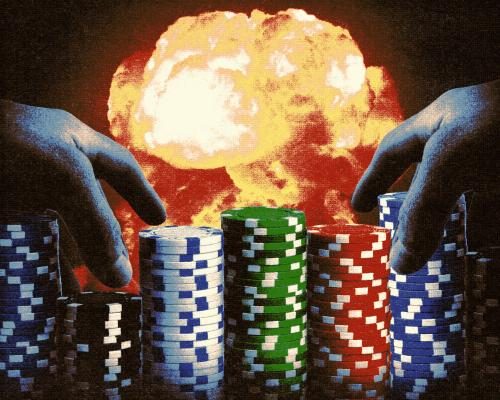
In a striking display of market timing, traders have placed over $1 billion in bets related to the ongoing conflict in Iran, with many accurately predicting significant military actions and geopolitical shifts. Notably, wagers were placed shortly before U.S. airstrikes on February 27 and the recent announcements of ceasefire negotiations, raising alarms about potential insider trading.
Significant Bets Before US Airstrikes
On the night of February 27, a surge of activity on the betting platform Polymarket caught the attention of analysts. Approximately 150 accounts placed bets that the U.S. would conduct airstrikes against Iran the following day, accumulating a total of $855,000. Among these, 16 accounts netted over $100,000 each from their wagers. This unusual spike in betting activity raised eyebrows, especially considering the subsequent news of U.S. and Israeli strikes against Iranian targets. Originally reported by The Guardian.
Shortly thereafter, an anonymous user on Polymarket, operating under the handle "Magamyman," made headlines by betting over $553,000 that Ayatollah Ali Khamenei would be "removed" from power. This bet was placed just moments before Khamenei was assassinated by Israeli forces, suggesting a level of foresight that is hard to dismiss as mere coincidence. A complaint filed by Public Citizen with the Commodity Futures Trading Commission (CFTC) pointed out that six individuals, suspected of having insider knowledge, collectively made $1.2 million on Polymarket following Khamenei's death.
Surge in Oil Futures Trading
The pattern of strategic betting continued on April 7, when at least 50 accounts on Polymarket placed bets anticipating a ceasefire between the U.S. and Iran, just hours before former President Donald Trump announced it on his social media platform. This followed his earlier statement warning that "a whole civilization will die tonight" if Iran did not cooperate regarding the Strait Of Hormuz.
Interestingly, the oil futures market also saw a significant increase in trading activity before these announcements. On March 23, traders placed $580 million in bets on oil futures just minutes before Trump indicated that productive talks were underway with Iran. This resulted in a sell-off that caused oil prices to decline sharply. The trend repeated itself on April 7, as traders spent $950 million betting on falling oil prices just before Trump's ceasefire announcement, which subsequently led to a drop in oil prices.
Calls for Regulatory Scrutiny
These developments have prompted calls from lawmakers and industry experts for a closer examination of trading activities surrounding these geopolitical events. Joshua Mitts, a law professor at Columbia University, raised critical questions about regulatory effectiveness, asking, "Is the problem that we don't have legislation or that we don't have enforcement capabilities?"
Concerns about insider trading in prediction markets have become increasingly relevant as platforms like Polymarket and Kalshi allow bets on a wide array of news events. While the CFTC is responsible for overseeing futures markets, its capacity to investigate suspicious trading remains uncertain, especially under the current administration, which is grappling with internal disagreements over jurisdiction and regulatory authority.
Craig Holman, a lobbyist for Public Citizen, expressed skepticism about the CFTC's willingness to act decisively, noting the commission currently operates with only one commissioner, Michael Selig, who favors prediction markets. This lack of a fully functioning, bipartisan commission may hinder robust investigations into potentially illegal trading practices.
Implications for Future Trading Practices
The influx of bets surrounding the Iran conflict highlights the intersection of finance and geopolitical events, raising pressing questions about the integrity of these markets. Andrew Verstein, a law professor at UCLA, stated, "We can't say from the outset whether any of these trades were illegal. Any one of them could be lucky, and any one of them could be based on lawful information." Yet, the patterns observed, particularly the timing and volume of these bets, suggest that many traders may have had access to information unavailable to the general public.
This situation reflects a broader trend where online betting markets are increasingly becoming arenas for speculation beyond traditional sports betting. As these platforms grow in popularity, the potential for abuse through insider trading becomes a critical concern for regulators. The outcome of this situation could reshape how prediction markets are regulated moving forward, as lawmakers grapple with ensuring fair play in an evolving financial landscape.
Originally reported by The Guardian. View original.