
Hasina Nasimi was eagerly looking forward to January 27, 2025, when she and her family were scheduled to fly to Denver, Colorado. After fleeing Afghanistan due to threats from the Taliban, Nasimi and her husband, along with their four children, had been evacuated to Qatar, where her relatives were already building new lives. Tragically, the Taliban had already taken the lives of her father and brother, the latter shot in 2018 for his role as a translator for U.S. forces during the invasion. The grim realities of their circumstances worsened after President Donald Trump signed an executive order on January 20, 2025, suspending refugee processing. This abrupt decision canceled the family's long-awaited relocation plans.
Stranded in Qatar: A Year of Limbo
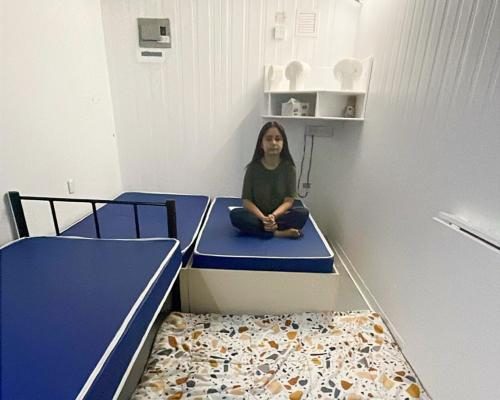
Now, Nasimi and her family are among approximately 1,100 Afghans, with at least 700 of them being women and children, who were evacuated by the U.S. but remain in limbo in Qatar. What was initially anticipated as a brief stopover at the As-Sayliyah camp has stretched into nearly a year and a half of uncertainty. Nasimi described the conditions as increasingly dire. "People are going crazy here," she said. "There is constant fear. Women have had premature births because of the trauma and uncertainty, and there have even been suicide attempts." Originally reported by The Guardian.
As tensions escalated due to the U.S.-Israeli war on Iran, living conditions in the camp deteriorated further, with Nasimi recounting that they heard missiles overhead and fragments hitting their roof. The As-Sayliyah facility, designed for short-term stays, has become a makeshift home for families confined to small containers and sharing limited facilities.
Facing the DRC: A Distant and Unknown Future
Compounding their distress, the Trump administration confirmed last month that discussions were underway to relocate these Afghan families to the Democratic Republic of the Congo (DRC), a nation suffering from its own conflicts. For Nasimi and her family, the thought of being sent to the DRC is unfathomable. They fear being uprooted to a country they know nothing about, far away from their family in Colorado and lacking a supportive Afghan community. "It's better to die in Afghanistan than to go there," Nasimi stated emphatically.
Like many others, Nasimi arrived in Qatar shortly after giving birth to her fourth child. The family had initially hoped for a swift transition to the U.S., but their dreams have been overshadowed by the grim reality of their continued confinement in Qatar. The uncertainty has taken a significant toll on their mental health and sense of safety.
A New Generation's Struggles: Zahra's Story
Fifteen-year-old Zahra Muhib, who arrived in Qatar as a 13-year-old, has also faced the harsh realities of life in the camp. She described her experience as "hell" and "a prison." Zahra's family served as officers in the Afghan armed forces, but after the Taliban regained power, they faced serious threats and were forced to flee. They were offered U.S. resettlement under the P1 visa scheme, but now that opportunity seems jeopardized.
"I have been diagnosed with depression and anxiety here, and I'm taking medication," Zahra revealed. The camp lacks structured education, and despite some informal classes, she spends much of her time isolated. "I've been out of education for four years because of the Taliban's ban on girls' education," she lamented. Although she claims she would go to the DRC if forced, her heart longs for a life filled with hope, dreams, and education.
Calls for Action: The Urgency of Resettlement
Organizations like AfghanEvac, founded by Shawn VanDiver, advocate for the urgent resettlement of Afghan families who aided U.S. forces over the past two decades. VanDiver emphasized that sending families to the DRC raises serious concerns, particularly as the country is embroiled in active conflict and already hosts over 600,000 refugees. He stated, "The only right solution is to bring them to America."
As the families in Qatar await clarity on their future, the emotional toll continues to mount. The prospect of being sent to a dangerous and unfamiliar land is a source of deep anxiety and fear. As they navigate this uncertain period in limbo, their dreams of safety and stability remain just out of reach. The world watches as these families, who once served alongside U.S. forces, fight for their basic human rights and the chance to rebuild their lives.
Originally reported by The Guardian. View original.