
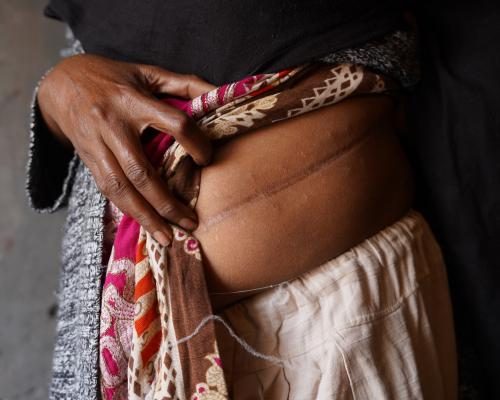
Shafeeq Masih faced a harrowing dilemma: remain ensnared in a crushing debt to his brick kiln owner or sell one of his kidneys to escape. Masih's debt, which ballooned to 900,000 rupees (£2,420), left him feeling like a slave. Despite working tirelessly, the financial burden only deepened, driven by the owner's manipulation. With mouths to feed and elderly parents to support, he saw no viable alternative. When an outsider offered him 400,000 rupees for a kidney, he reluctantly agreed, believing it would be his salvation.
Masih's ordeal began when he was forcibly taken to an undisclosed location. Blindfolded with taped glasses, he was promised a fresh start. However, upon awakening, he found himself with only 300,000 rupees and persistent pain. Returning to the brick kiln, he handed every last rupee to the owner, hoping for a wage increase or release from his debt. Instead, he was met with indifference and sent back to work, just as trapped as before. Originally reported by The Guardian.
Widespread Exploitation Among Brick Kiln Workers
Pakistan is home to approximately 20,000 brick kilns, employing around five million workers. The majority of these individuals are believed to be entrapped in a cycle of debt bondage. Syed Ayaz Hussain, a lawyer for the Bonded Labour Liberation Front, has dedicated over 35 years to advocating for the rights of these individuals. He estimates that thousands of brick kiln workers are coerced into selling their kidneys, with the practice being alarmingly common.
The grim reality is that many workers recount similar stories of exploitation. In interviews, victims expressed feelings of despair and betrayal. One woman, Sania Bibi, 50, shared her story of being lured by false promises of wealth, only to receive 100,000 rupees (£270). Another unnamed worker lamented, "The brick kiln owner refused to give us further loans. Then a stranger came and trapped me. Now I regret it." Many report receiving far less than the amount they were promised, with payments often ranging between 100,000 and 300,000 rupees.
The Cycle of Coercion and Debt
The kidney trade operates under a cycle of coercion, deception, and desperation. While many individuals consent to sell their organs, their decisions are often driven by insurmountable debt and poverty. Hussain asserts that the consent obtained under such conditions should be considered irrelevant, as it is marred by coercion and exploitation. "It's difficult to give away a part of your body, but there was no other way," said one victim, highlighting the extreme measures individuals feel compelled to take.
Brick kiln owners often play a dual role in this illicit trade. They not only create the debt that ensnares workers but may also profit from the kidney sales. The pattern typically begins with aggressive harassment from owners demanding repayment, followed by the arrival of an agent who befriends the worker and suggests selling a kidney as a solution. This predatory system perpetuates a cycle of exploitation, where workers remain trapped in their financial obligations.
Human Trafficking and Legal Blind Spots
The practice of selling kidneys among brick kiln workers raises serious human rights concerns. The National Commission for Human Rights in Pakistan has noted that many female workers, who juggle brick production and family responsibilities, are particularly susceptible to these abuses. The trade likely constitutes a form of human trafficking, with victims coerced into making life-altering decisions.
Current laws against organ trafficking are stringent, with the exception of Iran. However, in Pakistan, enforcement is lax, allowing this underground trade to flourish. Hussain, who bears the physical scars from a confrontation with a brick kiln owner, emphasizes the urgent need for reform. "You can find workers who have sold a kidney at almost any brick kiln you visit," he asserts. This grim reality is validated by numerous testimonies, including those of individuals who sold their kidneys decades ago and those who did so just last summer.
As the sun sets over the brick kilns of Punjab, the air thick with smoke and desperation, the plight of these workers remains unchanged. Masih's story and those like it shine a stark light on the urgent need for intervention and reform in Pakistan's labor practices. The cycle of exploitation and abuse must be broken, and the voices of these vulnerable workers must be heard.
Originally reported by The Guardian. View original.