
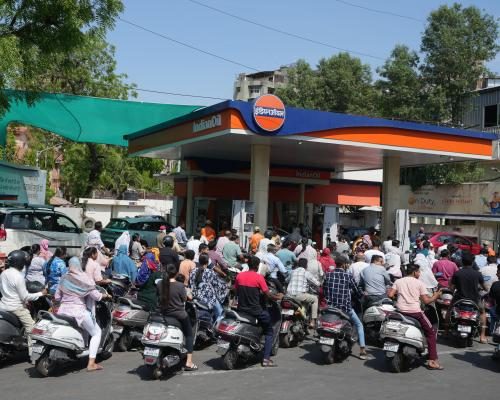
Fuel shortages are gripping communities worldwide as the ongoing conflict in the Middle East disrupts energy supplies. With oil prices soaring to about $100 a barrel, individuals and businesses are feeling the pinch, forcing many to rethink their fuel consumption strategies.
Alagesan's Struggle in Coimbatore
Alagesan, a 35-year-old shop owner in Coimbatore, India, relies on liquefied petroleum gas (LPG) to operate his roadside drink and snack shop. The escalating fuel shortage, triggered by the US-Israel attacks on Iran, has left him deeply concerned about the future of his business. "I am far away from the Middle East, but my life is affected," he lamented. "The gas cylinder is not available because of the war. I don't know what to do." With the strait of Hormuz, a critical maritime route for oil, becoming nearly impassable, the ripple effects are evident everywhere. Originally reported by The Guardian.
The International Energy Agency (IEA) has warned that the current situation could lead to the most significant supply disruption in the history of the global oil market. As oil prices climb, so does the cost of gasoline and everyday goods, intensifying the economic strain on consumers worldwide. The IEA's executive director, Fatih Birol, stated that the war is creating a "major energy crisis." He emphasized that without a swift resolution, the impacts on energy markets and economies will only worsen.
Personal Accounts of Fuel Rationing
Alagesan's worries are echoed by many who responded to an online callout regarding heating oil and fuel usage amid the conflict. People from various regions shared their experiences of adjusting to rising prices and fuel scarcity. Many have cut back on driving, using their vehicles only for essential trips, while others have turned to cycling or public transport. For those in colder climates, the situation is particularly dire. One woman noted a staggering "35-day wait for the next installment of gas cylinders," highlighting the severe rationing that has taken hold.
In Kerala, Gangesh, 57, described how the oil crisis is affecting the hospitality sector. "Most hotels are suffering the worst shortage," he reported, adding that many eateries have shut down, resulting in significant unemployment. The emotional toll of the conflict is palpable, with many expressing frustration over the situation, while others find solace in their electric vehicles and solar panels, feeling a sense of control over their energy sources.
Impact on Households in the UK and Beyond
The fuel crisis has also reached households in the UK, where an estimated 1.7 million homes rely on heating oil. In Northern Ireland, nearly two-thirds of households depend on this fuel source. Residents are increasingly worried about the steep price hikes; David from Londonderry noted that many are struggling to afford the rising costs. "For people with respiratory problems, like myself, it is essential to maintain a stable temperature," he said. This sentiment resonates deeply, particularly as winter temperatures continue to plunge.
Anne, a 50-year-old manager in Perthshire, Scotland, shared her own struggles. At the end of February, she budgeted £600 for 1,000 litres of paraffin. By now, the price has skyrocketed to £1,450, putting heating out of reach for her family. Facing freezing temperatures, they've resorted to cutting wood from fallen trees for firewood, a labor-intensive effort that underscores the gravity of their situation.
Creative Solutions Amidst Rising Costs
As the crisis continues, individuals are finding creative ways to cope. Sue, a 73-year-old semi-retired teacher from Macclesfield, UK, has prohibited the use of her car except for medical appointments. Instead, she and her husband rely on bicycles and a tricycle for transportation. Katie, 71, from Massachusetts, is feeling the strain of rising health costs while supporting her medically disabled son. "We now consider carefully almost every mile we must drive and are trying to cut back expenses every way we can," she shared, highlighting the tough choices families are faced with.
Others are adapting by grouping errands to minimize fuel usage. In New South Wales, Peggy is reducing her driving speed to enhance fuel efficiency, while a 71-year-old woman from Pitt Town is offering rides in her electric vehicle to friends concerned about fuel costs. As these stories illustrate, the global fuel crisis is prompting individuals across different continents to reevaluate their energy consumption and adapt to an increasingly challenging environment.
The ongoing conflict in the Middle East has far-reaching implications for energy markets and daily life, highlighting vulnerabilities in global supply chains. As consumers and businesses navigate this crisis, the hope for a swift resolution remains a crucial focal point.
Originally reported by The Guardian. View original.