
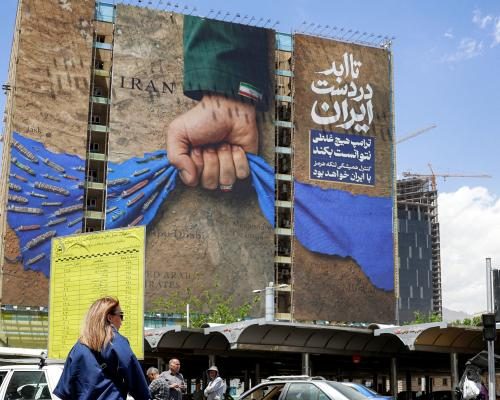
The ongoing crisis in the Middle East has reached a critical juncture as the US-Iran ceasefire appears increasingly fragile following recent military exchanges in the Strait Of Hormuz. Just a week ago, the truce was holding, albeit with negotiations progressing at a sluggish pace. Now, oil prices have surged back over $100 a barrel, reflecting market anxiety as tensions escalate.
With Iran effectively blocking the Strait of Hormuz and the US Navy enforcing a blockade on Iranian ports, both sides have engaged in a series of tit-for-tat military actions. The US has conducted strikes on Iranian military targets in response to an attack on three American destroyers, while Iran accused Washington of initiating the conflict by targeting its vessels. This back-and-forth threatens the tenuous peace established since April 8, raising fears of further escalation. Originally reported by The Guardian.
Oil Prices Surge Amid Market Turmoil
The instability in the region has had a direct impact on global oil markets, with Brent crude climbing to $101 a barrel, a 1% increase. This surge follows a brief period of optimism when prices dipped after initial peace negotiations showed potential. However, renewed hostilities have overshadowed these efforts, sending shockwaves through financial markets.
Market analyst Jim Reid from Deutsche Bank noted that investor sentiment has shifted dramatically, with major Asian equity indices experiencing declines. The Nikkei fell 0.69%, the KOSPI dropped 0.73%, and the Hang Seng index plummeted 1.17%. European futures have also reacted negatively, with the FTSE 100 and DAX both down by approximately 0.7% and 0.87%, respectively. In contrast, US futures saw a slight recovery, with S&P 500 futures up by 0.21% after a rough previous day.
UAE Intercepts Iranian Attacks
Further complicating the situation, the UAE's defense ministry reported intercepting missiles and drone attacks originating from Iran. This escalation marks a significant strain on the already fragile ceasefire, with Iranian state media alleging that the UAE was complicit in attacks on Iranian territories, including Qeshm Island.
The UAE's defense ministry urged citizens to avoid any debris from intercepted projectiles, stating, "The UAE's air defenses are currently dealing with missile and drone attacks originating from Iran." This statement reflects the ongoing conflict that has seen Iran frequently targeting Gulf nations harboring US military bases since the war's inception in late February.
Trump Maintains Ceasefire is Intact
Despite the escalating military exchanges, President Donald Trump insisted that the ceasefire remains in effect. In an interview with ABC News, he described the recent strikes as "just a love tap," reaffirming his belief that the truce is still holding. Trump emphasized, "Yeah it is. They trifled with us today. We blew them away. They trifled. I call that a trifle."
On his Truth Social platform, he claimed that while there was no damage done to US warships, significant harm was inflicted on Iranian forces. Trump warned that if Iran does not expedite negotiations for a comprehensive deal, the US will respond with greater force in the future. The proposed agreement, which reportedly involves a one-page memorandum aimed at reopening the Strait of Hormuz and establishing a 30-day cessation of hostilities, remains a point of contention.
Iran's Retaliatory Stance
In response to the US military actions, Iranian officials have accused the US of violating the ceasefire, claiming that their forces retaliated against American military vessels after attacks on an oil tanker and another ship. Ebrahim Azizi, the head of the Iranian parliament's national security committee, warned on social media that the US would face stronger repercussions if it continues its current course of action, stating, "Making the same mistake again and again won't get you a different answer; only a stronger one. Respect the new maritime regime of Iran."
As tensions continue to escalate, explosions have been reported in various Iranian cities, including Tehran and Bandar Abbas. Iranian state media has attributed these incidents to US military actions, further complicating the already volatile situation in the region.
As diplomatic efforts falter and military actions intensify, the international community watches closely, anxious for signs of a resolution. The fate of the ceasefire and the stability of the Strait of Hormuz hang in the balance as both nations navigate this precarious moment.
Originally reported by The Guardian. View original.