
The United States has enacted a temporary waiver on sanctions affecting Russian oil stranded at sea, a move intended to address rising global oil prices that have raised concerns over supply stability. Scott Bessent, Secretary of the Treasury, announced the decision late Thursday, allowing countries to purchase the stranded Russian oil for a duration of 30 days. This action comes in response to a significant increase in average U.S. fuel prices, which have surged by 65 cents per gallon over the past month. Bessent stated that President Trump is "working to keep prices low" amidst these challenges.
Bessent emphasized that this measure is narrowly focused and designed to apply only to oil already in transit. He noted that it would not provide substantial financial benefits to the Russian government, which largely depends on taxes assessed at the point of extraction for its energy revenue. Despite the U.S. efforts, Brent crude, the international oil benchmark, remained above $100 per barrel during early trading on Friday, illustrating the ongoing volatility in the oil market. Originally reported by The Guardian.
Middle East Conflict Fuels Oil Price Surge
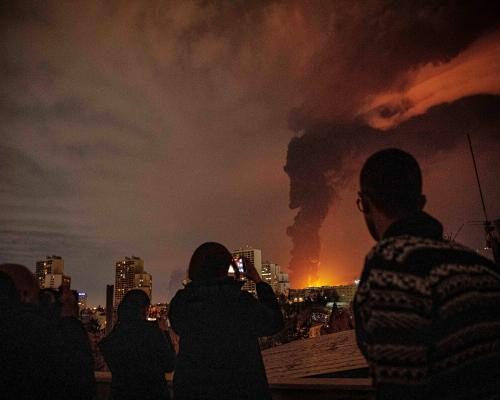
The recent conflict involving Israel and Iran has further complicated the global oil landscape, effectively closing the Strait of Hormuz, a critical passage for approximately one-fifth of the world's oil and seaborne gas tankers. The Trump administration has repeatedly pledged to escort vessels through the strait to ensure safe passage, yet actual maritime activity has not returned to normal levels. The Iranian government has declared that it will not permit any oil exports from the region while hostilities continue, exacerbating fears over potential supply shortages.
Adding to the tension, Iranian officials have threatened to increase retaliatory actions against economic targets in the region, with reports indicating that Iran has begun laying mines in the Strait of Hormuz. This escalation could lead to further disruptions in global oil supplies, prompting market analysts to speculate about the potential for oil prices to soar even higher. In light of these developments, Bessent's announcement may be seen as a strategic attempt to stabilize the market.
US Allies Express Concerns Over Sanction Lifting
While the U.S. has taken steps to ease sanctions on Russian oil, some of its allies have voiced concerns regarding this decision. French President Emmanuel Macron stated following discussions with other G7 leaders that the situation in the Strait of Hormuz does not justify lifting sanctions against Russia. This sentiment reflects a broader apprehension among U.S. allies about the implications of such a move, especially concerning the ongoing conflict in Ukraine.
On the other hand, the U.S. also recently allowed Indian refiners to temporarily purchase Russian oil for 30 days, despite prior assertions from Trump that India had agreed to cease such purchases. This shift was framed as a strategic maneuver that would "help END THE WAR in Ukraine" by cutting off a significant revenue source for Russia. As of Thursday, approximately 124 million barrels of Russian oil were reported to be in transit globally, underscoring the scale of the situation.
International Responses and Market Implications
The International Energy Agency (IEA), known for its role as the global energy watchdog, has taken drastic measures in response to these escalating tensions. On Wednesday, IEA member countries unanimously agreed to release 400 million barrels from government reserves, marking the largest release in the agency's history. However, ongoing conflicts and strikes across the Middle East have overshadowed these efforts, complicating the response to rising oil prices.
As Brent crude prices climbed to $100.74 per barrel following Bessent's announcement, Russia's economic envoy, Kirill Dmitriev, commented that it is "increasingly inevitable" for Washington to lift sanctions. He suggested that the U.S. is recognizing that the global energy market cannot maintain stability without Russian oil. Such comments highlight the interconnectedness of global energy politics and the challenges facing the international community as it navigates these turbulent waters.
In the backdrop of these developments, Trump has sought to downplay concerns over high oil prices, emphasizing that the U.S. remains the largest oil producer globally. He expressed that while rising prices can be profitable for the U.S., his primary focus is on preventing Iran from acquiring nuclear weapons and destabilizing the region. As the midterm elections approach in November, however, the impact of rising fuel prices could become a significant challenge for Trump's Republican allies, who are defending their slim majorities in both the Senate and House of Representatives.
Originally reported by The Guardian. View original.