
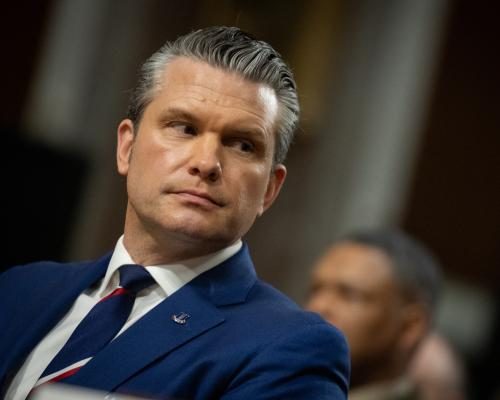
The Republican-led Senate once again blocked a Democratic proposal aimed at limiting President Trump's military actions in Iran, as tensions continue to escalate in the region. The vote, which took place on Thursday, ended with a 47-50 outcome, marking the sixth defeat of a war powers resolution related to the ongoing conflict. This persistent political tug-of-war highlights the growing divide between the two parties over military engagement and foreign policy.
Senate Vote Reflects Ongoing Partisan Divide
During the Senate vote, only two Republicans joined Democrats in support of the resolution: Senator Susan Collins of Maine and Senator Rand Paul of Kentucky. Meanwhile, Senator John Fetterman of Pennsylvania was the sole Democrat to oppose the motion. The resolution, introduced by Senator Adam Schiff, sought to restrict Trump's military actions in Iran, particularly following a series of airstrikes initiated by the U.S. and Israel in February. This latest vote underscores a significant rift in Congress over the administration's approach to Iran, with Democrats increasingly frustrated by the lack of accountability for military actions. Originally reported by The Guardian.
Schiff emphasized the urgency of the situation, stating, "This vote was critical as Friday marks 60 days since the Trump administration informed Congress about the military strikes on Iran." According to the War Powers Resolution of 1973, the president must cease military operations within 60 days unless Congress has declared war or authorized further action. With the clock ticking, Democrats have been pressing for a more robust debate on the issue.
Trump's Oval Office Remarks and Iran's FIFA Participation
On the same day, President Trump addressed reporters in the Oval Office after signing an executive order aimed at enhancing retirement plan access for employees whose employers do not provide such benefits. When questioned about Iran, Trump claimed that the country "wants to make a deal badly." This statement comes amid ongoing discussions about the Iranian national soccer team's participation in the upcoming FIFA World Cup.
When asked if the Iranian team should be allowed to compete, Trump expressed support, saying, "Let them play," provided that FIFA President Gianni Infantino, whom Trump described as a "piece of work," agreed to their participation. The uncertainty surrounding Iran's involvement in the tournament has arisen following the recent airstrikes. Nevertheless, Infantino confirmed that Iran would fulfill its matches against New Zealand, Belgium, and Egypt.
Maine Senate Race Takes a Turn
In a significant development in the political landscape, Maine Governor Janet Mills announced she would suspend her campaign for the Senate, paving the way for progressive newcomer Platner to secure the Democratic nomination. Mills, a two-term governor and former state attorney general, was considered a formidable candidate backed by prominent Democratic figures, including Senate Minority Leader Chuck Schumer.
Following her announcement, Platner stated, "Mills's decision to suspend her campaign demonstrates her commitment to defeating Collins." He added that he looks forward to collaborating with Mills in the lead-up to the November elections, aiming to turn the seat blue again. However, Mills has yet to confirm whether she will endorse Platner, leaving some uncertainty in the race.
Trump's Tariff Changes and Surgeon General Nominee Withdrawn
Amid the political turmoil, Trump also announced plans to remove tariffs and restrictions on whiskey imports, particularly benefiting Scotland and Kentucky. He made this announcement on Truth Social after a visit from King Charles and Queen Camilla, stating, "In Honor of the King and Queen of the United Kingdom, I will be removing the Tariffs and Restrictions on Whiskey." Trump highlighted the importance of trade between the two regions, aiming to strengthen economic ties.
In another notable development, Trump withdrew the nomination of Casey Means for U.S. Surgeon General, citing opposition from Senator Bill Cassidy. Instead, he announced that he would nominate Dr. Nicole Saphier, a radiologist and Fox News contributor, for the position. This shift in leadership comes amid ongoing discussions about public health policy and the future direction of the administration's healthcare initiatives.
As the political landscape continues to evolve, the implications of these developments in both foreign and domestic policy will undoubtedly reverberate through the upcoming elections and beyond. The tensions surrounding Iran, healthcare reforms, and the shifting dynamics in Maine's Senate race are just a few of the critical issues that will shape the political discourse in the months ahead.
Originally reported by The Guardian. View original.