
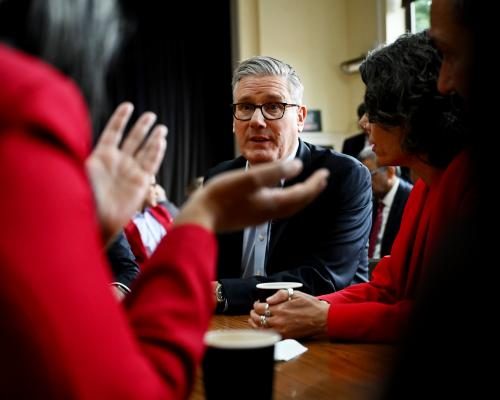
Keir Starmer is facing mounting pressure to outline a timeline for his resignation after Labour suffered a significant electoral defeat in local elections across the UK. By Friday night, the party had lost control of over 25 councils and more than 1,000 council seats in England, with many seats shifting to Nigel Farage's Reform UK. This election cycle marked a critical juncture for Labour, which has historically been a dominant force in British politics, particularly in Wales and London.
Labour's Historic Setback in Wales and Beyond
The local election results have been nothing short of disastrous for Labour. In Wales, the party's long-standing governance of 27 years came to an abrupt end as Plaid Cymru emerged with the largest number of seats, though they still fell short of a majority. This electoral wipeout has raised serious questions about Labour's viability as a political force in the region. Furthermore, Labour's position in Scotland appears to be in jeopardy, with the SNP poised to secure a significant victory. Originally reported by The Guardian.
In England, the results were equally troubling. Labour lost crucial councils in London, including Hackney and Waltham Forest, due to a notable surge in support for the Green Party. The overall loss of more than 1,000 seats has sent shockwaves through the party, and many MPs are now openly calling for Starmer to step down. Clive Betts, MP for Sheffield South East, voiced that Starmer needs to resign "in the not too distant future," while Sarah Owen, MP for Luton North, described it as "do or die for the Labour leadership."
Starmer's Response to Electoral Defeat
In the wake of the election results, Keir Starmer acknowledged the party's failures but remained resolute in his position. He stated, "tough days like this don't weaken my resolve," signaling his intention to stay in leadership despite the mounting criticism. Starmer's commitment to reforming Labour is evident, but the pressure from within the party is intensifying. By Friday evening, ten additional MPs had joined the chorus demanding he establish a clear timeline for his departure from No 10.
Despite the turmoil, some members of Starmer's cabinet have expressed their support. Health Secretary Wes Streeting, often viewed as a potential future leader, publicly backed Starmer, emphasizing his focus on restoring the NHS. Streeting stated, "I'll continue putting my shoulder to the wheel as the health and social care secretary, who's getting the NHS back on its feet and making sure it's fit for the future." Home Secretary Shabana Mahmood also acknowledged the "devastating night" for Labour but stressed that Starmer is committed to improving the party's fortunes.
Reform UK and the Rise of Alternative Parties
Arguably, the biggest winner in these elections was Reform UK, which gained over 1,200 seats and took control of 12 councils across England. This marked a substantial shift in the political landscape, with Farage proclaiming it a "truly historic shift in British politics." The rise of Reform UK, alongside gains made by the Liberal Democrats and the Green Party, has raised alarms for Labour, indicating a potential fragmentation of the traditional two-party system.
Green Party leader Zack Polanski declared that the era of two-party politics "is not just dying, it is dead and it is buried." This emerging trend suggests that voters are increasingly seeking alternatives to the established parties, a reality that Labour must contend with if it hopes to reclaim its influence.
What Lies Ahead for Labour?
The fallout from the local elections poses serious questions about Labour's future under Starmer's leadership. The calls for resignation from within his party, combined with significant electoral losses, create a precarious environment. As senior Labour MPs demand accountability, the party's internal unity appears to be fraying, raising concerns about its long-term viability.
What remains to be seen is whether Starmer can navigate these turbulent waters and reinvigorate Labour's standing among voters. As the party grapples with its identity and direction, the next steps taken by its leadership will be crucial in determining its fate in future elections. The pressure on Starmer is palpable, and the coming weeks will likely be pivotal in shaping Labour's strategy moving forward.
Originally reported by The Guardian. View original.