
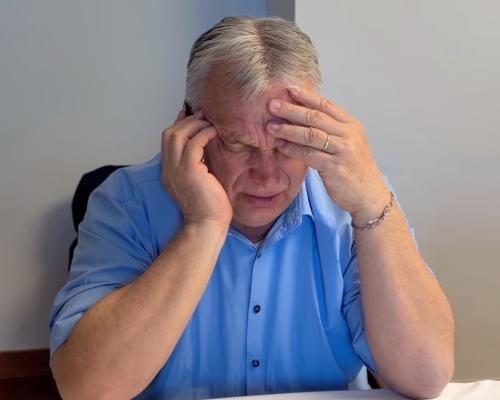
Hungary's Prime Minister Viktor Orbán has raised alarms, claiming that his family has been threatened by Ukrainians as tensions between Budapest and Kyiv escalate. With parliamentary elections just a month away, Orbán appears to be leveraging this controversy for political gain, intensifying anti-Ukrainian sentiment ahead of a critical vote that could see the end of his 16-year reign.
In a dramatic video released on Wednesday, Orbán purportedly spoke to his daughters, expressing his concerns. "I'm sure you'll see on the news that the Ukrainians have threatened not only me but you as well," he said, visibly emotional. The Prime Minister emphasized the seriousness of the threats, stating, "My kids and my grandkids.. We have to take this seriously but we must not be scared." His remarks follow comments made by Hrihoriy Omelchenko, a former politician and official in Ukraine's SBU security service, who suggested, during a televised interview, that vigilantes might pursue Orbán if he doesn't alter his anti-Ukrainian stance. Originally reported by The Guardian.
Escalating Rhetoric and Political Strategy
The backdrop to Orbán's accusations includes remarks made by Ukrainian President Volodymyr Zelenskyy, who threatened to disclose Orbán's address to the Ukrainian armed forces. This statement reportedly prompted European allies to urge Zelenskyy to temper his language. Orbán has historically been seen as one of the EU's most pro-Russian leaders, leading to a strained relationship with Ukraine. As polls indicate that Orbán is trailing behind challenger Péter Magyar by as much as 20 points, his government has ramped up its anti-Ukrainian campaign.
The latest episode of this diplomatic spat was ignited by Ukraine's assertion that it would take weeks to repair an oil pipeline damaged during a Russian drone attack. In retaliation, Orbán vetoed additional EU sanctions against Russia and blocked a €90 billion loan intended for Ukraine. This escalation culminated in Hungary's anti-terrorism police seizing a convoy of armored vehicles belonging to Oschadbank, Ukraine's state savings bank, and detaining seven Ukrainians who were accompanying it.
Controversial Arrests and Accusations of State Terrorism
The convoy, reportedly transporting tens of millions of euros and 9 kg of gold bars from Vienna to Kyiv, was described by Ukrainian authorities as a standard government cash transfer. Hungarian officials, however, suggested the money was part of a laundering operation. The seven individuals were detained for over 24 hours before being deported back to Ukraine. Lóránt Horváth, the detainees' lawyer, criticized the handling of the situation, stating that every aspect of the procedure was unlawful, particularly the denial of legal assistance.
One of the detained men, who suffers from diabetes, was hospitalized during his detention. Horváth claimed he was transported in handcuffs and blindfolded, and later faced complications related to his health. Ukraine's foreign ministry has accused Hungary of subjecting the detainees to psychological and physical pressure during their time in custody.
International Fallout and Disinformation Campaigns
As the diplomatic row continues, officials from both nations have exchanged sharp accusations regarding the incident. Ukraine's Foreign Minister Andrii Sybiha stated, "The mask has slipped.. They openly confess to taking hostages and stealing money with the aim of demanding ransom. Such actions must be called by their name: state terrorism." In response, Hungarian Foreign Minister Péter Szijjártó dismissed Sybiha's claims as "pretty pathetic," challenging him to explain why such a large sum of cash was being sent to Hungary.
With the Hungarian election set for April 12, the potential for further escalation remains high. Reports have emerged that a Kremlin-aligned think tank is planning a disinformation campaign aimed at bolstering Orbán's re-election prospects. His calls for maintaining positive relations with Moscow have set him apart from many other European leaders, and his foreign minister has made multiple trips to Russia since the onset of the war in Ukraine.
Orbán's assertion that a victory for Magyar would pull Hungary into the conflict on Ukraine's side echoes his strategy of presenting himself as a bulwark against foreign influence. As tensions mount and the election date approaches, the political landscape in Hungary remains fraught with uncertainty and potential for further confrontations between Budapest and Kyiv.
Originally reported by The Guardian. View original.