
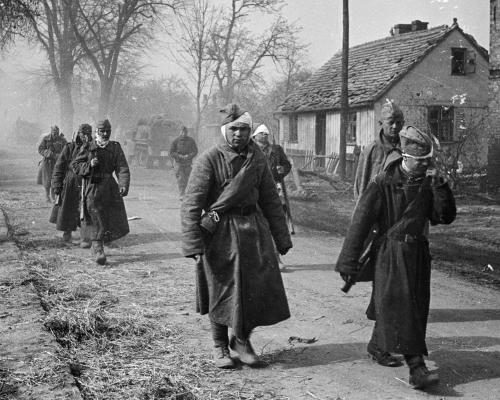
In a compelling act of preservation, Arthur Bondar, a Ukrainian-Russian photojournalist, has successfully smuggled a collection of World War II negatives out of Russia. This endeavor, undertaken in 2023, saw Bondar transport eight loads of vital historical imagery across borders to Germany, where he now resides with his wife, Oksana. The negatives, which number around 35,000, are crucial artifacts representing a less glorified narrative of the war, capturing the human experience in its full complexity.
Unveiling the Past Through Negatives
Bondar's collection includes small 4cm by 9cm negatives, each revealing poignant images from the Second World War. Holding the negatives up to the light in his study, Bondar sees ghostlike figures: a woman on horseback, groups of women tending fields, and soldiers in candid moments. These negatives, purchased from various sellers, include images of the Reichsarbeitsdienst, a labor force of women under the Nazi regime, which Bondar obtained from a German vendor online. Originally reported by The Guardian.
"Negatives are photographic truths that make it difficult to distort history," Bondar asserts, emphasizing their importance in providing an unfiltered view of wartime events. Unlike prints, which may have been manipulated or altered, negatives retain the authenticity of the moment captured. Bondar's commitment to maintaining this authenticity is evident as he meticulously scans and catalogs each piece, revealing a hidden narrative that often contradicts the dominant historical accounts.
Dangerous Exfiltration from Russia
Smuggling these treasures out of Moscow was a risky endeavor for Bondar. Despite being interrogated during his exit, he managed to bring the negatives to Georgia and eventually to Germany. "To boot, I was a Ukrainian doing this 'dishonourable' act," he reflects. The risks were significant; he faced potential fines, confiscation of his collection, or even imprisonment for holding images that could be deemed disrespectful to the Russian military narrative.
Bondar's archive serves as a counter-narrative to the glorified portrayal of the Second World War often propagated by Moscow, which uses historical triumphs to justify its contemporary military actions. In Russia, the law has become increasingly stringent, with certain depictions of the war now prosecutable offenses. Bondar's work stands as a testament to the complexities of human experience during the war, showcasing the vulnerability and humanity of soldiers.
Documenting the Many Faces of War
With a focus on sharing these images, Bondar has created a carefully curated website where he uploads the photographs alongside hardback publications and exhibitions. One current exhibition is at a museum dedicated to the Battle of the Seelow Heights, a brutal period in the final push to capture Berlin. The display features works by Valery Faminsky, one of Bondar's most cherished finds, highlighting the harsh realities faced by soldiers and civilians alike during the war.
Bondar's dedication to showcasing the multifaceted nature of warfare reflects his belief that it is essential to remember "all the sides of war, above all its stupidity and uselessness." His collection provides insight into the emotional and personal aspects of conflict, offering a stark contrast to the often sanitized narrative presented by state propaganda.
The Legacy of a Photographer in Exile
Now residing in Germany, Bondar continues his mission to preserve and disseminate these vital historical records. His efforts serve not only as a means of personal expression but also as a broader commentary on the war's impact on human lives. The ongoing conflict in Ukraine fuels his commitment to ensuring that history is remembered in its entirety, rather than through selective lenses that glorify military victories.
As he reflects on his journey, Bondar's resolve shines through. He hopes that by sharing these images, future generations will understand the true cost of war and the importance of empathy in the face of conflict. His work stands as a powerful reminder that the lessons of the past remain crucial for shaping a more compassionate future.
Originally reported by The Guardian. View original.