
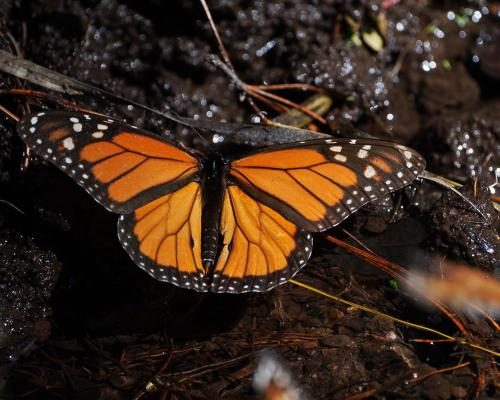
The winter of 2025 brought a remarkable boost to the monarch butterfly population in Mexico, with a staggering 64% increase compared to the previous year. According to new data released by the World Wildlife Fund (WWF) Mexico, the area occupied by these iconic butterflies expanded from 1.79 hectares (4.42 acres) to 2.93 hectares (7.24 acres) of forest. This significant growth marks the largest habitat coverage for monarchs since 2018, offering a hopeful sign for a species long considered at risk of extinction.
During a recent news conference, Mexican Environment Minister Alicia Bárcena Ibarra emphasized the importance of the monarch butterfly, stating, "The monarch butterfly is the symbol of the trilateral relationship between Mexico, the United States and Canada. Its conservation is a collective commitment we must maintain for the future." Each year, millions of these butterflies embark on an incredible journey, traveling nearly 3,000 miles from Canada, traversing the United States, before arriving in the forests of western Mexico. During this migration, the striking orange butterflies transform entire trees into a colorful spectacle. Originally reported by The Guardian.
Challenges Facing Monarch Butterflies
Despite this encouraging news, monarch butterflies continue to face numerous threats that have contributed to their declining numbers over the past three decades. Habitat loss due to deforestation, climate change, and the widespread use of herbicides have all taken a toll on the species. In the United States, the increased application of herbicides like glyphosate and dicamba has led to a drastic reduction in milkweed, the sole food source for monarch caterpillars. This decline is directly correlated with the sharp drop in butterfly populations.
The Biden administration previously proposed listing the monarch as threatened under the Endangered Species Act by the end of 2024. However, this decision has been indefinitely delayed by officials from the Trump administration. In February, two environmental organizations took legal action, filing a lawsuit aimed at compelling the administration to set a definitive date for granting protections to the monarch butterfly. Tierra Curry, endangered species co-director at the Center for Biological Diversity, stated, "It would be unforgivable for [the monarch's] epic migrations to collapse because of political cowardice on enacting range-wide protections for them." Curry added that even the Trump administration should reconsider allowing these iconic butterflies to drift toward oblivion.
Illegal Logging and Conservation Efforts
In Mexico, the expansion of avocado farming has significantly impacted the monarch's habitat, particularly in the state of Michoacán. This growth has led to extensive illegal logging, often facilitated by organized crime groups that have infiltrated the lucrative avocado trade. The area occupied by monarch butterflies today remains a mere fraction of its former size, with current coverage at just 2.93 hectares compared to a peak of nearly 18.21 hectares (45 acres) in 1995. Scientists believe that a minimum of 6.07 hectares (15 acres) is necessary for the species' long-term survival.
Efforts to mitigate illegal logging have shown some success in recent years. WWF Mexico's director, María José Villanueva, reported, "One of the greatest achievements of this work is that illegal logging in the core zone of the Monarch Butterfly Biosphere Reserve has been virtually eradicated since 2008." This progress means that the forests vital for the monarchs' hibernation are receiving more robust protection and conservation.
The Future of Monarch Butterflies
While the recent increase in the monarch butterfly population is encouraging, much work remains to ensure their survival. The combination of environmental challenges and human activities continues to threaten their existence. Without concerted global efforts to protect their habitats and address pesticide use, the future of these butterflies remains uncertain.
As the seasonal migration of monarchs continues, conservationists hope this surge in their population signals a turning point. Ensuring that their habitats remain intact and free from illegal logging is paramount to their survival. With ongoing support from various organizations, there is hope that we can preserve this remarkable species for generations to come.
Originally reported by The Guardian. View original.